

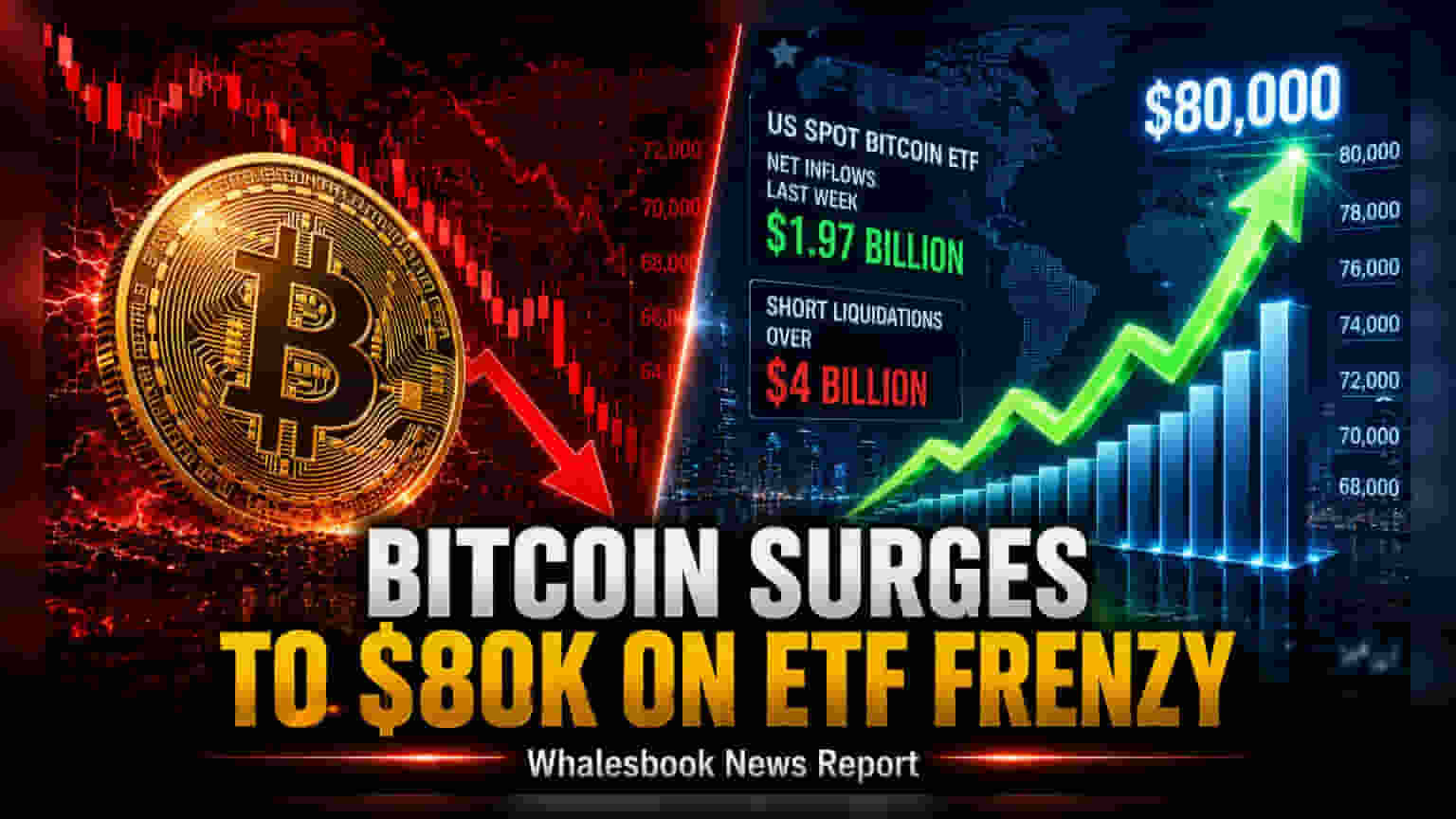
Bitcoin has climbed past $79,000, supported by nearly $2 billion in inflows into US spot Exchange Traded Funds (ETFs) over the last week. The rally marks a major shift in sentiment after weeks of outflows, though analysts warn of potential resistance near $80,000. Investors are now watching whether this institutional buying trend can sustain the current price momentum.
Bitcoin has staged a significant rally, moving past the $79,000 mark as market sentiment shifts from caution to renewed confidence. This price jump represents the cryptocurrency's largest weekly gain in over three years, with the asset rising by approximately 23% in the same period. This movement has been heavily supported by institutional money entering the market through US spot Exchange Traded Funds (ETFs), which recorded nearly $2 billion in net inflows last week.
The surge in price has been a combination of steady institutional demand and a rapid chain reaction in the trading market, often called a short squeeze. When Bitcoin's price began to rise, traders who had bet against the currency were forced to buy it back to limit their losses, which further pushed the price upward. Market data indicates that this intense activity led to the liquidation of over $4 billion in short positions across the crypto market in recent days.
BlackRock’s iShares Bitcoin Trust was a primary driver of this trend, contributing a significant portion of the total inflows. This turnaround is particularly notable because it follows a period of net outflows just a week earlier, signaling that large investors are returning to the asset class. The rally has also been aided by broader market expectations regarding liquidity, specifically linked to anticipated US Treasury bond buybacks, which generally increase the amount of money available in the financial system.
Despite the positive momentum, market participants are keeping a close watch on the $80,000 level. This is considered a psychological resistance point, where sellers may step in to take profits, leading to a potential cooling-off period. Technical indicators, such as the Relative Strength Index (RSI), have flashed overbought signals, suggesting that the speed of the recent climb may be difficult to maintain without a period of consolidation or sideways movement.
The sustainability of this rally depends heavily on whether these high levels of ETF inflows continue. If institutional demand dries up, the market could face a retracement. Additionally, broader economic factors, including updates on US interest rate policies and geopolitical tensions, continue to create an environment where volatility remains likely. Investors looking at the space are monitoring whether the current buying pressure is a long-term trend or a short-term response to the recent liquidation events. The key for the market will be how Bitcoin behaves if it tests and maintains its position near the $80,000 mark in the coming days.