 Whalesbook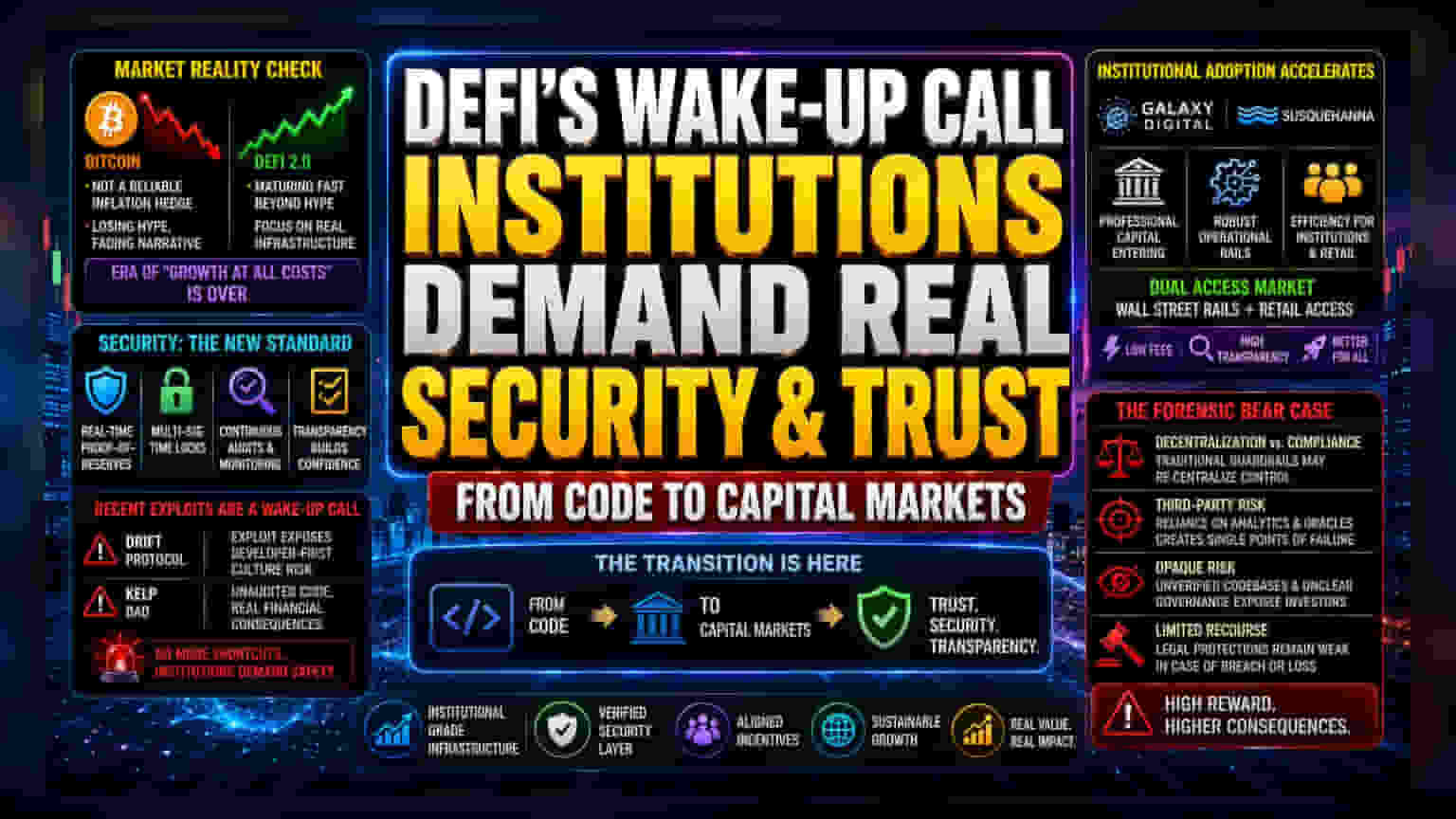


The Institutional Reframing of DeFi
The current divergence in the digital asset market suggests that the era of 'growth at all costs' in decentralized finance is hitting a wall. While Bitcoin remains trapped in a philosophical stalemate—failing to act as a seamless hedge against inflation while simultaneously shedding its hyper-speculative luster—DeFi protocols are being forced to evolve. The narrative is no longer about disruptive code; it is about the transition from experimental software to reliable financial infrastructure. This shift is being driven by the necessity to appease institutional allocators who demand transparency that the early stages of the ecosystem simply could not provide.
Security as the New Metric of Success
Security exploits have served as a persistent drag on the sector, with recent vulnerabilities at platforms like Drift Protocol and Kelp Dao exposing a structural weakness: a developer-first culture that lacks financial risk oversight. The industry's reliance on unaudited, rapid-fire code deployments has created a liability that Wall Street simply refuses to underwrite. Institutional adoption requires moving beyond trustless code to verified, transparent capital management. Protocols currently gaining the most traction are those integrating real-time proof-of-reserves and automated multi-signature time locks. These mechanisms are essentially imports from traditional banking, designed to limit human error and malicious intervention, thereby signaling to larger capital pools that the platform is more than just a speculative sandbox.
The Operational Convergence
There is a misconception that institutional involvement dilutes the decentralized nature of these platforms. In reality, entities like Galaxy Digital and Susquehanna are driving the adoption of more sophisticated operational rails that actually increase efficiency for retail users. By prioritizing low-fee, high-transparency architectures, successful protocols are creating a dual-access market. This structure allows Wall Street to utilize blockchain rails for operational speed while simultaneously ensuring that retail investors are not marginalized by complexity. As large institutions integrate, they are enforcing a standard of professionalization that effectively forces the entire sector to move away from the 'tech-only' mindset.
The Forensic Bear Case: Structural Vulnerabilities
Despite the push for professionalization, the DeFi sector remains structurally fragile. The inherent tension between full decentralization and the regulatory compliance required for institutional interaction remains unresolved. If a protocol implements 'traditional' guardrails like multi-sig time locks, it arguably risks re-centralizing control, which could alienate the core ideological base of the crypto community. Furthermore, the reliance on big-data analytics platforms like ApexE3 adds a layer of third-party risk. If these analytical gatekeepers are compromised, the 'transparency' they provide could become a single point of failure. Investors should be wary of platforms claiming institutional-grade security while still operating with opaque codebases or governance models that lack clear, enforceable legal recourse during a breach.