

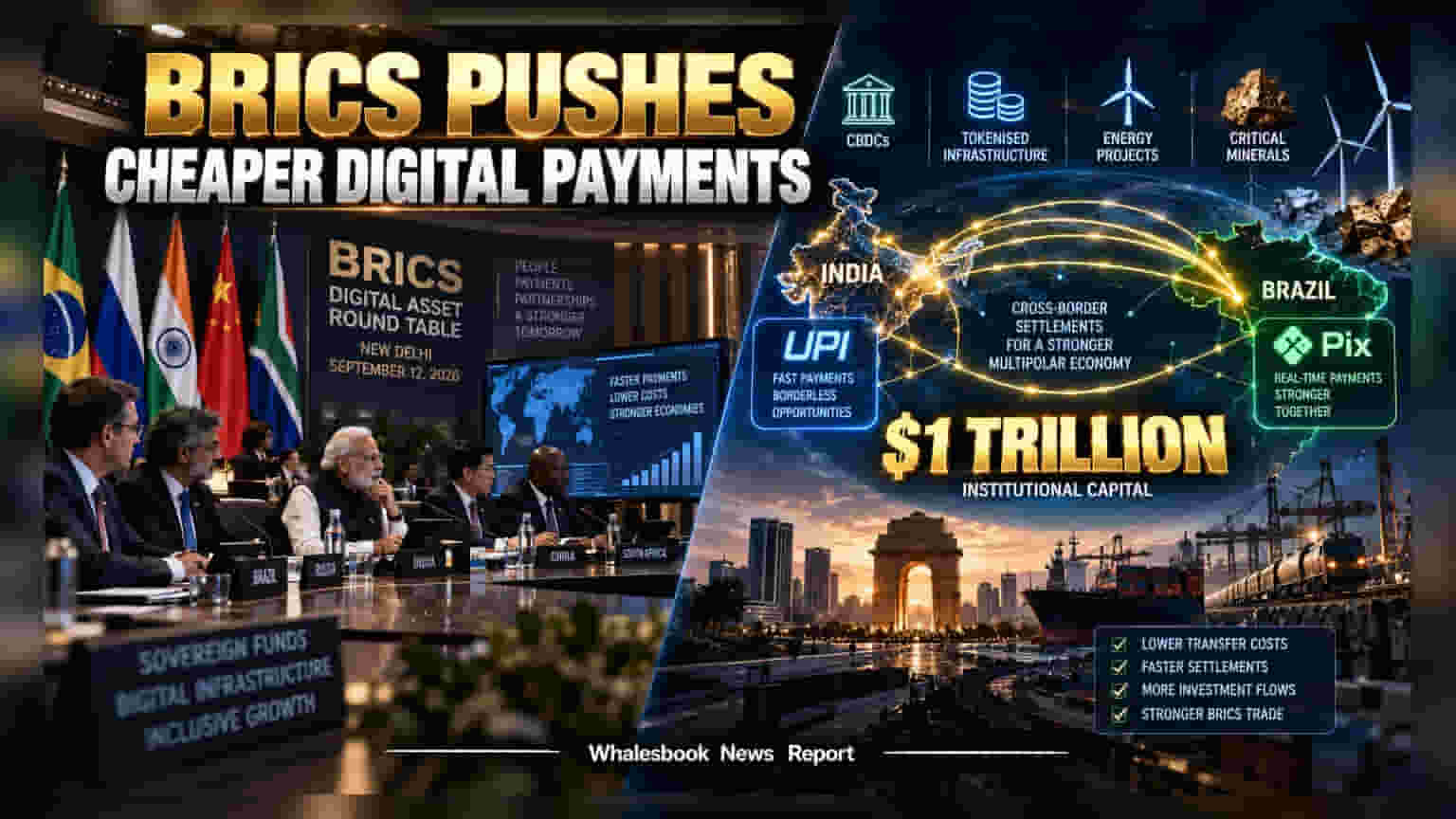
BRICS nations will hold a digital asset round table in New Delhi on September 12, 2026, to explore faster cross-border payments using systems like UPI and CBDCs. Indian officials have clarified the goal is to lower transaction costs, not to pursue a de-dollarization agenda. The event will involve investors managing approximately $1 trillion in assets, though no common digital currency has been announced.
The BRICS Digital Asset Round Table, scheduled for September 12, 2026, in New Delhi, will bring together industry leaders, sovereign wealth funds, and private investors to discuss the future of cross-border financial settlements. As the 2026 BRICS chair, India is hosting the event to explore practical ways to make international transfers faster, more efficient, and less expensive.
A primary focus of the discussions is the potential for linking domestic fast-payment networks. Systems such as India’s Unified Payments Interface (UPI) and Brazil’s Pix are expected to feature prominently. By allowing these existing networks to communicate, nations could theoretically reduce the friction and high costs currently associated with traditional correspondent banking. Central Bank Digital Currencies (CBDCs) are also on the agenda, as members look for ways to support direct settlement between participating economies.
For investors, the distinction between payment efficiency and geopolitical strategy is critical. Discussions regarding BRICS financial initiatives are often interpreted as moves toward de-dollarization, a sensitive topic given that the US President has threatened 100% tariffs on countries that seek to replace the dollar. To manage these expectations, New Delhi has explicitly stated that replacing the US dollar as a settlement or reserve currency is not part of its financial program. The official objective remains centered on practical trade facilitation and reducing transaction costs rather than geopolitical maneuvering.
The event also draws attention for the scale of institutional capital involved. The Sovereign Wealth Fund Institute, which is organizing the round table, noted that the participating investors—including sovereign wealth funds, pension funds, and family offices—manage approximately $1 trillion in assets. This suggests a growing institutional interest in digital infrastructure projects, such as tokenized investments for energy, property, and critical minerals, which are also slated for discussion.
Despite the scale of capital involved, shareholders and market participants should view these developments as exploratory. There is no announced common BRICS digital currency, nor is there a set timeline for any unified payment framework. The initiative faces significant technical and regulatory hurdles, as the diverse financial systems of member nations must be aligned to ensure compliance and security. The effectiveness of any potential project will depend heavily on the ability to navigate these cross-border regulatory challenges without triggering further trade friction. The next important updates will come from official summit declarations regarding the progress of these payment linkages and any specific frameworks agreed upon by the member nations.