

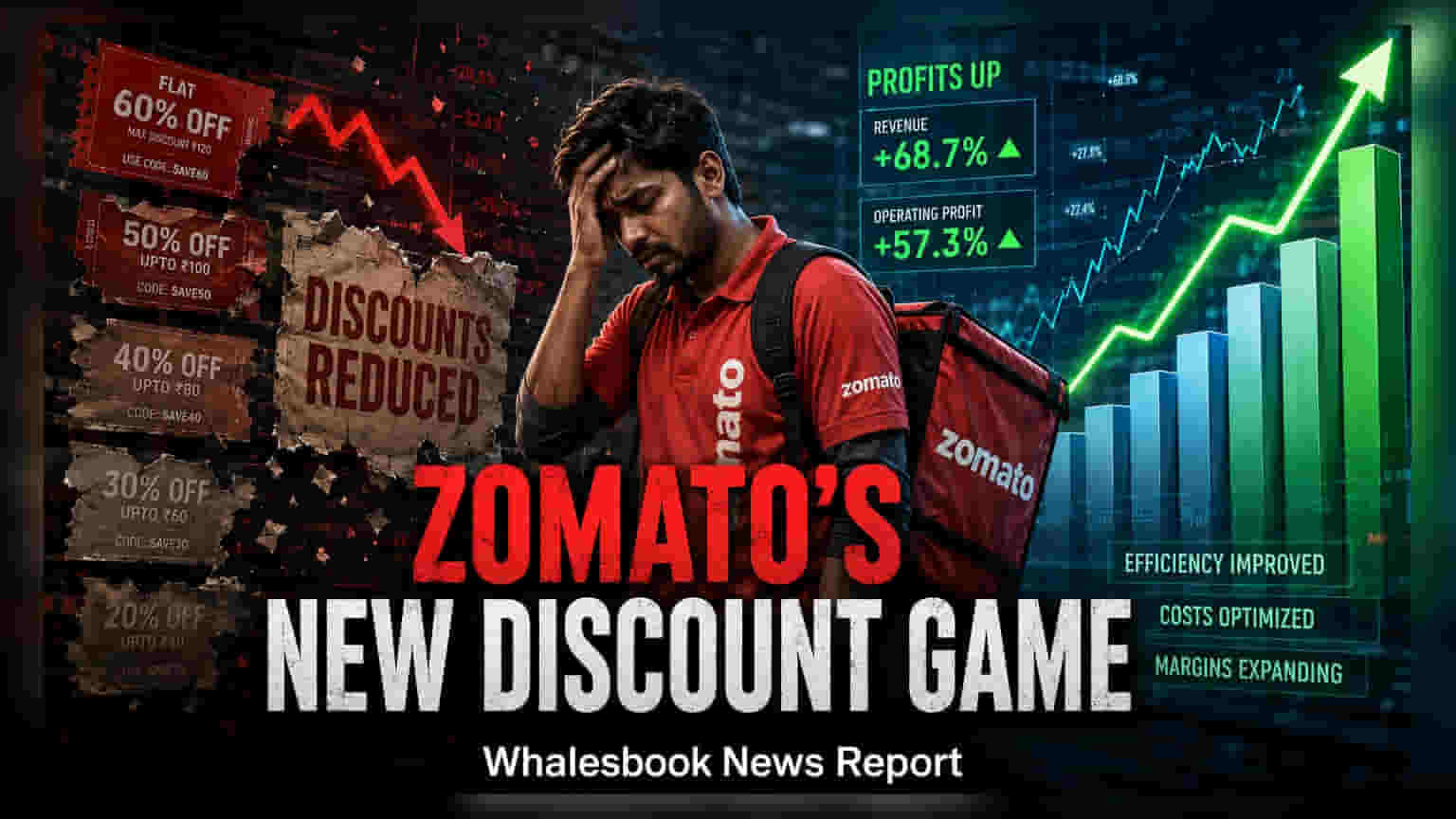
Zomato is refining its approach to promotions, focusing on converting existing customer interest rather than broad demand creation. While parent company Eternal Ltd. reported strong Q1 FY27 revenue of ₹20,211 crore, investors are tracking high marketing expenditure and ongoing negotiations with restaurant associations over commission practices.
Zomato is recalibrating its marketing strategy to prioritize efficiency in a competitive food delivery market. The company’s leadership has indicated a shift from aggressive, broad-based discounting to a model of "precision marketing." Instead of attempting to artificially generate new demand through heavy promotional spends, the focus is now on using discounts to capture and convert consumers who are already considering an order. This strategic change comes as the company attempts to balance rapid growth with the need for sustainable profitability.
Financial Context and Marketing Spend
The marketing strategy shift is unfolding against the backdrop of significant expenditure. Zomato’s parent company, Eternal Ltd., reported consolidated revenues of ₹20,211 crore for the first quarter of fiscal year 2027 (Q1 FY27). A major driver of this revenue growth has been the quick commerce segment, Blinkit, which continues to account for a significant portion of the top line.
However, the financial results also highlight the costs associated with this growth. In Q1 FY27 alone, marketing expenditure stood at ₹945 crore. While the company aims for this spending to be more performance-led—focusing on metrics like customer retention and payback periods—the high level of investment remains a key factor in the company’s bottom line. Eternal Ltd. reported a net profit of ₹92 crore for the quarter, which marked a sequential decline of 47.1% compared to the previous quarter. This drop was attributed partly to tax expenses and ongoing investments in business expansion, including the quick commerce vertical.
Operational and Sector Risks
Beyond marketing expenses, the company faces external pressure from restaurant associations. Disagreements regarding commission structures and discount policies have created friction in the ecosystem. While a planned boycott by restaurant bodies has been temporarily deferred until September 1, 2026, the situation remains a fluid operational risk. The outcome of these negotiations will be critical, as they could impact the platform's relationship with its restaurant partners and, potentially, its operating margins.
Furthermore, the quick commerce and food delivery sectors remain intensely competitive. To maintain its market share, the company must continue spending on infrastructure and advertising. Investors are balancing this strong revenue trajectory against the volatility in net profits and the ongoing need for high capital and marketing outlays to support growth in both the core food business and the newer quick commerce segment.
Moving forward, the primary areas for investors to track include the successful resolution of negotiations with restaurant associations, the ability of the company to maintain or improve profit margins despite high marketing costs, and the continued revenue contribution from the quick commerce business.