

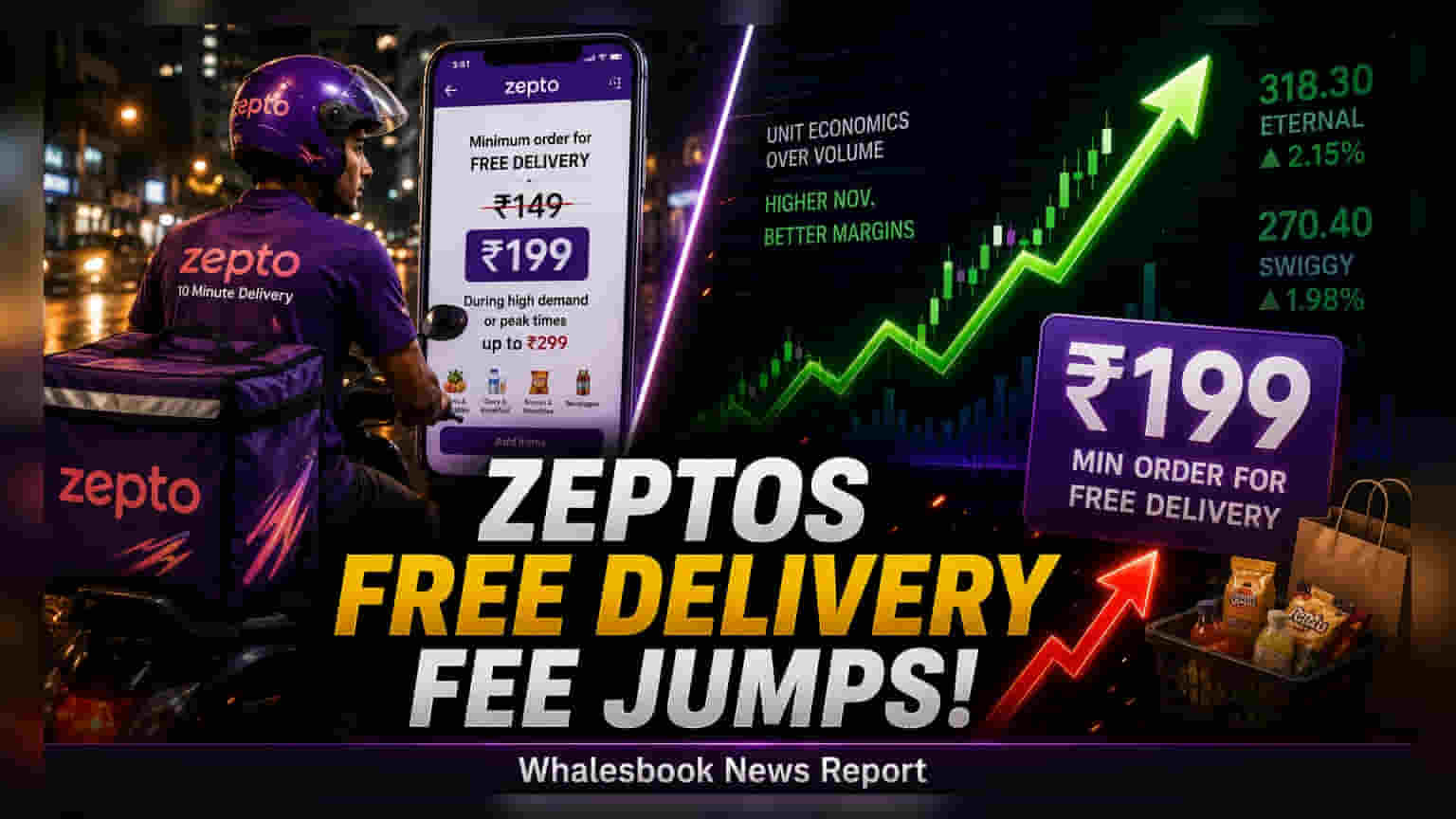
Quick commerce firm Zepto has raised its minimum order value for free delivery to Rs 199 from Rs 149. The threshold may reach Rs 299 during peak demand. This adjustment signals an industry-wide shift toward profitability over aggressive discounting. By aligning with peers like Blinkit and Swiggy, the company aims to improve its order economics and manage expenses more effectively.
Quick commerce platform Zepto has officially increased its minimum order value for free delivery to Rs 199, up from the previous limit of Rs 149. In certain high-demand scenarios or peak times, this threshold can increase to as much as Rs 299. This change, which began appearing for users on August 19, 2026, marks a significant shift in how the company manages its delivery costs.
This move aligns Zepto with its primary competitors, such as Blinkit (owned by Eternal) and Swiggy Instamart, who have already maintained similar policies. For years, the quick commerce industry focused heavily on rapid growth and aggressive discounting to capture market share. However, this latest policy change suggests a broader industry trend where players are now prioritizing "unit economics"—the profit made on each individual order—over sheer volume.
Analysts, including those from Kotak Institutional Equities, have pointed out that this adjustment is likely a strategic effort to improve the Net Order Value (NOV). By encouraging customers to add more items to their carts to avoid delivery fees, the company can spread its fixed delivery costs over a larger order size, which helps in managing overall quarterly expenses.
While Zepto is a private company, its operational changes are frequently watched by investors who track the broader quick commerce sector, including listed peers like Eternal and Swiggy. On August 19, market data showed Eternal shares trading around Rs 318.30, while Swiggy shares were trading near Rs 270.40. Investors often observe these industry-wide shifts to understand whether the sector is moving toward a more sustainable, profitable business model.
However, there are risks to this strategy. A higher free delivery threshold tests how sensitive customers are to prices. If the cost of delivery or the requirement for a larger order becomes too high, it might discourage users from placing small, convenience-led orders, which form a core part of the quick commerce model. The challenge for Zepto and its peers will be to raise these thresholds without causing a drop in the number of orders placed by customers.
The most important monitorable for investors and industry followers moving forward will be the impact of these changes on customer retention and order frequency. Future quarterly reports and management commentary will provide better clarity on whether this move successfully balances the need for improved profit margins with the need to keep users engaged on the platform.