

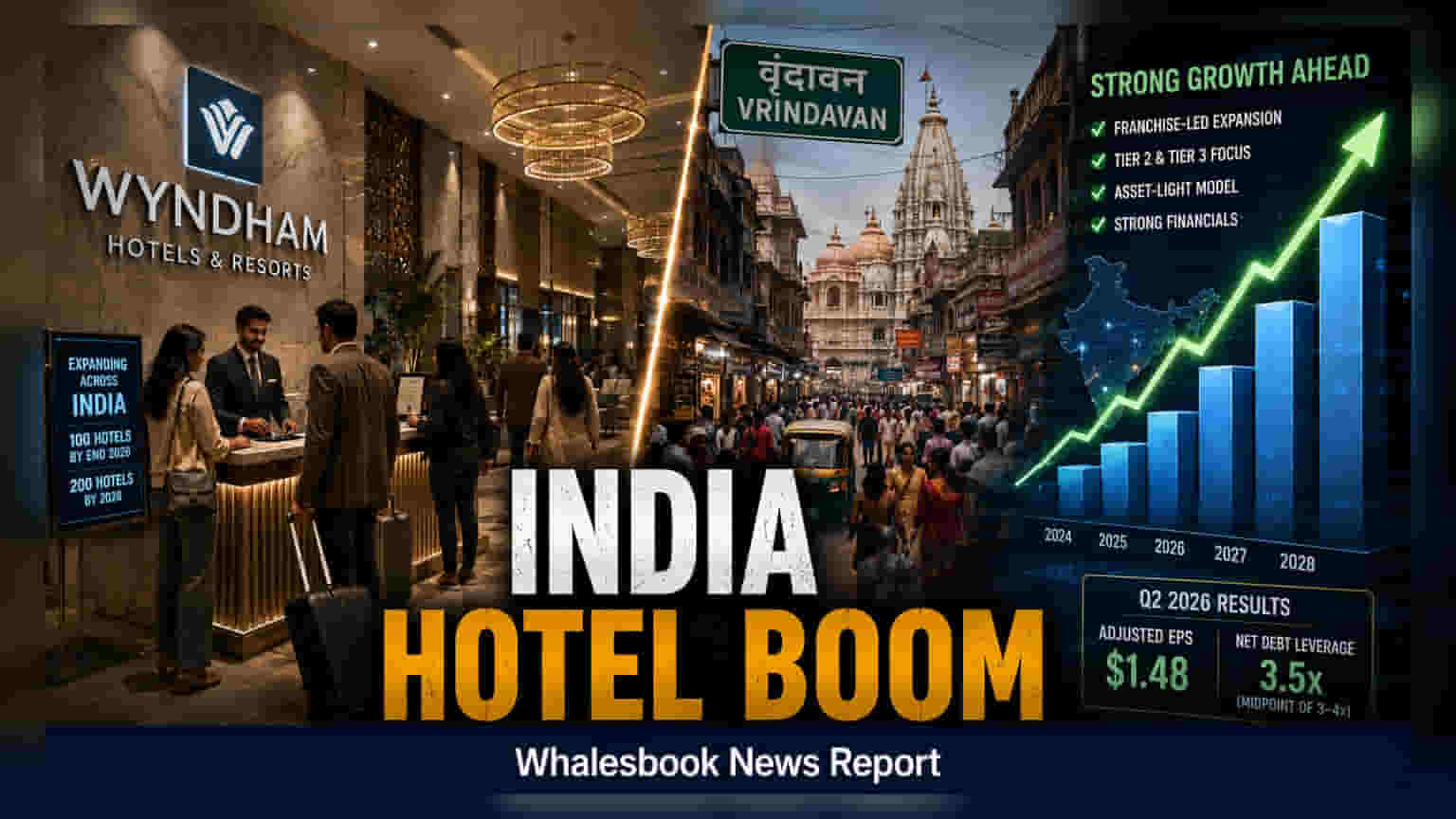
US-based Wyndham Hotels & Resorts aims to have 100 operational hotels in India by year-end 2026, with plans to double that figure by 2028. The company is using a franchise-heavy model to grow in smaller cities while managing debt carefully. Investors should track how effectively the firm manages operational costs and franchisee relations in these new markets.
Wyndham Hotels & Resorts is moving quickly to expand its footprint in India, with a stated goal of reaching 100 operational hotels by the end of 2026. The company’s growth plan extends beyond this short-term target, as it aims to double its total presence in the country to approximately 200 properties by 2028. To support this growth, the hospitality chain is introducing its 'Vienna House' brand to the Indian market, with the first 'Vienna House Easy' property already signed for Vrindavan, expected to open in 2029.
Franchise Strategy and Brand Focus
The company is relying on a franchise-led, asset-light business model to drive this expansion. Under this approach, Wyndham generally does not own the physical hotel buildings. Instead, it allows third-party local owners to operate properties under the Wyndham brand name. This strategy is central to its push into Tier 2 and Tier 3 cities, which the company views as key economic hubs for future hospitality demand. By letting local partners manage the development, Wyndham aims to reduce the money it needs to spend directly on property construction.
Financial Health and Risk Factors
Wyndham reported a solid second quarter in 2026, with an adjusted earnings per share (EPS) of $1.48, which performed better than many market estimates. The company has also maintained a disciplined approach to its balance sheet, reporting a net debt leverage ratio of 3.5 times as of June 30, 2026. This figure sits at the midpoint of its target range of 3 to 4 times, suggesting that the company is keeping its debt usage within its planned comfort zone.
However, there are risks that investors should consider. Because the company depends heavily on third-party franchisees to execute its growth plans, any slowdown in local economic conditions in Tier 2 and Tier 3 Indian cities could delay project timelines. Furthermore, the hospitality sector is currently facing pressure from rising labor and operational costs. While the asset-light model helps shield Wyndham from owning real estate, it does not fully insulate the brand from the broader impact of global economic uncertainty or a potential drop in discretionary travel spending.
Looking ahead, the key monitorable for investors will be the speed at which these signed properties actually open and begin generating revenue. The company’s ability to maintain high owner retention and ensure that its brand standards are met by franchisees across smaller Indian cities will be vital for long-term success.