 Whalesbook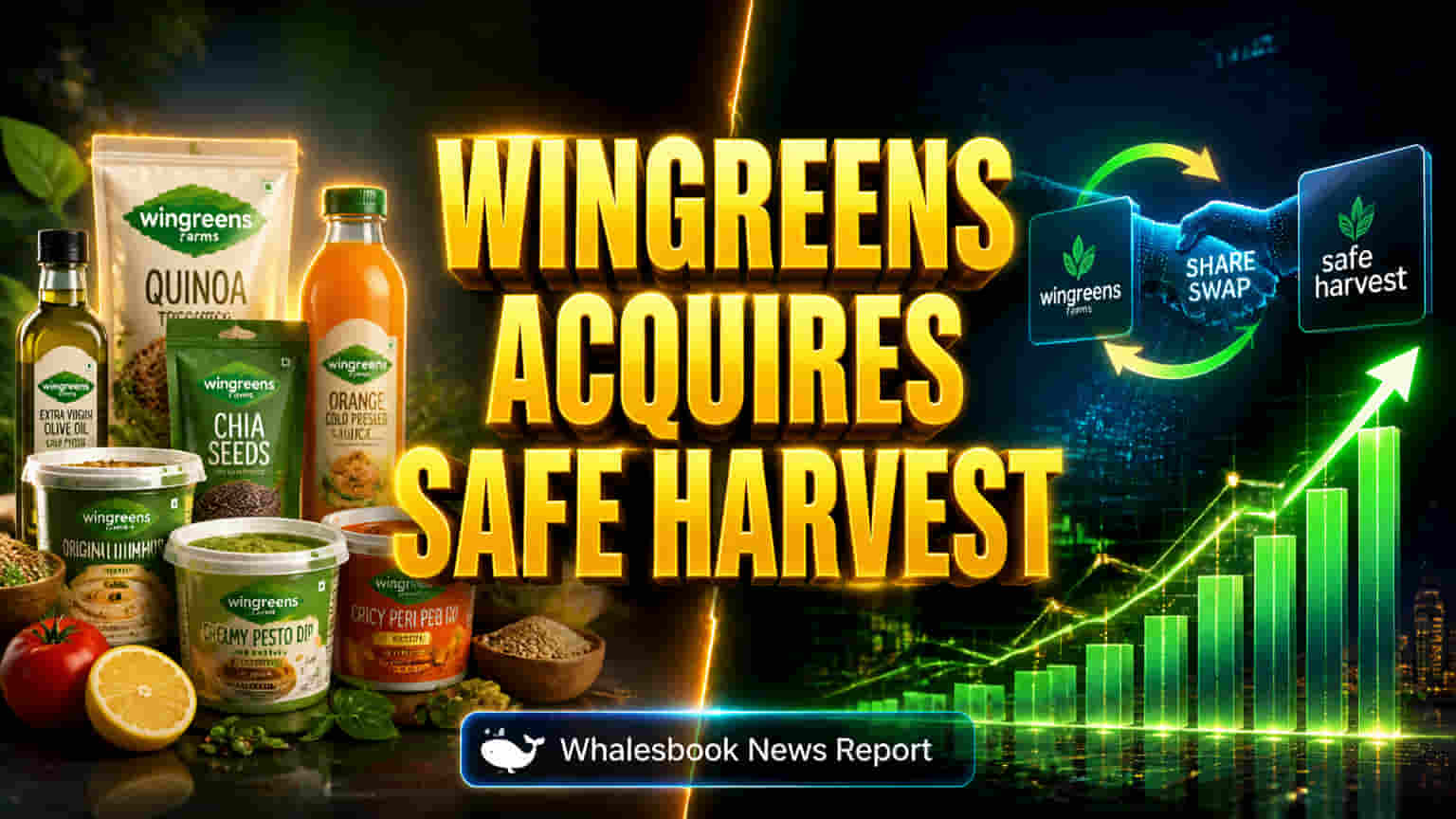


Wingreens Expands Health Portfolio with Safe Harvest Acquisition
Wingreens World's purchase of Safe Harvest is a key step in its strategy to combine brands within the fast-growing health and wellness market. Supported by significant funding and moving toward profitability, Wingreens is preparing for a possible stock market debut by capitalizing on changing consumer demand for natural products.
Deal Details and Financial Turnaround
The acquisition of Safe Harvest, which offers staples and cold-pressed oils, was completed through a share swap. This adds Safe Harvest's products, such as packaged cereals and natural oils, to Wingreens' existing brands like Wingreens Farms dips and Raw Pressery juices. The deal followed a Series D funding round that provided over ₹120 crore cash, contributing to Wingreens World's total capital raised of ₹556 crore. Investor Ashish Kacholia led this round. Wingreens World's revenue reached ₹362 crore in FY26, up from ₹289 crore in FY25. Importantly, the company turned profitable at the EBITDA level in FY26, a significant improvement from a ₹65 crore loss in FY24, showing stronger operational results. This progress supports its plan to seek a public listing within two years.
Market Growth and Competitive Landscape
Wingreens' acquisition strategy occurs as India's consumer health and wellness markets see strong growth and consolidation. The organic food and beverage sector is projected to grow to over $7.6 billion by 2030, with a compound annual growth rate (CAGR) of about 20.8%. The ready-to-eat meals market is also expected to more than double by 2034, driven by convenience and lifestyle changes. Wingreens' reported FY26 revenue of ₹362 crore shows growth, though it's smaller than major companies like Hindustan Unilever (HUL), which had FY25 revenues of ₹63,121 crore, or Marico, with ₹13,611 crore in FY26. Publicly traded rivals like HUL and Marico trade at P/E ratios between 33-55 and 59-60 respectively as of May 2026. Tata Consumer Products has a P/E ratio of around 71-80. Wingreens' ability to attract substantial funding and achieve positive operating earnings (EBITDA) before an IPO suggests investors believe in its growth potential in these expanding markets. Large players like HUL have also acquired brands, such as OZiva, to strengthen their portfolios, reflecting a broader industry trend toward consolidation to increase market share and access new innovations.
Facing Fierce Competition and Execution Hurdles
Despite positive developments, Wingreens World faces significant challenges. The fast-moving consumer goods (FMCG) and health & wellness sectors are highly competitive. Established companies like HUL and Marico have extensive distribution networks, strong brand loyalty, and substantial financial power that can challenge newer brands. Although Wingreens achieved positive operating earnings (EBITDA) in FY26, it reported net losses in FY24, meaning a path to consistent net profit still requires careful management. Integrating Safe Harvest brings execution risks; any delays or inefficiencies could slow the company's growth and affect its IPO readiness. The valuation from its funding rounds will face scrutiny, requiring strong future growth and profitability to justify the investment. If Wingreens fails to deliver consistent, significant growth after the acquisition, investors may become hesitant, especially as it prepares to go public.
Outlook for IPO Readiness
Wingreens World's acquisitions and funding rounds are aimed at growing its size and market presence before a public listing within two years. The company's success will depend on effectively integrating Safe Harvest, maintaining its growth rate, and moving from positive operating earnings to consistent net profit. Ongoing consolidation in the consumer health and wellness sector suggests Wingreens might continue buying companies or could itself become a target for larger groups seeking entry into fast-growing niche markets. Investors will closely watch its financial performance and strategic execution as it moves through this expansion phase toward its IPO goal.