

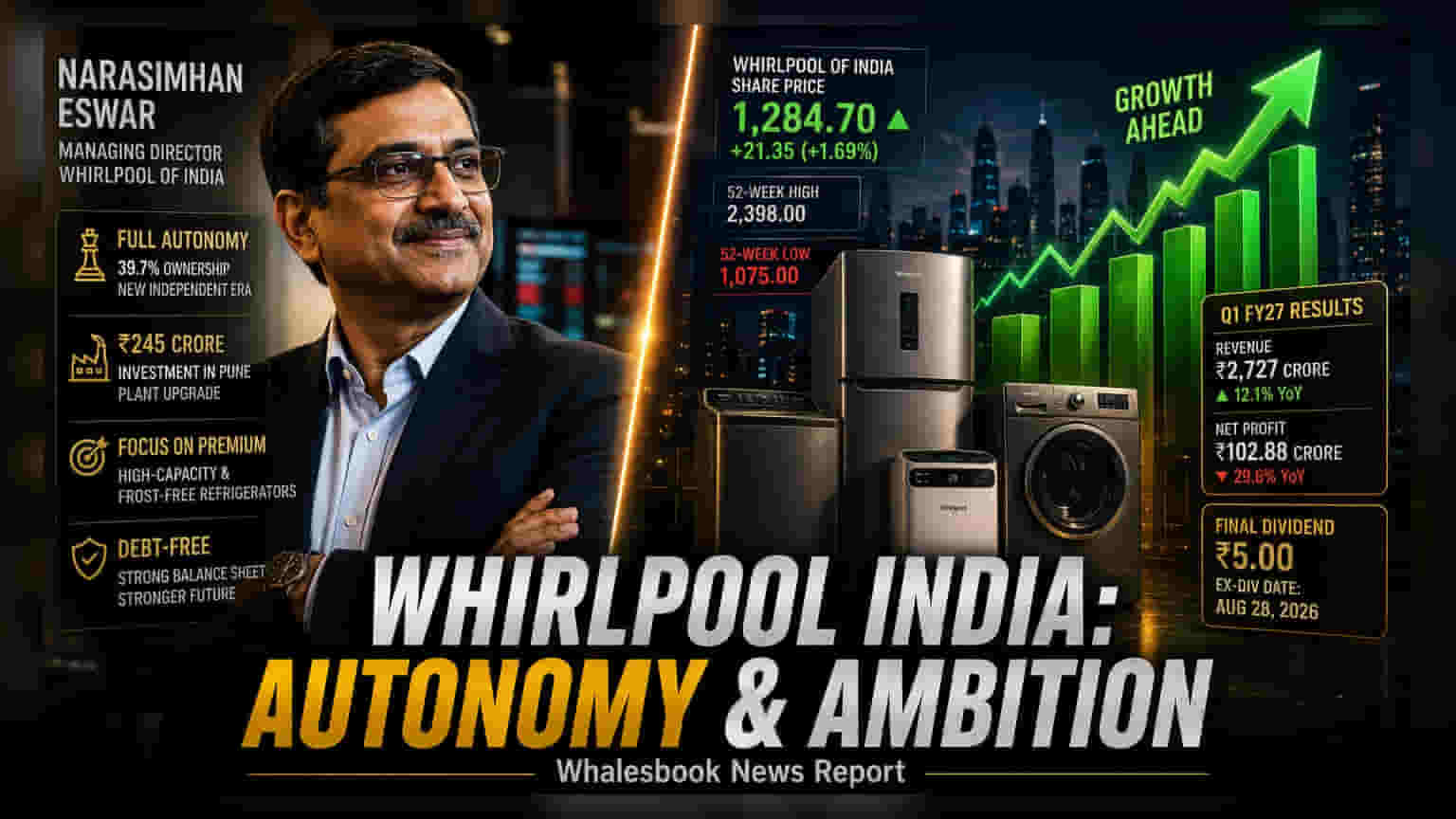
Whirlpool India is shifting to an independent operational model, supported by a ₹245 crore manufacturing expansion into premium products. While Q1 revenue grew 12%, profits fell 29.6% due to high input costs. Senior management has purchased personal shares to signal confidence after the stock dropped nearly 46% from its yearly peak.
Whirlpool of India is entering a new phase of independence as its U.S. parent, Whirlpool Corporation, reduces its ownership to 39.7%. This change grants the Indian board full control over business decisions, capital allocation, and long-term strategy, marking a departure from the previous model where the parent company heavily influenced the local entity’s direction.
To drive future growth, the company is aggressively targeting the premium home appliance segment. It has invested ₹245 crore to upgrade its Pune manufacturing facility, specifically focusing on high-capacity and frost-free refrigerators. This investment is central to the company’s goal of improving its presence in higher-value product categories, which typically carry better profit margins than entry-level appliances.
The company’s recent financial results show a complex picture. In the first quarter of fiscal year 2027, consolidated revenue increased by 12.1% year-on-year to ₹2,727 crore, reflecting steady demand for its core products. However, net profit dropped by 29.6% to ₹102.88 crore. This decline was primarily driven by persistent input cost pressures and commodity inflation, which squeezed profit margins despite the revenue growth.
Investor sentiment has been tested, with the stock price falling roughly 46% from its 52-week high as investors reacted to the parent company’s stake sales. In a move to demonstrate belief in the company’s turnaround strategy, six senior executives, including the Managing Director and CFO, recently used personal savings to purchase shares in the company. The firm remains debt-free, which provides a financial cushion as it navigates these challenging market conditions.
The company has also announced a final dividend of ₹5.00 per share, with an ex-dividend date of August 28, 2026. Looking ahead, investors should watch whether the new premium product lines can help the company recover its profit margins in the face of ongoing supply chain and raw material cost pressures. Success in executing this pivot toward premium models will be a key factor for shareholders to monitor in the coming quarters.