

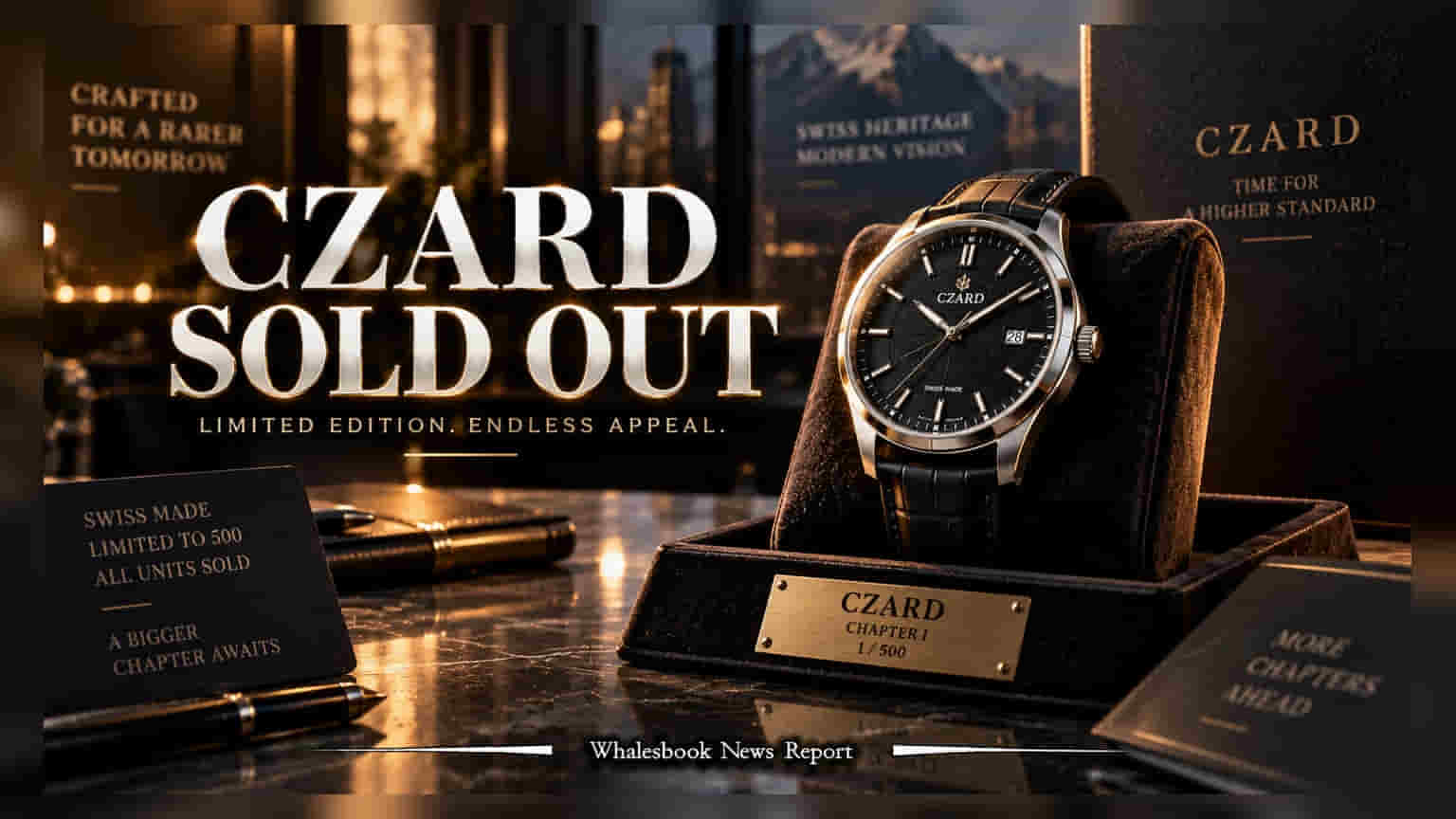
Luxury startup CZARD sold out its debut batch of 500 numbered timepieces shortly after its August 15 launch in India. While not a publicly traded entity, the brand's rapid sellout and planned expansion to Dubai highlight the potential of scarcity-based business models. The company is now preparing a 1,000-unit release to test long-term demand.
Private watchmaker CZARD made its entry into the Indian luxury market on August 15. The startup, which operates through a private partnership firm, managed to sell its initial collection of 500 numbered timepieces in a very short timeframe. It is important for market observers to note that CZARD is a private entity and is not listed on the National Stock Exchange (NSE) or the Bombay Stock Exchange (BSE).
The company’s business model centers on what it calls a 'chapter' system. By limiting production runs to 500 units and numbering each watch on the caseback, the brand focuses on driving demand through artificial scarcity. This strategy is designed to appeal to collectors who prioritize exclusivity. By incorporating Swiss-made movements, specifically the Sellita SW261-1, the brand aims to position itself in the entry-level luxury segment, targeting consumers who value mechanical watchmaking at a specific price point.
With the first batch now sold out, the company is preparing to scale its next production run to 1,000 units. The brand is also planning to expand retail operations into Dubai, a market known for its significant watch collector base. This international expansion suggests management views the initial Indian sellout as a viable proof of concept rather than a one-time event.
However, this model carries specific operational and business risks. Transitioning from a small, scarcity-driven launch to larger production volumes is a common hurdle for new luxury entrants. The company must prove that it can maintain consistent demand as the novelty factor diminishes and the supply increases. Furthermore, the firm manages a complex supply chain involving operations in Geneva, Helsinki, and Surat, which requires precise logistics and quality control.
Additionally, the startup has faced some external scrutiny regarding its brand identity. Public commentary has raised questions regarding similarities between the CZARD logo and that of other established institutions. Such concerns, if not addressed, can create risks related to brand reputation or intellectual property, which are critical for any business looking to establish a long-term luxury presence.
For those monitoring the consumer goods and startup space, the next important update will be how the brand manages its production increase. Future performance will depend on whether the company can successfully navigate these scaling challenges while maintaining the perceived value of its 'chapters' in a competitive and crowded watch market.