

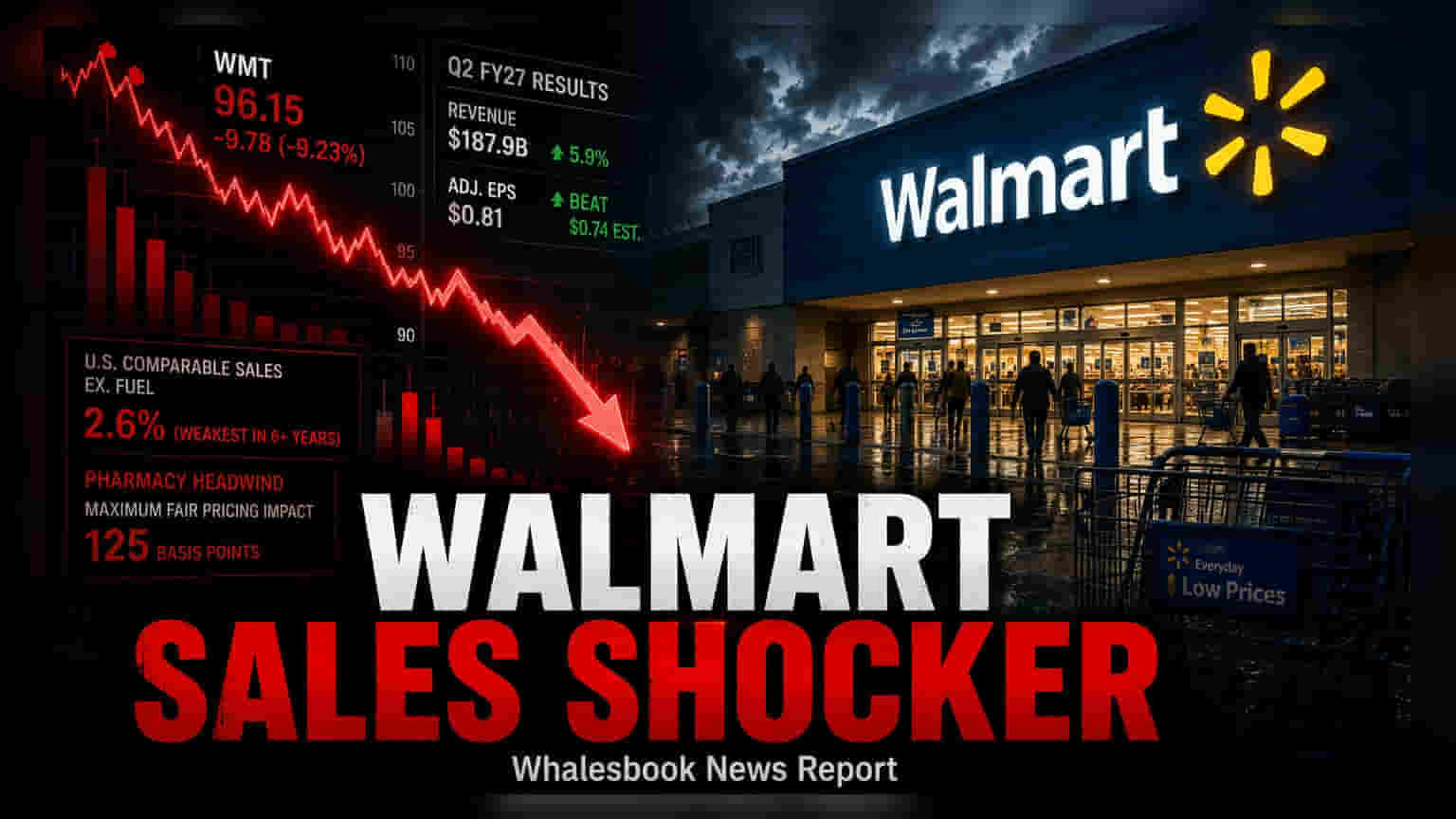
Walmart shares dropped nearly 10% on August 20, 2026, as investors reacted to the slowest US comparable sales growth in over six years. While the retailer exceeded quarterly profit and revenue expectations, a 2.6% growth figure, impacted by pharmacy pricing regulations, weighed on market sentiment. The company also raised its full-year guidance, balancing the immediate concern of decelerating consumer spending with a long-term focus on price leadership.
Walmart Inc. saw its stock price decline by approximately 10% on August 20, 2026, despite reporting financial results for the second quarter of fiscal 2027 that topped analyst expectations. The company generated $187.9 billion in revenue, reflecting a 5.9% year-over-year increase, and reported an adjusted earnings per share of $0.81, beating the market estimate of $0.74. However, investors shifted their focus to a specific deceleration in the company's core U.S. business.
Sales Growth Slowdown
The primary concern for the market was the 2.6% growth in U.S. comparable store sales, excluding fuel. This performance represents the weakest growth rate in more than six years. The company identified a specific drag on this figure, noting that federal drug pricing regulations—specifically regarding Maximum Fair Pricing—created a 125-basis-point headwind for the pharmacy segment. While management described this as a temporary regulatory issue, it arrived during a period of heightened sensitivity regarding consumer spending habits.
Strategic Investments and Guidance
Despite the sales growth challenges, Walmart maintained a confident outlook by raising its full-year guidance for both sales and adjusted operating income. The company is continuing its strategy of price investments, having lowered the prices on over 11,000 items during the quarter to maintain its competitive advantage in a budget-conscious retail environment. This approach is designed to capture market share from competitors, even as the broader economic landscape remains difficult for some consumer segments.
E-commerce and Market Position
Growth in the company’s digital operations remained a bright spot, with e-commerce continuing to serve as a significant driver of volume. The integration of online and in-store shopping remains a priority, with investments in delivery speed and product variety aimed at increasing customer frequency. While the company's business model is centered on volume, the current market reaction reflects investor caution regarding whether such aggressive price investments can be sustained without putting long-term profit margins under pressure.
For investors, the key monitoring point will be whether the sales growth deceleration is truly limited to the regulatory impact in the pharmacy segment or if it signals a broader, more persistent weakening in consumer demand. As the largest retailer in the United States, Walmart is often viewed as a global indicator for consumer health, and the market is currently balancing the company’s operational efficiency against these macroeconomic signals. As Walmart is not listed on the National Stock Exchange or Bombay Stock Exchange, Indian investors tracking global retail trends should note that these results impact global sentiment rather than local equity indices directly.