

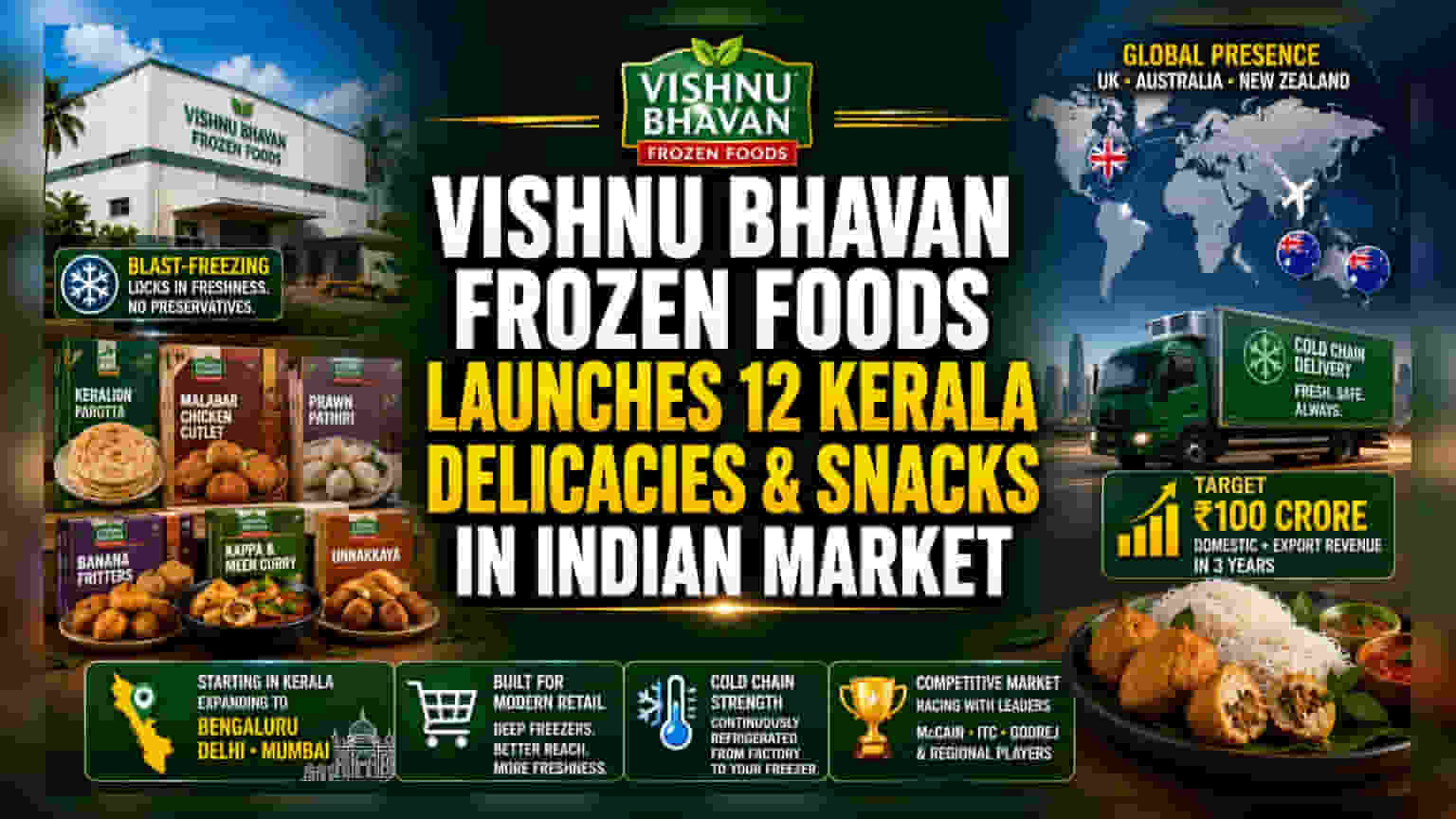
Vishnu Bhavan Frozen Foods has launched a range of frozen Kerala snacks, aiming for ₹100 crore in sales within three years. Backed by the promoters who previously managed the popular Brahmins brand, the company will use its Thodupuzha facility to cater to both domestic and export markets.
What Happened
Vishnu Bhavan Frozen Foods has officially entered the Indian consumer market with a new line of frozen Kerala delicacies and tea-time snacks. The company, based in Thodupuzha, Kerala, has unveiled an initial portfolio of 12 products. To maintain freshness without using preservatives, the company is using blast-freezing technology, which freezes food extremely quickly to preserve texture and flavor. The facility has an annual production capacity of 18 lakh kilograms, or 1,800 metric tonnes. While the company already has an established export business in countries like the UK, Australia, and New Zealand, this marks its formal push into the domestic Indian market, starting with Kerala and expanding to major metros like Bengaluru, Delhi, and Mumbai.
The Business Pivot From Spices To Frozen
This venture is led by the promoters who were previously associated with the Brahmins brand, a well-known name in the Kerala spice and food mix market. The Brahmins brand was acquired by Wipro Consumer Care in 2023. With their established experience in the food industry, these promoters are now pivoting to the frozen food category. This change involves shifting from ambient-stable products—like spice powders which have a long shelf life and are easy to store—to frozen products that require an entirely different business model.
The Challenge Of The Frozen Market
Entering the frozen food market is structurally different from selling dry groceries. The biggest hurdle for any frozen food company in India is the 'cold chain.' This refers to the need for continuous refrigerated storage and transport from the factory to the supermarket shelf and finally to the customer's home. If the temperature chain is broken, the product spoils. Building this infrastructure is capital-intensive and requires high operational spending on electricity and specialized logistics. Additionally, the Indian market is highly competitive, with established players like McCain, ITC, Godrej, and various regional brands already fighting for freezer space in retail stores.
Scaling To ₹100 Crore
Vishnu Bhavan has set a target of ₹100 crore in combined domestic and export revenue over the next three years. Success in reaching this figure will depend on how efficiently the company can manage its distribution network. Unlike shelf-stable products, frozen foods cannot be sold through every small retail outlet. They require stores that have reliable deep freezers. The company’s ability to secure placement in modern trade outlets and large supermarkets will be the primary driver of this revenue goal.
What Investors Should Monitor
For those tracking the broader food and beverage sector, this launch highlights the ongoing shift toward ready-to-eat and processed foods in India. Key monitorables for the company's growth will include its ability to expand its distribution footprint beyond Kerala, the acceptance of its products in competitive metro markets, and its management of logistical costs. Investors may also track how the company balances its export business with the new domestic expansion, as export markets often have different regulatory standards and pricing structures compared to the domestic market.