

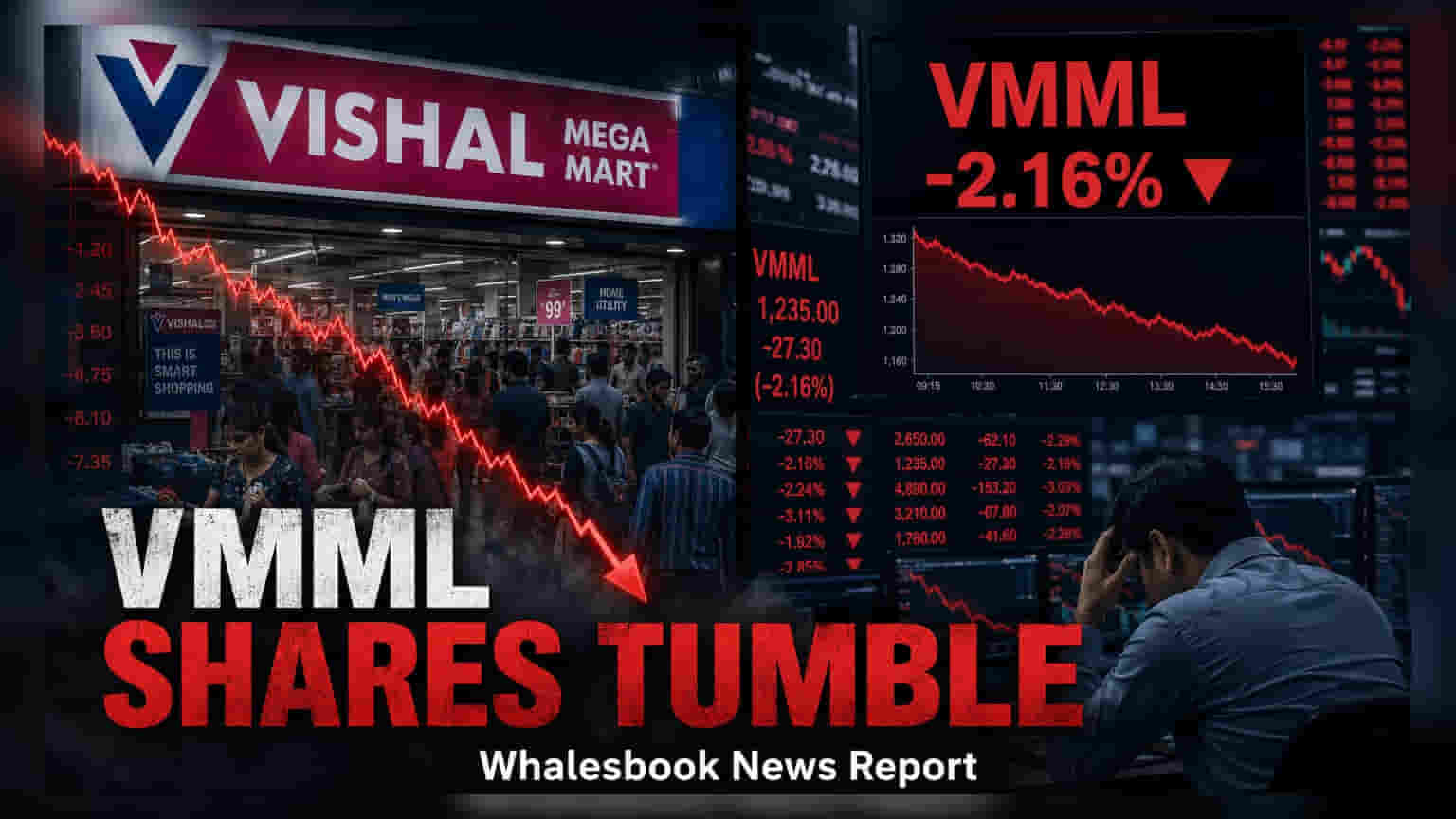
Vishal Mega Mart shares saw a decline on August 5, 2026, amid a shift in technical sentiment. Despite reporting strong double-digit growth in revenue and profit for the June quarter, the stock faced selling pressure within the Nifty Midcap 150 index.
Vishal Mega Mart Limited shares traded lower on August 5, 2026, as the stock experienced bearish technical momentum. As part of the Nifty Midcap 150 index, the company's price movement reflects a shift in market sentiment, where technical signals currently suggest a cautious short-term outlook, often leading to profit booking by traders.
This price adjustment comes despite the company reporting consistent financial growth. For the fiscal year ending March 2026, Vishal Mega Mart posted a consolidated revenue of Rs 12,906.32 crore, up from Rs 10,716.35 crore in the previous year. Net profit also rose significantly, increasing by 32.80% to Rs 839.23 crore. This growth trend continued into the first quarter of the new fiscal year, with revenue for the period ended June 2026 reaching Rs 3,727.01 crore, an 18.68% increase year-over-year. Net profit for the same quarter was Rs 258.77 crore, representing a 25.57% rise.
While the company has shown clear operational growth, investors are paying close attention to valuation and broader market trends. The stock currently trades at a multiple of over 7 times its book value, a level that some market participants consider high. Additionally, the company does not currently distribute dividends, which is a factor investors often weigh when assessing retail stocks.
In terms of corporate governance, the company’s board has recently approved a limit on aggregate foreign ownership, capping it at 49.99%. This move is part of the company's broader regulatory and structural management. From a sector perspective, the retail industry continues to face challenges, including rising operational costs and changing consumer demand patterns. These factors can put pressure on profit margins, regardless of revenue growth.
Going forward, the key for shareholders will be how the company balances its expansion with cost management. Investors may want to track whether the company can maintain its double-digit growth rates in upcoming quarters and how the stock interacts with its current technical support levels.