

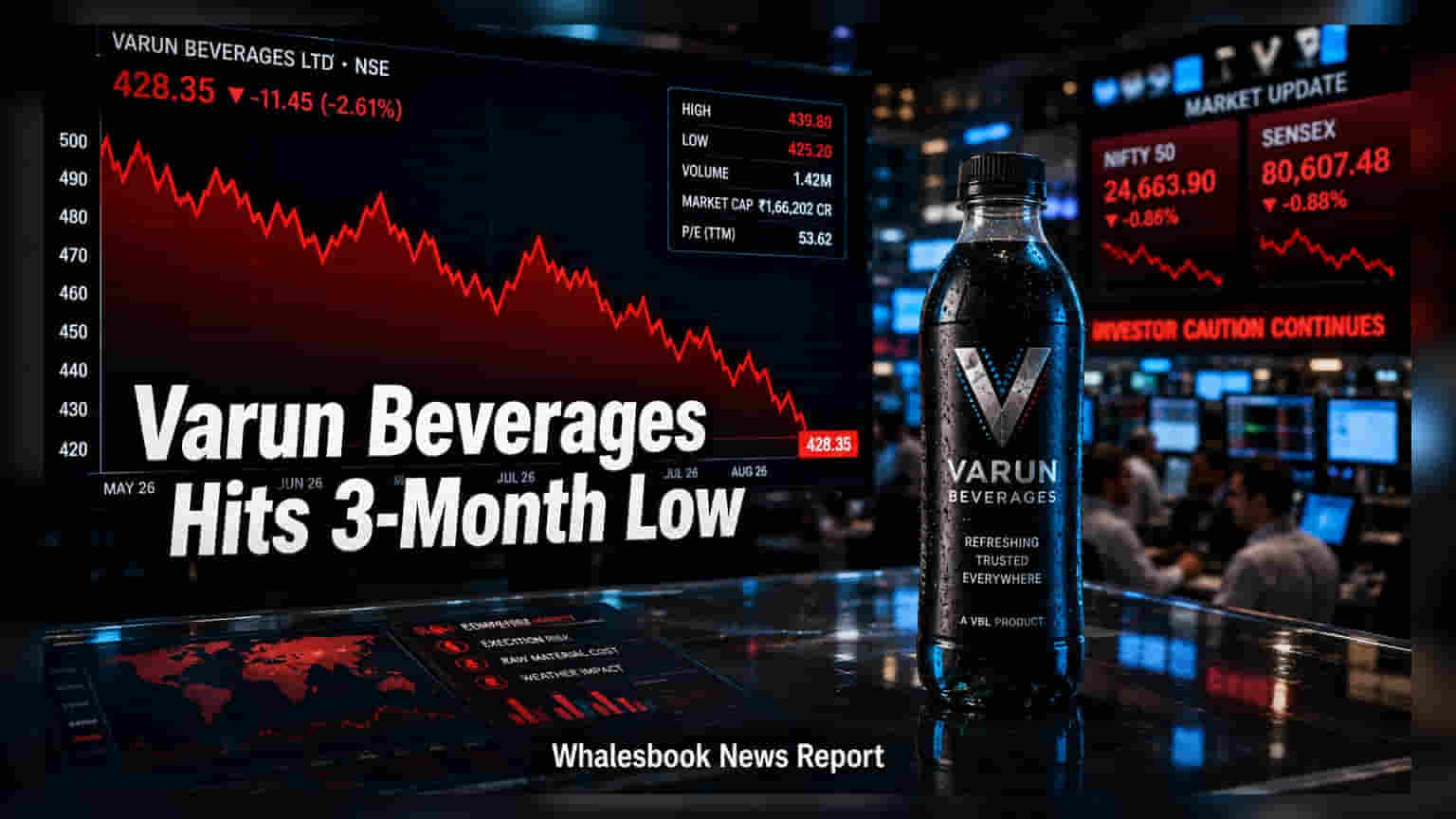
Varun Beverages stock slipped nearly 3% on Wednesday as the market reacted to the company's entry into the ready-to-drink alcoholic beverages market. The company is forming a new subsidiary and expanding in Tunisia, though investors are focused on margin pressures and execution risks.
Varun Beverages Limited (VBL) shares saw downward pressure on Wednesday, trading between ₹425 and ₹431, marking a decline of approximately 2.6% to 3%. This movement comes as the company navigates a volatile trading period, despite announcing a significant strategic shift aimed at diversifying its business. The drop reflects a broader trend of investor caution, even as the firm steps into new growth areas.
Strategic Foray into Alcohol and International Expansion
The company announced its entry into the ready-to-drink (RTD) alcoholic beverages and allied products segment on August 25, 2026. To manage this new line of business, VBL is incorporating a wholly-owned subsidiary named KIVA Spirits and Company Limited, with an authorized share capital of ₹10 crore. The firm has appointed Prathmesh Mishra, a former Diageo executive with over 30 years of industry experience, to lead this initiative as CEO and Managing Director.
In addition to the domestic alcohol venture, Varun Beverages is expanding its core business footprint internationally. The company is establishing a joint venture in Tunisia, where it will hold a 75% stake. This move is designed to scale up the production and distribution of its carbonated soft drinks, juices, and dairy products in the region, continuing its strategy of geographic diversification.
Financial Performance and Execution Risks
While these expansion moves signal a long-term growth plan, the immediate investor reaction appears focused on the company's financial health and execution hurdles. In the second quarter of the 2026 calendar year, VBL reported a 20.4% year-on-year increase in revenue to ₹8,451 crore and a 15.1% rise in net profit to ₹1,525 crore. However, EBITDA margins tightened by 76 basis points to 27.7%. This pressure on margins is largely attributed to the consolidation of the lower-margin Twizza business, an acquisition the company has been integrating into its portfolio.
The alcoholic beverage segment in India is highly competitive and requires significant money spent on expansion and brand building. Entering this market introduces new execution risks, as the company must navigate different regulatory environments and consumer preferences compared to its core soft drink business. Furthermore, the firm remains exposed to broader macro risks, such as potential fluctuations in PET resin costs, which are linked to crude oil prices, and the need for favorable weather conditions to support the high-volume sales of its core beverage products. Investors may continue to monitor whether the company can maintain its profitability levels as it balances these new, capital-intensive projects with the consolidation of existing international acquisitions.