

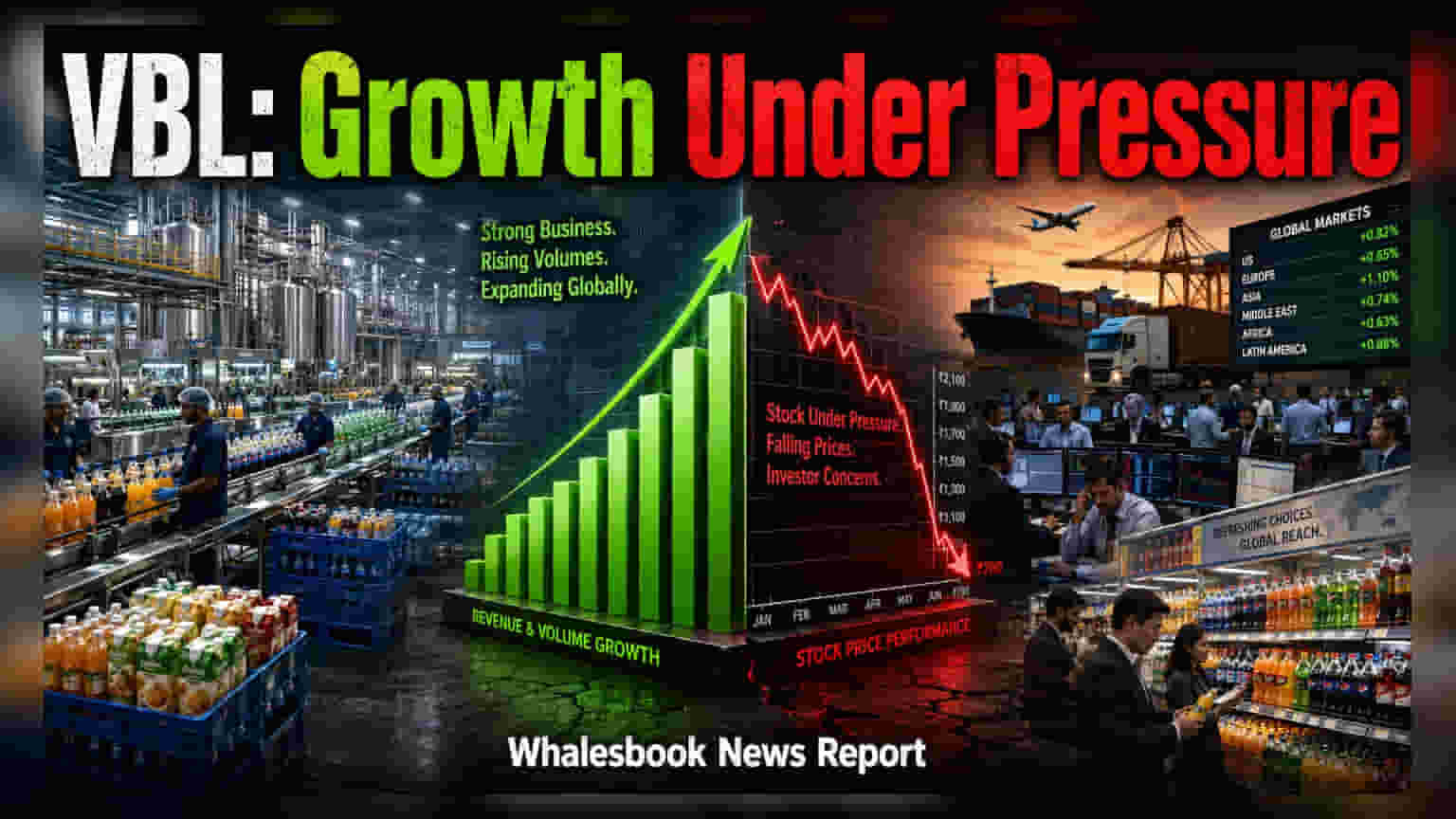
Varun Beverages reported a 15.1% rise in Q2 CY2026 net profit to ₹1,525.36 crore, driven by robust volume growth. However, the stock has faced pressure as consolidated EBITDA margins contracted by 76 basis points due to the integration of the lower-margin Twizza business. Investors are weighing this short-term margin dilution against the company's aggressive international expansion strategy.
Varun Beverages (VBL), a key franchise partner for PepsiCo, reported a 15.1% increase in its net profit to ₹1,525.36 crore for the second quarter of calendar year 2026. Despite the double-digit profit growth, the company’s share price has faced a correction of nearly 13% over the past three months. This market reaction reflects investor caution regarding a slight compression in profit margins as the company pursues an aggressive international expansion strategy.
The core of the margin pressure stems from the company's inorganic growth strategy. While consolidated sales volumes grew by 19.8% to 466.7 million cases, the consolidated EBITDA margin contracted by 76 basis points to 27.7%. This dip is primarily attributed to the integration of the South African business Twizza, which operates on lower margins compared to VBL's established domestic operations. For investors, the key factor is whether the company can successfully improve the efficiency of these newly acquired assets to align them with its overall profitability standards.
Operational performance remains a bright spot, with domestic volume growth of 14.4% and a sharp 38.4% jump in international market volumes. The company is actively diversifying its portfolio beyond traditional carbonated soft drinks, which currently make up a large portion of its volume. Newer categories, including value-added dairy and juices, are gaining traction. This diversification is critical for mitigating the seasonality of the soft drink business, as the company seeks to maintain consistent growth throughout the year.
Expansion efforts continue to be a primary driver of the company's capital allocation. VBL recently completed the acquisition of DFIL Kenya assets, effective August 1, 2026, further strengthening its footprint in the African market. This follows the broader strategy of leveraging its long-term bottling agreement with PepsiCo, which extends until 2049, to scale operations across new geographies. However, these rapid expansions come with execution risks, including the challenge of maintaining margin profiles while scaling supply chains in different regulatory and economic environments.
Beyond expansion, the company faces persistent risks related to input costs. Fluctuations in the prices of crude oil derivatives, which impact PET resin costs, and changes in sugar prices remain significant variables. Additionally, domestic volumes are sensitive to unseasonal weather conditions, which can dampen demand during the peak summer months. As the company continues to integrate its recent acquisitions, investors will likely track the trajectory of EBITDA margins and the management's ability to offset rising input costs through operational efficiencies and product mix improvements.