

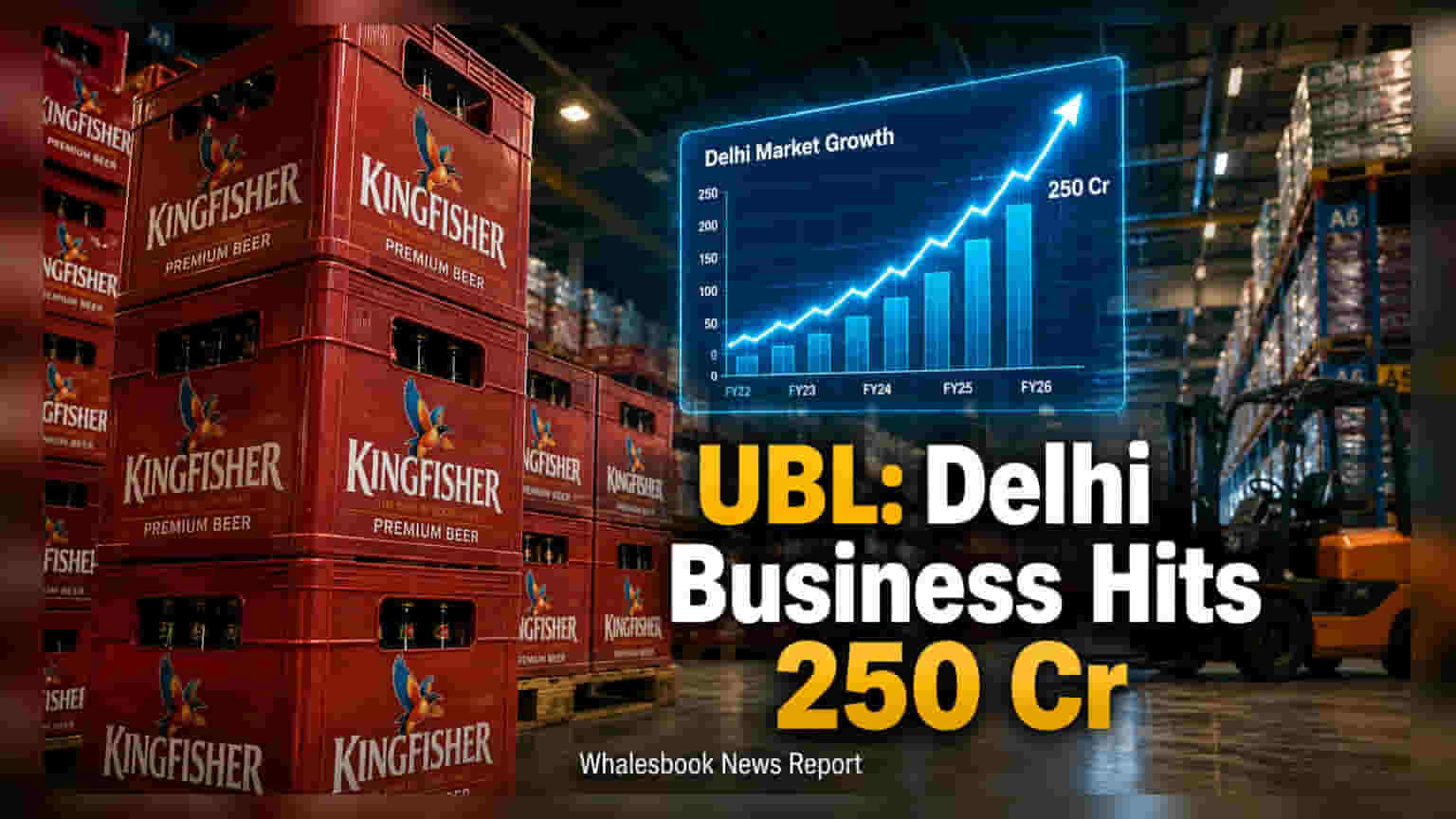
United Breweries has reached an annual revenue run rate of Rs 250 crore in Delhi following a successful shift in its distribution strategy. While the company is seeing strong sales growth in its premium beer portfolio, it continues to face pressure on profit margins due to rising logistics and packaging costs. Investors are watching how these operational gains balance against the company's recent quarterly profit decline.
United Breweries has revitalized its position in the national capital, with the company's beer business in Delhi hitting an annual revenue run rate of Rs 250 crore. This milestone follows a strategic transition to Adie Broswon Distribution as its local partner, which has helped the company bridge the gap between strong consumer demand and actual product availability at retail stores.
Sales Trends and Premium Growth
The Delhi market recorded volumes of 1.5 million cases in the fiscal year 2025-26. Kingfisher Strong continues to be a major contributor, clearing 1 million cases and establishing a 10% market share in the region. Beyond the core portfolio, the company is seeing a shift toward higher-value products. Sales volumes for Kingfisher Ultra Max grew by over 235%, while Kingfisher Ultra saw an increase of more than 115% in the same period. This trend aligns with the company’s wider effort to push premium offerings across the country, further evidenced by the recent expansion of the Heineken Silver brand into states like Kerala, Odisha, and Madhya Pradesh.
Financial Reality and Margin Pressure
While the operational improvements in Delhi offer a positive outlook, the company’s broader financial health faces challenges. In its results for the June quarter of fiscal 2027, United Breweries reported a 10% increase in consolidated revenue, reaching Rs 5,919.44 crore. However, its net profit declined by 9.64% to Rs 166.28 crore. The primary reason for this dip is the squeeze on profit margins caused by rising costs in packaging, logistics, and exports. Geopolitical instability in West Asia has intensified these pressures, with the annual cost impact on the business estimated between Rs 350 crore and Rs 400 crore.
Risks and Market Reaction
Investors are also tracking regulatory and compliance risks that could affect the bottom line. The company has faced specific demands from local authorities, such as the contested Rs 116.25 crore market committee fee notice in Patiala, which highlights the regulatory risks inherent in the alcohol industry. Additionally, the beer market remains highly competitive, with constant pressure to secure shelf space and maintain volume growth.
On August 26, 2026, the company’s shares were trading around Rs 1,356.70. The stock showed a modest positive reaction, reflecting investor interest in the ongoing expansion of the premium portfolio despite the headwinds in profitability. Moving forward, shareholders will likely monitor how effectively the company can control its input costs and whether these distribution improvements can be successfully replicated in other key markets to help stabilize profit margins.