
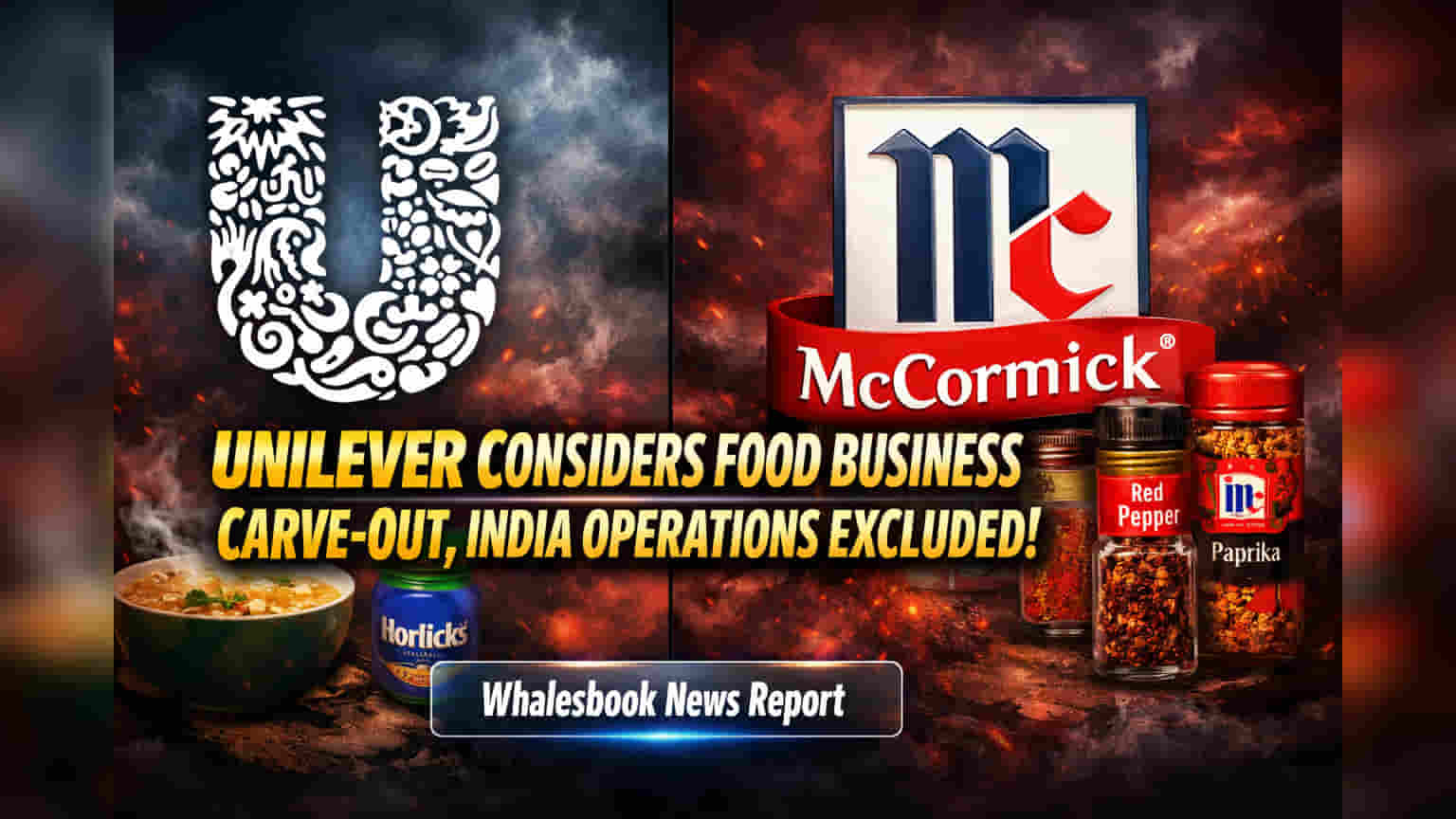
Unilever Plc is reportedly in advanced talks to merge a large part of its global food business with spice maker McCormick & Company. Both companies have confirmed the discussions. The deal is expected to use a tax-efficient structure and could be worth about $15.7 billion, with Unilever shareholders potentially owning around 65% of the new combined company. A key part of the deal is that it will not include Hindustan Unilever's (HUL) significant and growing food operations in India.
India Operations Key, Global Business Faces Challenges
Hindustan Unilever Limited (HUL) has stressed that its food business is a core and vital part of its operations, bringing in over ₹15,000 crore annually, or about 22% of its total sales. The Indian unit leads in key areas such as tea, ketchup, and malted drinks. This focus on India stands in contrast to Unilever's global packaged foods division. While this global division contributes over a quarter of the group's sales, it faces increasing challenges. These include changing consumer tastes away from highly processed foods, stronger competition from store brands, and a potential shift in demand linked to the rise of weight-loss medications.
Company Valuations and Stock Performance
Unilever's price-to-earnings (P/E) ratio over the past 12 months is between 20.03 and 26.4. This is similar to PepsiCo (25.1x-26.4x) but higher than Reckitt Benckiser (10x). Unilever's market value is estimated between $107.6 billion and $129.59 billion. McCormick, on the other hand, has a P/E ratio of about 18.11-18.3 and a market value around $14.25 billion. McCormick's stock has dropped 34.88% in the last year, while Unilever's stock is down 10.50%, showing wider difficulties in the consumer goods market.
Analyst Views and Potential Risks
Analysts generally see the potential deal as a positive move for McCormick, expecting significant strategic benefits. Bank of America Securities has a 'Buy' rating and an $80 price target, believing the deal will boost earnings. TD Cowen and Bernstein also express optimism. However, some analysts, like Stifel, have reduced price targets because of rising costs and recent profit shortfalls, while still holding a positive outlook. The deal does carry risks. Unilever's global food business faces changing demand and competition. Successfully combining Unilever's wide range of food products into McCormick's structure will be a major challenge. McCormick's stock has also struggled, suggesting wider issues in the sector.
Future for the Merged Food Business
If the merger goes through, it would create a much larger company in the spice and flavor industry. This could give McCormick greater scale, a wider range of products, and more global reach. By selling off its slower-moving food assets and keeping its fast-growing Indian division, Unilever hopes to simplify its business and concentrate on livelier parts of the consumer market. The Indian FMCG market, growing at a rapid 27.9% annually, offers a clear alternative to the difficulties seen in developed markets, highlighting why keeping HUL's operations separate makes strategic sense.