

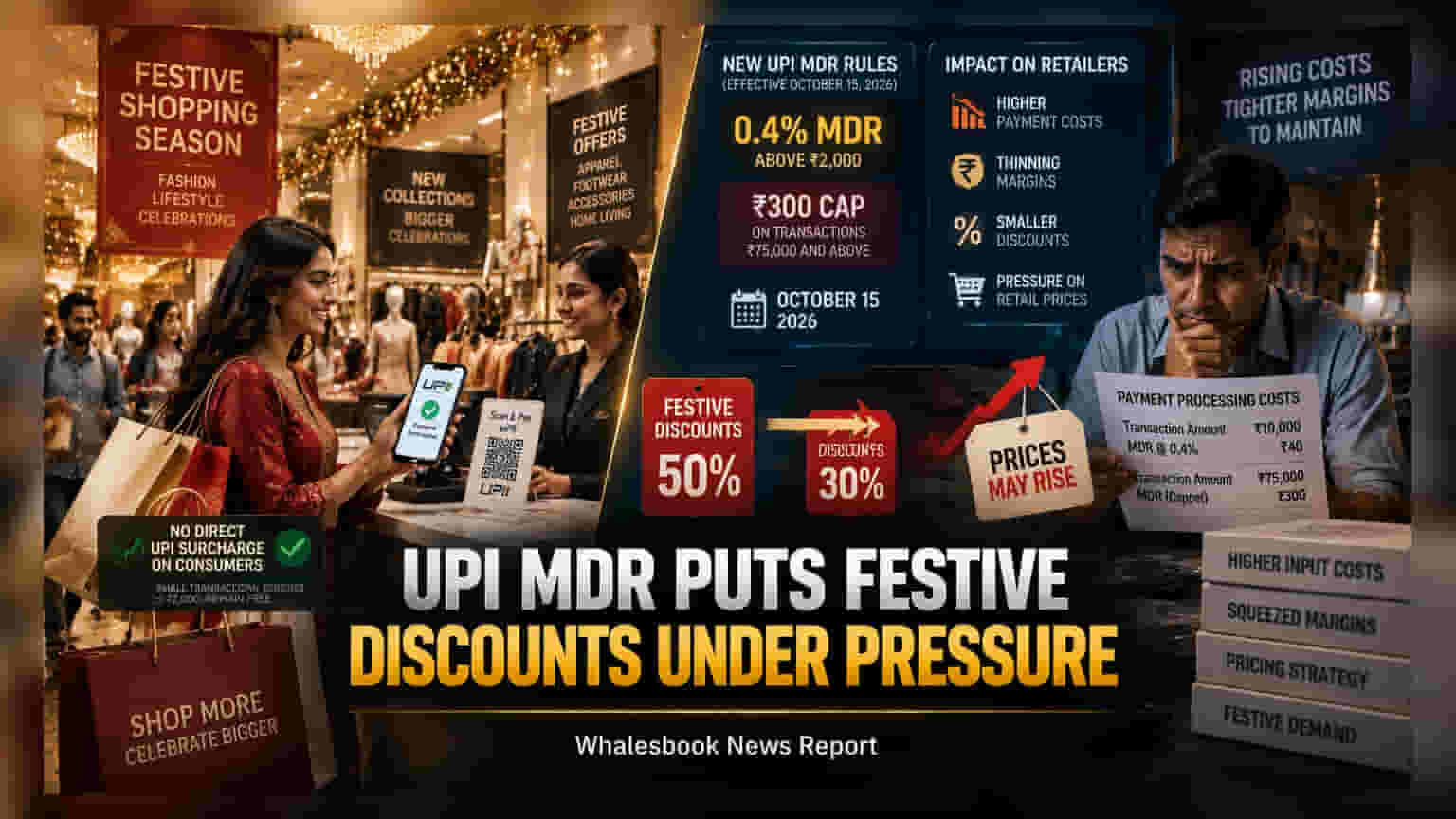
The NPCI has introduced a 0.4% merchant discount rate on UPI payments above ₹2,000, starting October 15, 2026. While consumers face no direct fees, retailers warn of potential price adjustments or reduced festive discounts. Fintech stocks like Paytm have seen positive movement on expectations of new revenue streams.
The National Payments Corporation of India (NPCI) has finalized a new merchant discount rate (MDR) framework for Person-to-Merchant (P2M) UPI transactions, which will go into effect on October 15, 2026. Under these rules, merchants will pay a 0.4% fee on UPI transactions exceeding ₹2,000. For very high-value transactions, specifically those of ₹75,000 and above, the fee is capped at ₹300.
The policy includes specific exceptions designed to limit the impact on daily expenses and small businesses. Essential sectors such as fuel, railways, insurance, telecom, and agricultural inputs will operate under a flat ₹5 fee for transactions over ₹2,000 rather than the 0.4% percentage-based charge. Additionally, the new fee structure does not apply to P2P transfers or merchant transactions of ₹2,000 or less, ensuring that about 95% of total transaction volume remains free of cost.
From a financial perspective, the policy change serves as a significant shift for payment service providers and banks. Companies in the digital payments sector, such as One 97 Communications (Paytm) and Mobikwik, saw their share prices rise by approximately 7% following the announcement. Investors view this as a potential revenue lever for fintech firms that have historically provided merchant processing services with minimal direct income from UPI, the dominant payment mode in India.
However, the retail sector has expressed concerns regarding the impact on margins. Since the NPCI has strictly prohibited a direct UPI surcharge on consumer bills, retailers cannot pass the 0.4% cost to shoppers as a separate line item. Industry bodies like the Retailers Association of India have noted that with thin operating margins, businesses may look to cover these payment costs through adjustments in product pricing or by offering smaller festive discounts.
This decision is particularly sensitive given the timing, as retailers head into the peak festive shopping season, where consumers typically make larger discretionary purchases. There is also a broader concern among industry experts that the fee might create an incentive for smaller merchants to encourage cash payments to avoid the MDR, potentially impacting the pace of digital adoption for larger transactions.
For investors, the key monitorables over the coming months will be how retailers manage their promotional strategy during the upcoming festive sales and whether there is a shift in payment patterns at the point of sale. Earnings calls and management commentary from listed retail chains and payment companies in the next quarter will likely provide more clarity on how this cost is being absorbed or passed through the supply chain.