

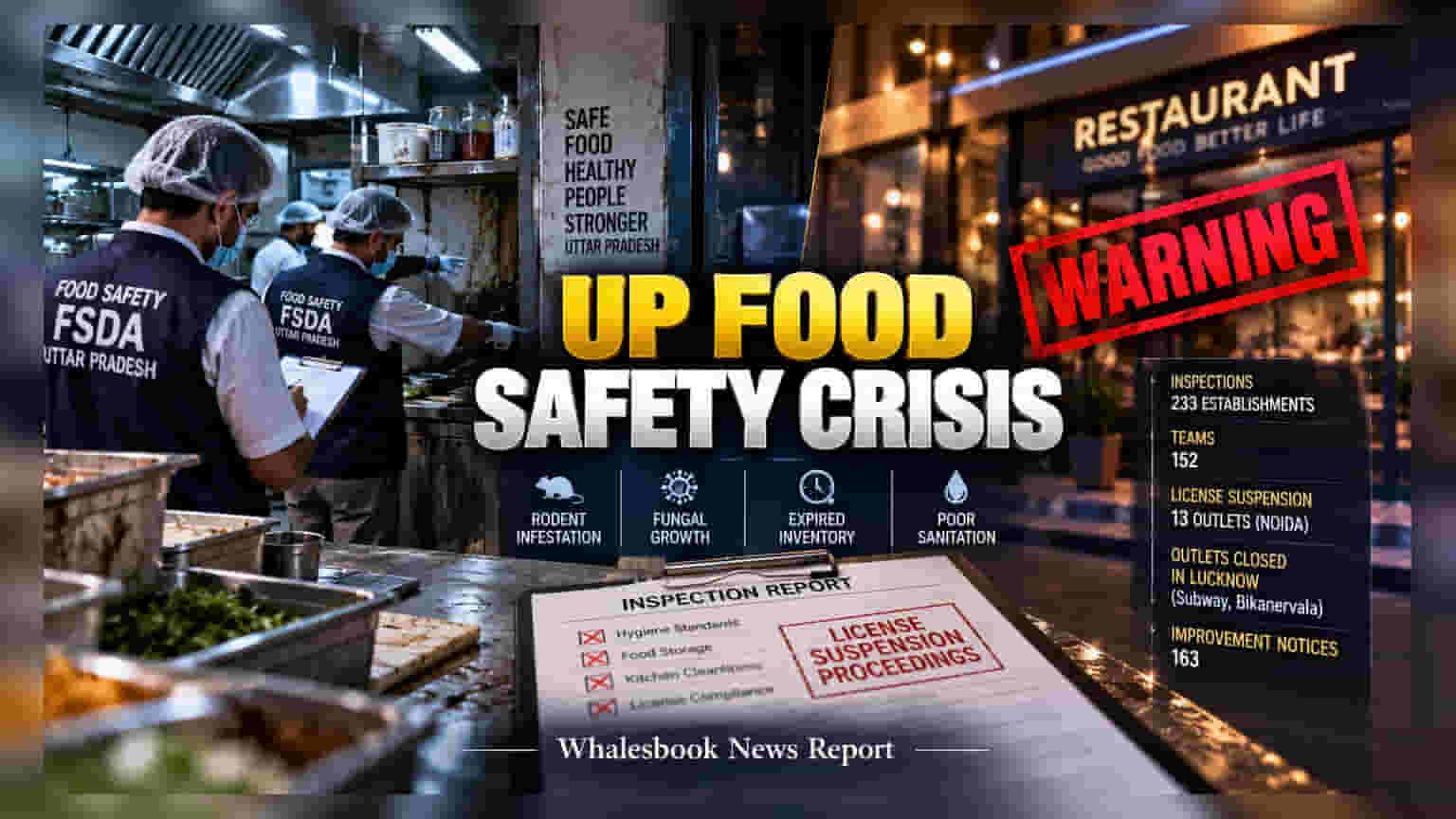
Uttar Pradesh authorities have initiated license suspension proceedings against 13 restaurants in Noida following inspections that uncovered severe health violations like rodent infestations and expired ingredients. The state-wide crackdown across 233 eateries, including locations in Lucknow and Gorakhpur, underscores rising regulatory pressure on the hospitality sector and risks associated with brand reputation and operational compliance.
The Food Safety and Drug Administration (FSDA) of Uttar Pradesh has launched a major enforcement drive, targeting hygiene and sanitation lapses across the hospitality sector. Following inspections of 233 establishments in cities including Noida, Lucknow, and Gorakhpur, the department has moved to initiate license suspension proceedings against 13 prominent outlets in Noida. These actions follow the discovery of critical safety failures, such as rodent infestations, fungal growth, and the storage of expired inventory.
The regulatory sweep involved 152 teams assessing kitchens for compliance with basic hygiene standards, such as proper drainage, temperature control for refrigeration, and the separation of raw and cooked ingredients. In addition to the license suspensions in Noida, authorities took immediate action in Lucknow, where specific outlets, including Subway and Bikanervala, faced closures due to identified risks such as structural waterlogging and the presence of pests. In total, 163 improvement notices were issued, reflecting a broad effort to address systemic sanitation issues across the region.
For the hospitality sector, this crackdown highlights the significant operational risk related to regulatory compliance and brand reputation. Many restaurant chains operate through franchise models where maintaining consistent safety standards across numerous locations is essential. When safety lapses occur, the impact can extend beyond individual store closures, potentially eroding consumer trust and brand value. Investors in hospitality and food service businesses often look at how effectively companies monitor and enforce hygiene protocols across their supply chain and individual outlets.
This enforcement drive signals that authorities are shifting from merely issuing warnings to taking stricter administrative actions. While improvement notices were provided initially to allow businesses time to correct deficiencies, the current wave of suspensions targets those with severe or repeat breaches. The department has indicated that failure to comply with mandated safety protocols could lead to permanent license cancellation and potential legal proceedings.
The crackdown serves as a reminder of the evolving regulatory environment in the hospitality industry. Companies are now under higher scrutiny to ensure that their food handling practices, kitchen sanitation, and inventory management meet the prescribed health standards. Going forward, the most important update for stakeholders will be the progress on compliance audits and whether these stricter enforcement measures lead to a sustained improvement in industry-wide hygiene standards or further disruptions to operations for non-compliant outlets.