

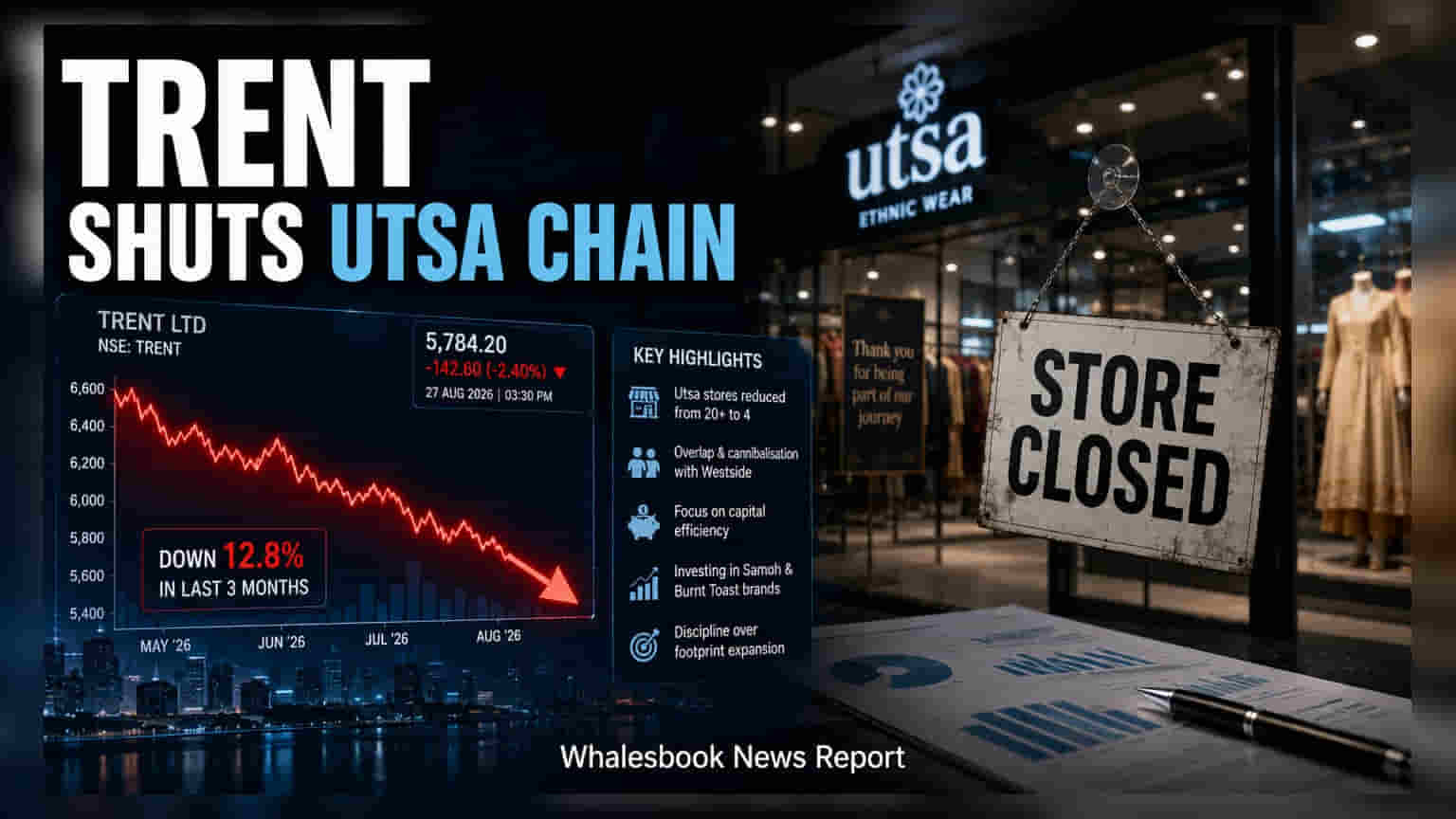
Trent Ltd is closing its standalone Utsa ethnicwear chain, reducing its footprint from over 20 stores to just four. The move addresses poor profitability and product overlap with the company's flagship Westside brand. This shift highlights a disciplined approach to capital allocation, as the retailer prioritizes high-growth concepts like Zudio and Star Bazaar while cutting underperforming assets.
Trent Ltd is scaling back its Utsa retail chain, an ethnicwear brand that struggled to carve out a unique position in the company's fashion portfolio. The company is systematically closing these stores, with the network shrinking from over 20 locations to just four. This decision marks a strategic retreat from the standalone Utsa model, as the management prioritizes capital efficiency over footprint expansion in segments that do not deliver strong returns.
The primary reason for this move is product overlap and internal competition. Utsa suffered from significant cannibalization with Westside, the flagship brand of the Tata-owned retailer. Analysts have noted that Westside’s broader inventory often provided a more compelling value proposition for shoppers, making it difficult for Utsa to justify its separate rental and operational costs. For shareholders, this closure is a signal of disciplined management. Instead of continuing to invest in a format that failed to generate adequate sales per square foot, Trent is choosing to pivot resources toward business segments with better growth potential.
This decision is part of the company's broader house of brands strategy, which involves constant experimentation. Trent tends to incubate various retail concepts, keeping those that gain traction and discarding those that do not. While Utsa is being phased out, the company is redirecting focus toward newer ventures like its premium ethnic label, Samoh, and Burnt Toast, a youth-oriented lifestyle brand. These new formats are currently in the testing phase, with management keeping a close watch on store-level performance before committing to large-scale expansion.
Despite this pruning, Trent’s core business remains a focal point. The rapid growth of Zudio and the expansion of the Star grocery chain continue to drive revenue. However, the company’s aggressive pace of store openings brings its own set of challenges. Rapid expansion in the value-retail sector can occasionally lead to store density issues, where new openings start affecting the sales of existing nearby outlets. This cannibalization risk is something investors often monitor, as it can put pressure on same-store sales growth and overall profit margins.
As one of the retail sector's premium-valued companies, Trent is under constant pressure to deliver high-quality growth. Any sign of slowing productivity in its core formats or failure to scale new ventures can lead to stock volatility, given the high market expectations built into its current valuation. Furthermore, with Noel Tata set to step down as Chairman in November 2026, the retail giant is in a period of leadership transition, making operational discipline all the more critical.
Looking ahead, the next important updates for investors will be the continued performance of the Zudio and Westside formats, and how effectively the company executes the expansion of its newer, smaller concepts. The market will also be watching to see if the withdrawal from Utsa leads to improved margin efficiency in the upcoming quarters, as the company moves to streamline its operational costs.