

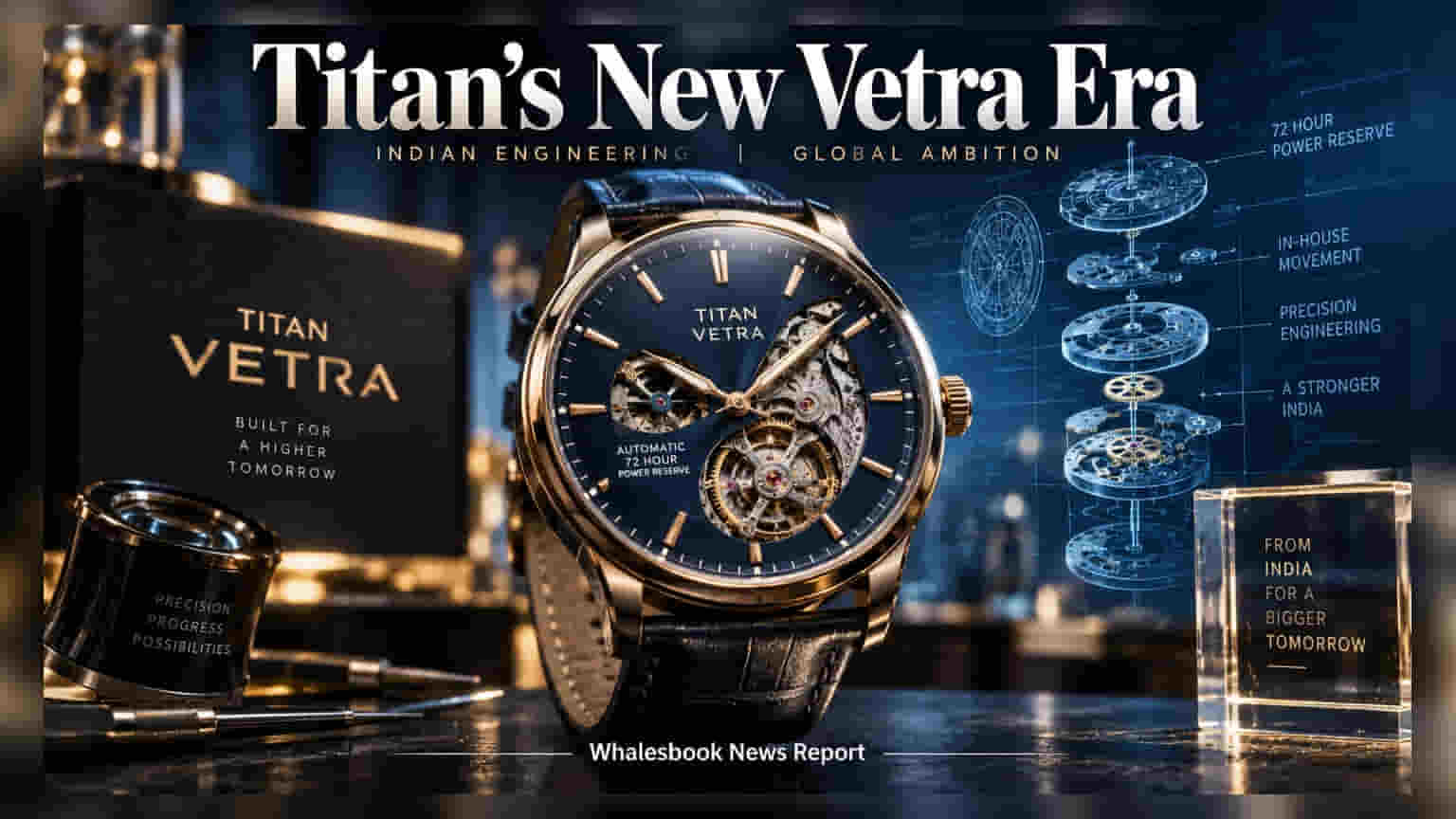
Titan Company has introduced 'Vetra,' its own brand of automatic watch movements, to reduce dependence on foreign suppliers. The company aims to boost its automatic watch sales to ₹350 crore this year. Investors should monitor whether this move toward internal manufacturing improves long-term margins or increases research costs.
Titan Company is expanding its premium watch business by launching 'Vetra,' a new brand for its proprietary automatic movements. This move allows the company to design and build mechanical components internally, reducing its long-standing reliance on third-party suppliers, which are often based in foreign markets. By controlling the design process from the start, Titan aims to create watches that better suit the preferences of Indian consumers.
The company is focusing on the automatic watch segment, which is a small but growing slice of India's ₹25,000 crore watch market. While the total market is large, the automatic segment is estimated at roughly ₹3,000 crore. Titan’s internal data shows that its sales for automatic watches are projected to reach ₹350 crore for the current cycle, up from ₹275 crore in the previous year.
This shift is intended to help the company compete more effectively in the premium segment, specifically for watches priced above ₹25,000. While the broader watch market is growing, the high-end category is expanding at a faster rate of 35%, and Titan is trying to capture this growth with a specialized product line. The new Vetra movements feature a 72-hour power reserve, a technical upgrade from the company's previous 40-hour limit. This helps the brand narrow the gap with established international competitors, such as Seiko or Swiss watchmakers, who have historically set the standard in mechanical watchmaking.
For investors, this transition to building parts in-house involves both potential benefits and risks. Controlling the production process can lead to better profit margins over time, as the company will not need to pay extra to external component suppliers. However, this strategy requires higher spending on research and development, which can put pressure on short-term profits.
There are also business risks to consider. The luxury watch segment relies heavily on discretionary spending and consumer confidence. If economic conditions slow down, demand for expensive timepieces could weaken. Additionally, Titan faces stiff competition from established global brands that have a much longer history in mechanical craftsmanship. The success of the Vetra brand depends on whether Indian consumers view Titan’s high-end products as equal in quality and prestige to global legacy brands. Investors should track the company’s ability to maintain sales growth in the premium category and watch for any updates on how these R&D expenses affect operating margins in future quarterly results.