

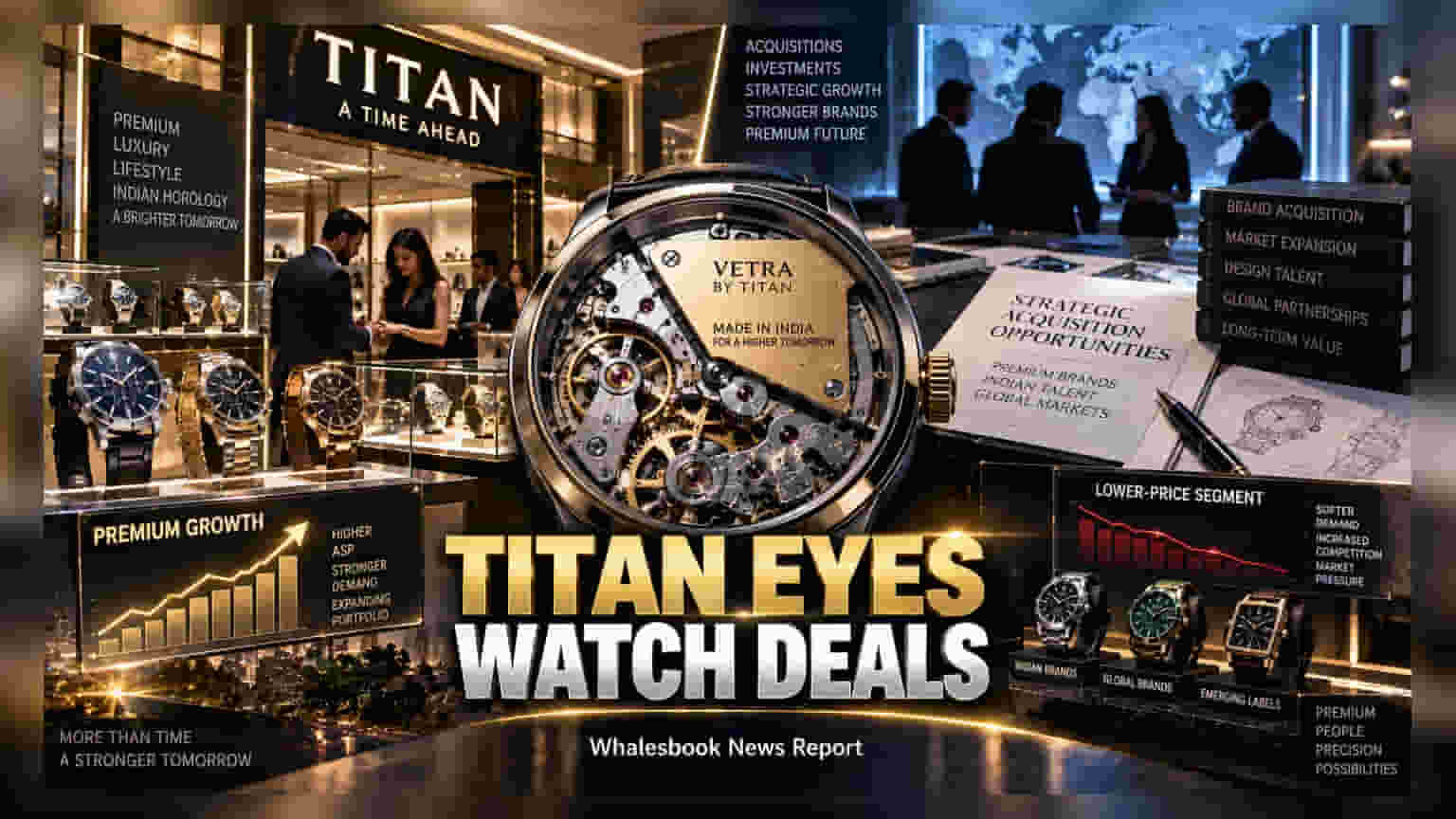
Titan Company is exploring acquisitions to boost its luxury watch portfolio as premium product sales grow significantly faster than mass-market options. The company is navigating a shift in consumer preference, moving toward higher-value timepieces as entry-level demand remains weak.
Titan Company is actively evaluating opportunities to acquire or invest in watch brands as it looks to strengthen its premium and luxury portfolio. This strategic move aligns with a broader shift in consumer spending, where demand for premium watches is outpacing the growth of the company’s mass-market offerings. Titan’s management noted that products priced above ₹25,000 are witnessing strong interest, whereas the sub-₹1,000 segment has continued to face sluggish demand.
The focus on premiumisation is a critical lever for Titan, as the watch business transitions from a functional product category to a lifestyle and fashion-focused industry. By moving up the value chain, the company aims to improve average selling prices and develop more differentiated products. This shift helps the company build a stronger position in a market that is increasingly crowded by both traditional horology brands and global smartwatch manufacturers.
Inorganic Growth and Strategic Integration
Titan is considering inorganic growth—buying or partnering with other companies—to speed up its presence in niche segments and acquire design talent. The company’s past experience serves as a roadmap for this strategy; its successful expansion of the jewellery business through investments, notably in CaratLane, demonstrated how acquiring brands can help tap into younger demographics and digitally-led consumer segments. Investors may watch to see if a similar approach in the watch division allows Titan to integrate emerging, India-focused labels that resonate with affluent buyers.
However, expanding through acquisitions involves execution risks. Integrating new brands requires careful management of cultural differences, operational workflows, and capital allocation. Success will depend on whether Titan can scale these new additions without diluting its overall return on capital or becoming overly reliant on external brands.
Operational Pressures and Market Context
Beyond brand acquisitions, Titan is working to control more of its value chain through the launch of Vetra, a branded movement platform. By developing its own movements, the company is attempting to establish deeper credibility in high-end watchmaking and promote Indian horology. This is particularly relevant as the company continues to retail international brands like Tommy Hilfiger and Police through its Helios network. If trade agreements or changes in import duties occur, the company may also look to introduce a wider range of accessible Swiss brands to its portfolio.
Currently, the business faces the immediate challenge of managing demand during the festive season. Strong consumer interest, coupled with an early wedding season, has created pressure on the company’s ability to service orders efficiently. For investors, the important monitorables will be the company’s success in balancing volume and value, the ability to maintain profitability as it pushes into higher-price segments, and the impact of future acquisitions on the company’s cash flow and balance sheet strength.