

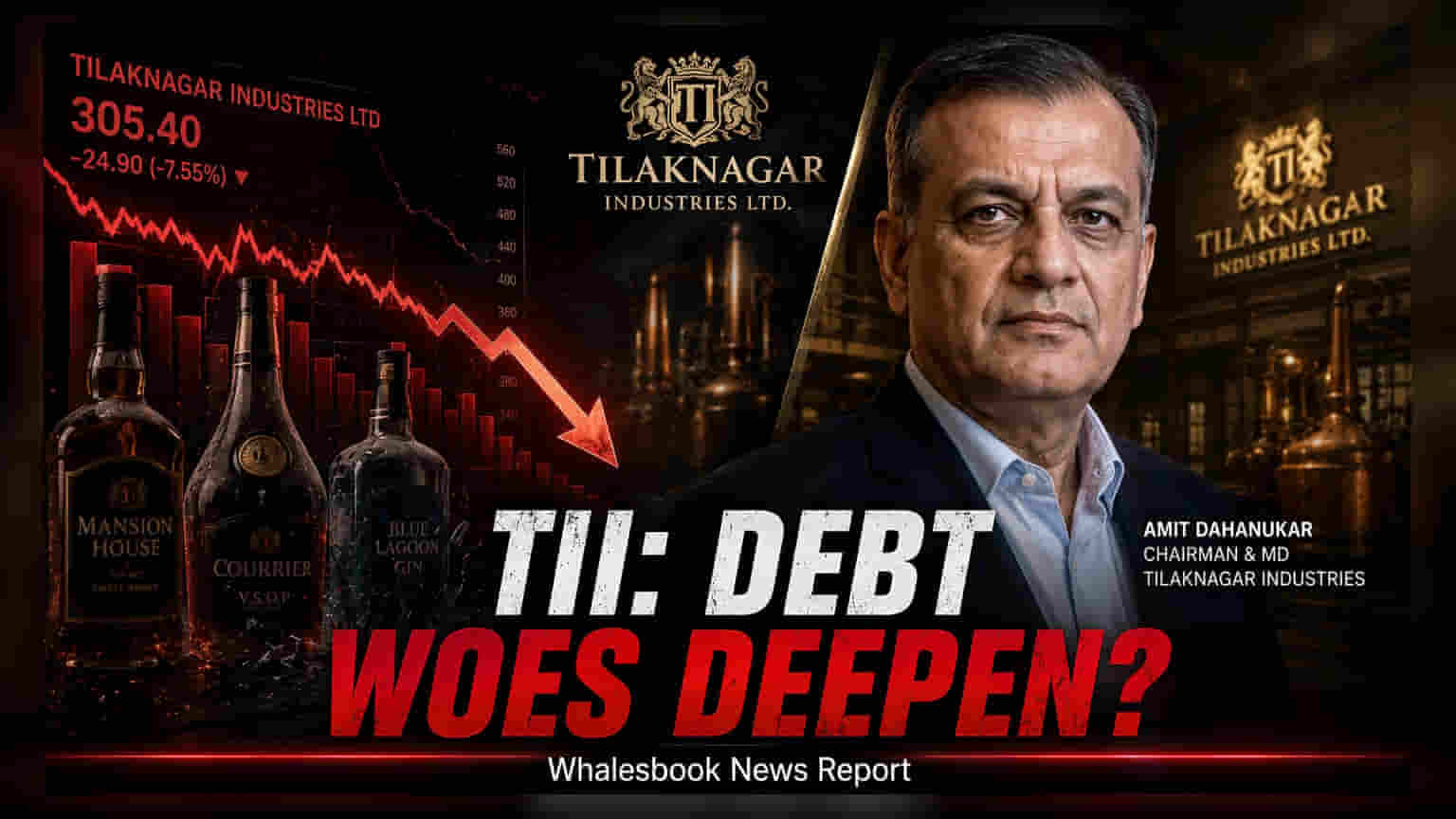
Tilaknagar Industries expects low double-digit volume growth this year while aiming to cut net debt to ₹1,700 crore by FY27. The company is currently working to resolve overdue receivables in Telangana to improve its cash flow and profit margins.
Detailed Coverage
Tilaknagar Industries, a key player in the Indian alcoholic beverage sector, has outlined a roadmap to reach an EBITDA of approximately ₹1,000 crore by the 2028-29 financial year. This goal follows a recent quarter where the company faced margin pressure due to rising costs, prompting a focus on both operational efficiency and aggressive debt management.
Debt Reduction and Financial Targets
The company is prioritizing the health of its balance sheet by targeting a net debt level of ₹1,700 crore by the end of the 2026-27 financial year. As of the end of the June 2026 quarter, the company’s net debt stood at ₹2,100 crore. Management expects this figure to remain steady during the first half of the current fiscal year before accelerating downward as business integration efforts and operational performance improve.
Addressing Margin Pressure and Telangana Collections
Like many peers in the consumer goods space, Tilaknagar Industries saw its profit margins squeezed during the April-June 2026 quarter. To combat this, the company is working toward a recovery that aims for EBITDA margins in the 16% to 18% range by FY29. A significant hurdle remains in Telangana, where the company has not secured a price revision for three years. Currently, it has approximately ₹550 crore in overdue receivables from this market. Ongoing discussions with the state government regarding price hikes are viewed as a critical step, as successful collections would provide the cash flow needed to pay down debt faster.
Strategic Market Opportunities
Following the acquisition of the Imperial Blue brand, the company has consolidated its operations. The management has highlighted the Bihar market as a long-term area of interest. Although the company did not have a presence in Bihar previously, the acquired brand had a history of selling over one million cases there, providing a potential opportunity should the state’s prohibition policies change in the future.
With a market capitalization of roughly ₹11,053 crore, the stock has experienced downward pressure over the past year, declining more than 12%. Investors are now looking for updates on the timeline for the Telangana price hike, which remains the primary catalyst for both margin improvement and the company's debt reduction schedule. The company's ability to maintain its volume growth target while navigating these regional pricing challenges will be the key monitorable for the coming quarters.