

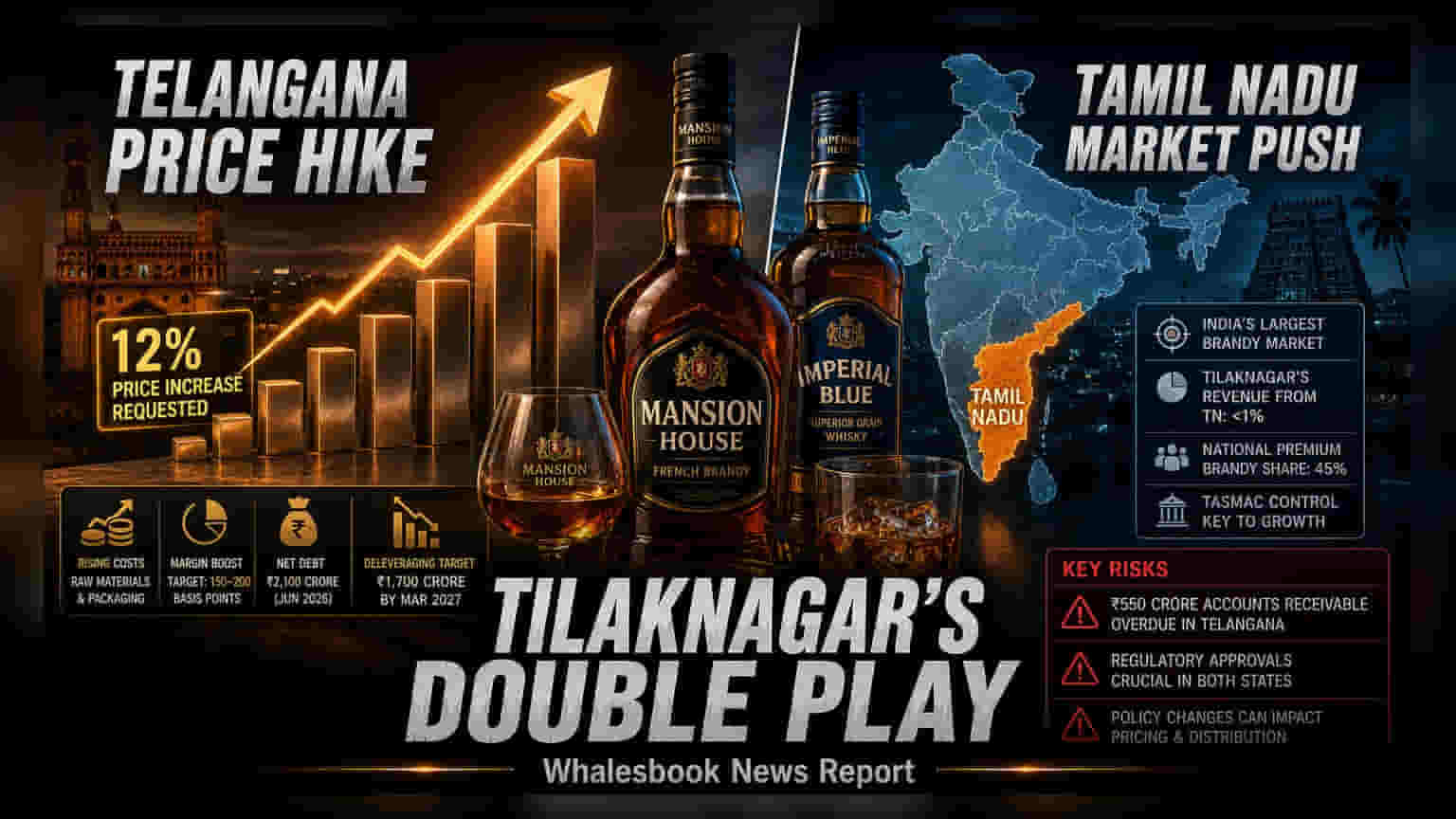
Tilaknagar Industries is seeking a 12% price hike in Telangana to offset rising costs while pursuing market expansion in Tamil Nadu. Investors are weighing these growth plans against the company's ₹2,100 crore debt and significant overdue receivables in the Telangana market.
Tilaknagar Industries, a major player in the Indian liquor sector, has approached authorities for a 12% price increase in Telangana. This marks the company’s first request for a price revision in three years, driven by the need to combat rising raw material and packaging costs. The company, which owns popular brands like Mansion House brandy, has presented its case to a government-appointed price fixation committee, aiming to improve its operating profit margins by 150–200 basis points.
Financial Context and Debt Strategy
This pricing move arrives as the company looks to balance growth with financial health. In its latest financial results for the first quarter of fiscal year 2027, the company reported revenue exceeding ₹1,046 crore, supported by a strong performance from its Imperial Blue whisky brand. However, the company is also managing a net debt of ₹2,100 crore as of June 2026. Management has communicated a clear deleveraging path, with a target to reduce this debt to ₹1,700 crore by March 2027. Investors will be monitoring whether operational cash flows can support this target while the company simultaneously invests in expansion.
Market Expansion and Risks
Beyond pricing, Tilaknagar Industries is setting its sights on a significant push into Tamil Nadu, one of India's largest markets for brandy. Currently, the company derives less than 1% of its total revenue from this region, despite its commanding 45% share in the national premium brandy segment. Success in Tamil Nadu depends largely on policy shifts, as the state-run agency TASMAC maintains strict control over approved suppliers.
While the expansion offers a large growth runway, the company faces distinct challenges. A primary risk factor for investors is the status of accounts receivable in Telangana, where approximately ₹550 crore remains overdue. The recovery of these funds is critical for the company’s working capital cycle. Additionally, the company is highly exposed to regional regulatory changes, which can impact both pricing approvals and distribution access. The success of these initiatives will depend on timely regulatory approvals in Telangana and potential policy openings in Tamil Nadu.