 Whalesbook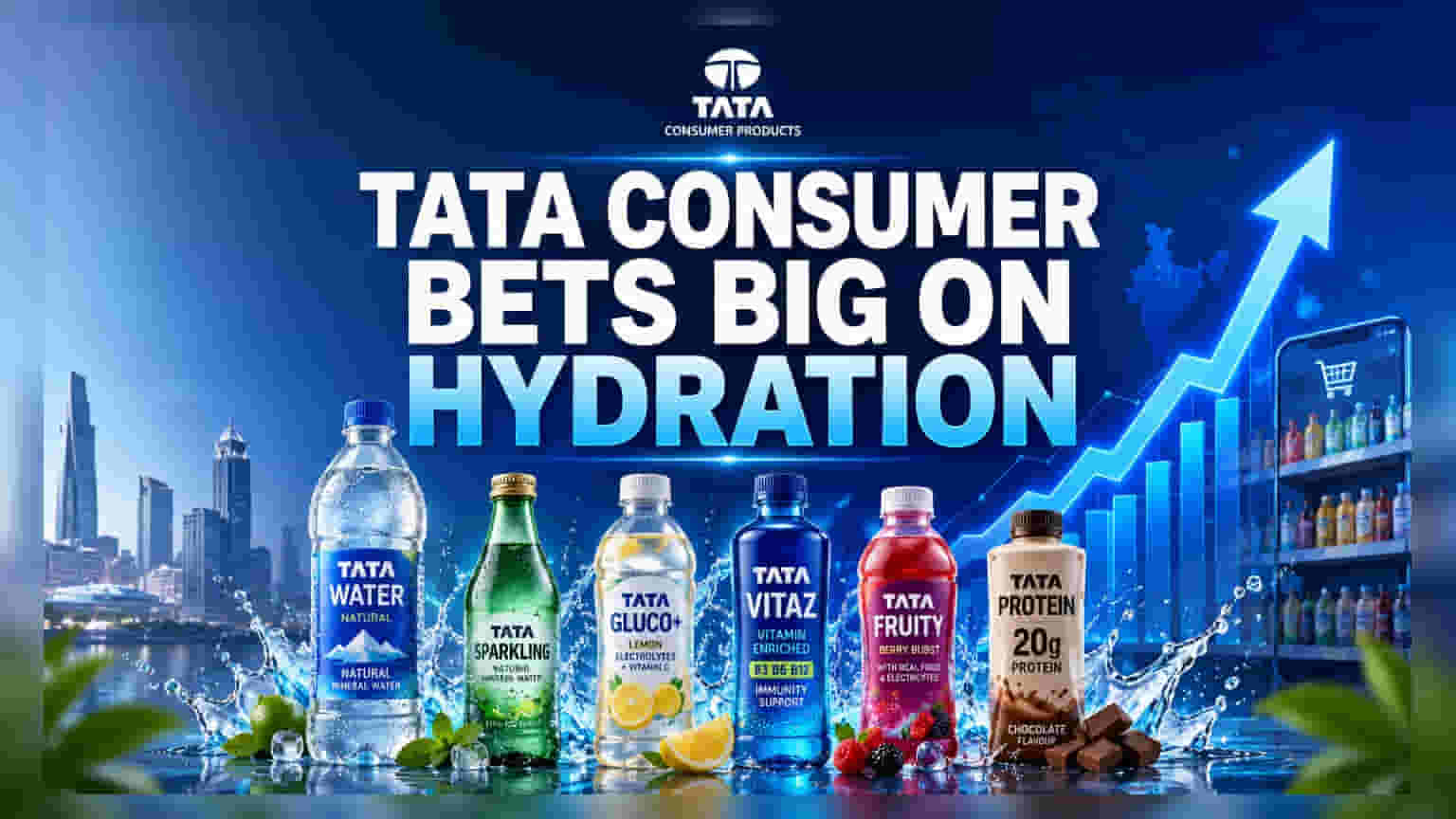


Tata Consumer Products (TCPL) is targeting the growing 'ready-to-drink' beverage market by focusing on functional and value-added water. As the company bets on shifting consumer health trends, investors are monitoring how this expansion impacts its competitive standing and long-term profitability.
What Happened
Tata Consumer Products Ltd. (TCPL) has announced a strategic shift toward hydration-focused beverages to drive its growth in the ready-to-drink (RTD) market. The company is expanding its portfolio beyond standard packaged water to include flavored, sparkling, vitamin-enriched, and protein-infused options. This pivot aims to capture the growing Indian demand for wellness-oriented beverages, a segment TCPL believes will be a primary growth engine for the next decade.
Why This Matters For Investors
The move reflects a broader trend in the Indian FMCG sector where companies are shifting toward 'premiumization'—selling products that offer higher value and better health positioning. For TCPL, which has historically been known for its strong presence in tea, salt, and staples, this expansion is an attempt to diversify revenue streams. The company reported that its RTD business has grown four times over the last five to six years. By focusing on higher-margin, wellness-based hydration products, the company aims to move beyond commodity pricing and tap into the spending power of a younger, health-conscious demographic.
Peer and Sector Context
The Indian beverage market is highly competitive. TCPL enters a space where it must compete with global giants like Coca-Cola and PepsiCo, as well as aggressive domestic players like Reliance Consumer Products and Varun Beverages. While TCPL has strong distribution, the beverage business requires significant investment in supply chains, cold storage, and marketing to build brand recall. Unlike staple categories where demand is consistent, the beverage sector is driven by consumer trends, requiring companies to constantly innovate and refresh their product lineup.
The Bigger Business Context
TCPL is leveraging its existing brand recall for products like Himalayan natural mineral water and Tata Life Alkaline water to reach smaller cities. The company is also using quick commerce platforms to launch and test new products, such as its Tetley Kombucha Zero line. This digital-first approach helps the company test demand with lower overheads before committing to massive nationwide distribution. However, the success of this strategy will depend on whether these new, premium offerings can gain consistent shelf space and repeat purchases in a price-sensitive market.
What Could Go Wrong
Investors should be aware of several risks. First, the beverage business is capital-intensive; significant marketing spend is often required to break into a market dominated by entrenched incumbents. If these new product lines fail to gain volume, the heavy spending on branding and distribution could put pressure on the company's profit margins. Additionally, raw material costs for functional ingredients can be volatile, and the company remains exposed to the risks of stiff competition, which could trigger price wars and lower overall industry profitability.
What Investors Should Track
The most important monitorable is the sustainability of revenue growth in the new hydration portfolio. Investors may look for updates on how the company manages the cost of marketing these new brands and whether they can successfully scale premium products into Tier-II and Tier-III markets without hurting their operating margins. Management commentary on the contribution of new product launches to total revenue will provide insight into whether this hydration-led strategy is delivering the expected returns.