

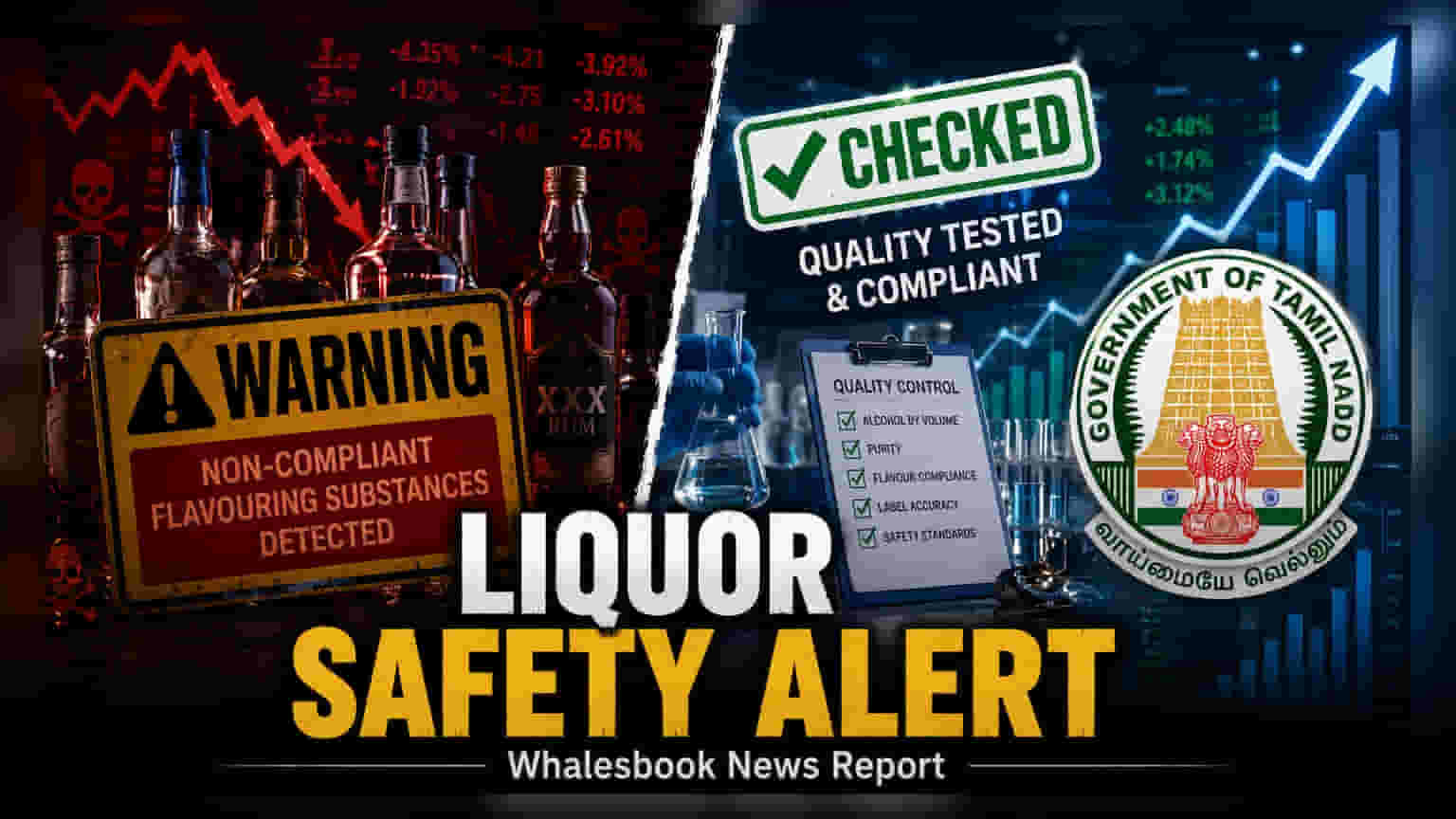
The Tamil Nadu government has mandated rigorous quality inspections across state distilleries following public concern over the handling of a recent FSSAI ban on Enrica Enterprises. This move signals stricter oversight for suppliers to the state’s monopoly retailer, TASMAC, which may lead to higher compliance costs and operational scrutiny for liquor manufacturers.
The Tamil Nadu government has introduced stricter quality control measures for all distilleries supplying liquor to the state’s monopoly retailer, the Tamil Nadu State Marketing Corporation (TASMAC). This decision follows a series of events involving Enrica Enterprises, a private liquor manufacturer, whose products faced a temporary ban by the Food Safety and Standards Authority of India (FSSAI) earlier this month.
On August 11, 2026, the FSSAI flagged 11 liquor variants produced by Enrica Enterprises for containing non-compliant flavouring substances. Although this ban was revoked on August 14, 2026, after the company appealed and provided compliance assurances, the rapid reversal triggered public and political debate. To address these concerns and restore consumer confidence, the state administration has now instructed that all beverages must undergo comprehensive testing to ensure they meet the specific alcohol-by-volume and quality standards mandated by law.
For businesses operating in the liquor sector, this development underscores the increasing regulatory focus on compliance. Because TASMAC acts as the sole purchaser for the entire state, any shift in its quality assurance protocols affects every supplier in the network. Manufacturers are now required to navigate not only central FSSAI regulations but also more proactive enforcement by the state’s excise and marketing arms.
The liquor industry in Tamil Nadu operates within a highly regulated framework, where the state maintains a monopoly over both wholesale and retail distribution. For suppliers, this means the risk of supply chain disruptions is closely tied to their ability to maintain consistent product standards. Any failure to meet these rigorous testing requirements can lead to immediate halts in procurement or product bans, which directly impacts a company's revenue and market access.
Investors and stakeholders tracking companies supplying to the Tamil Nadu market should watch for further guidelines regarding testing frequency and the potential for increased operational expenses. The state’s move to modernize its quality oversight suggests that the 'business as usual' approach to compliance is shifting, with a greater emphasis on documented adherence to food safety and labelling standards. The next important step will be to see if these stricter protocols lead to delays in bottling or distribution for suppliers in the coming months.