

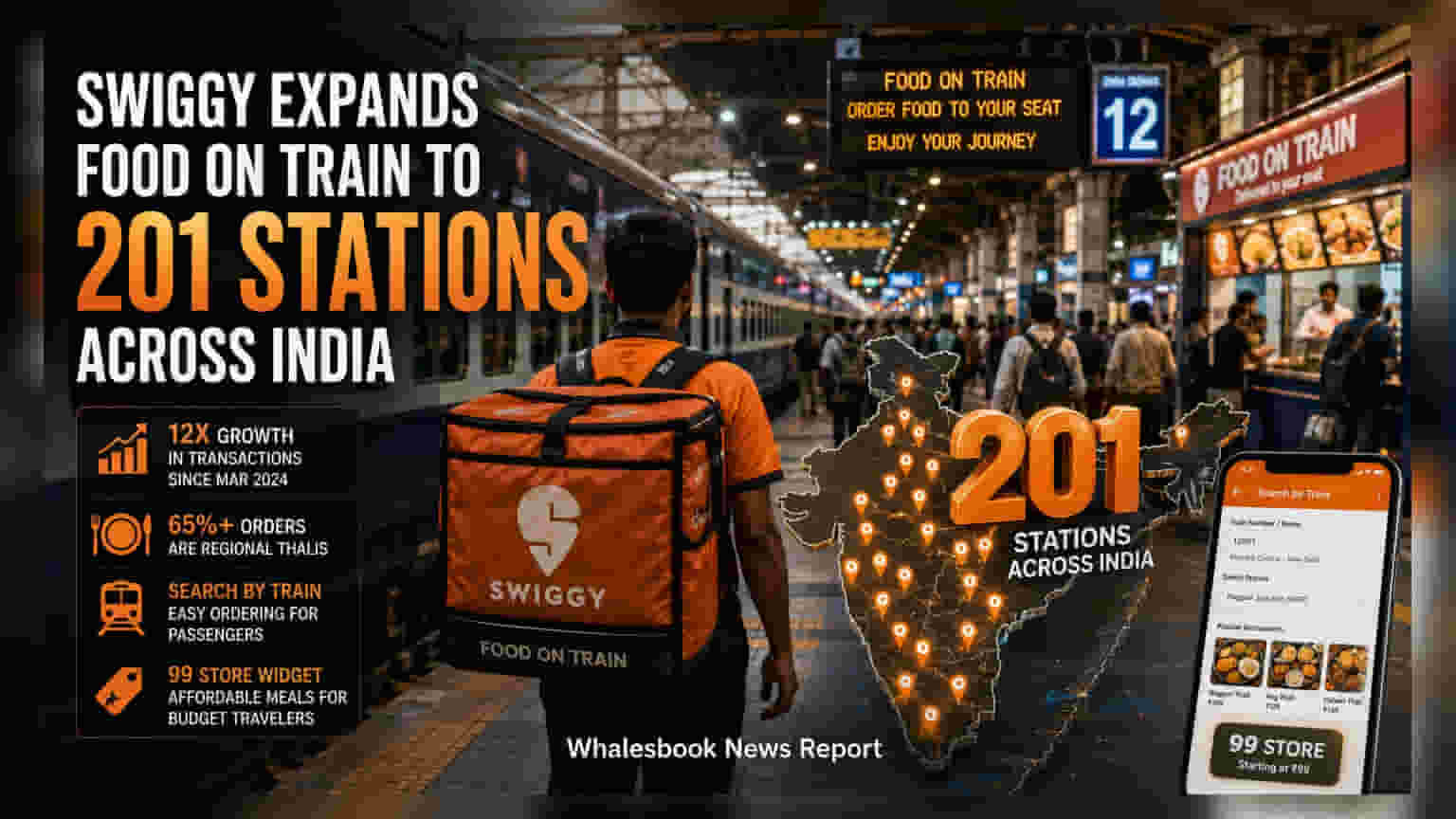
Swiggy has expanded its 'Food on Train' service to 201 railway stations, recording 12-fold volume growth over the past two years. With regional thalis driving demand, the company is capturing new transit segments. Investors are watching whether this expansion can maintain unit economics and support the company's path to profitability amidst intense sector competition.
Swiggy has extended its 'Food on Train' delivery service to 201 railway stations across India. Since launching the service in March 2024, the platform has reported a 12-fold increase in transaction volumes by August 2026. This expansion allows train passengers to order meals directly for their journeys, integrating a significant non-home consumption segment into the company's delivery network.
Consumer Trends and Strategy
The service's growth is supported by a shift in passenger dining preferences. Data indicates that regional thalis now account for more than 65% of total train orders, suggesting a preference for complete meals over fast food. To capture this demand, Swiggy has introduced features like 'Search by Train' and a '99 Store' widget, which target budget-conscious travelers, particularly in Tier-2 and Tier-3 markets. By aligning its menu with localized tastes, the company is attempting to increase its share of the transit food market.
Financial and Ownership Context
For investors tracking Swiggy’s financial performance, the company's recent results provide the necessary context. In its Q4 FY26 earnings reported in May 2026, Swiggy recorded revenue of ₹6,383 crore, reflecting a 45% year-on-year increase. During the same period, the company's net loss narrowed to ₹800 crore, indicating a trend toward better cost management. Additionally, the company's ownership profile shifted in July 2026, with domestic shareholding rising to 50.24%, marking a point where domestic investment has overtaken foreign ownership.
Risks and Sector Pressure
While the expansion into railway stations increases the company's reach, the hyperlocal delivery sector remains highly competitive. Swiggy faces pressure to maintain financial discipline while funding aggressive expansion. The company’s focus on Tier-2 and Tier-3 markets presents a specific risk: if infrastructure and marketing costs rise faster than the adoption rate, profit margins could come under pressure.
Beyond operational costs, the company must also navigate the complexities of managing a widespread logistics network. Previous instances of friction, such as disputes with local merchant associations, highlight the risks inherent in large-scale delivery operations. The success of this expansion will depend on the company's ability to maintain efficient unit economics as it scales further.
The next key update for investors will be to monitor the company's quarterly margin trends and whether the growth in transit-related delivery can translate into sustained improvements in bottom-line performance. The competitive intensity in the food delivery sector remains a primary factor that may influence the company's pricing power and delivery costs.