

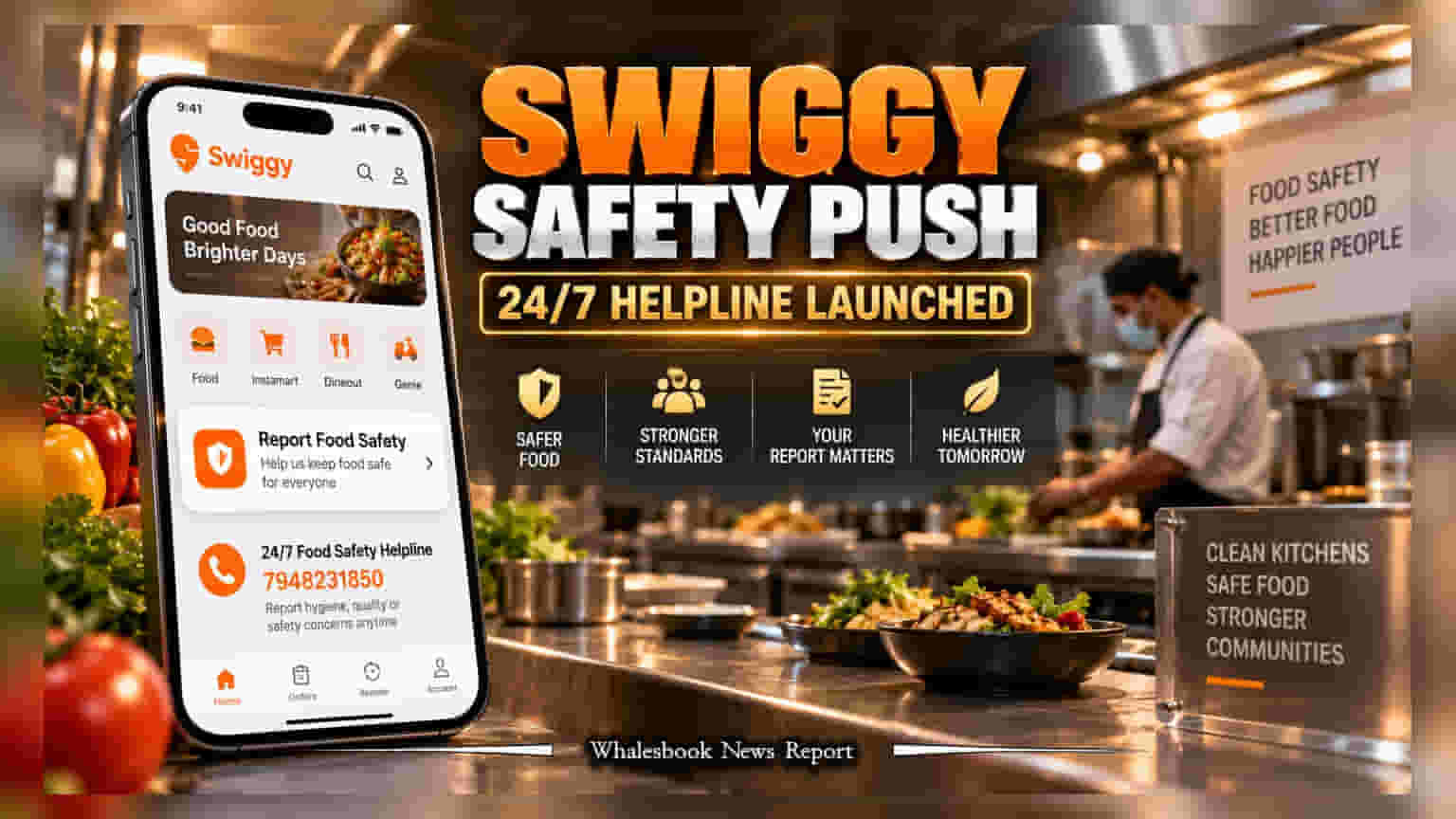
Swiggy has introduced a 24/7 helpline and in-app reporting channel to manage food safety complaints. This move comes as regulators tighten oversight on delivery platforms. Meanwhile, Swiggy’s stock faces volatility today due to its scheduled exclusion from MSCI indices, which may trigger passive fund outflows.
Swiggy has launched a dedicated 24/7 food safety helpline (7948231850) and an in-app reporting channel to address consumer hygiene and quality concerns. The platform intends to use this direct feedback mechanism as an intelligence tool to identify systemic gaps in food preparation and enforce stricter standards across its vast restaurant partner network.
This initiative arrives during a period of intense focus from the Food Safety and Standards Authority of India (FSSAI). Regulators have increasingly scrutinized both food delivery aggregators and quick-commerce operators to ensure compliance with national hygiene mandates. By creating a formalized pipeline for consumer complaints, Swiggy is attempting to address safety patterns preemptively, rather than reacting only after regulatory enforcement actions occur.
Market Volatility and Index Exclusion
Beyond operational changes, Swiggy faces a significant day on the stock market. As of September 7, 2026, the company is being excluded from the MSCI Global Standard and Mid Cap indices. This move follows the company’s recent strategic shift to cap foreign shareholding at 49.5%, a necessary step to maintain its status as an Indian-Owned and Controlled Company (IOCC). Investors are monitoring the situation closely, as the exclusion is expected to trigger selling pressure from passive funds, with some estimates indicating potential outflows of approximately $340 million.
Financial Context and Growth
These operational and corporate changes occur as Swiggy works to improve its financial profile. In its Q1 FY27 financial results, the company reported a revenue growth of 37.31% compared to the previous year. During the same period, Swiggy successfully narrowed its net loss to ₹791 crore. While revenue growth has been strong, the company continues to manage the balance between expansion and profitability.
Operational Risks
Investors may continue to track how the platform navigates its regulatory environment. A key challenge for the company is maintaining uniform hygiene and quality standards across a highly decentralized and large network of restaurant partners. Ensuring that these partners adhere to safety protocols remains an execution risk, especially as FSSAI and state-level food safety agencies increase their inspections. The success of the new safety helpline will depend on how effectively the company can use the collected data to resolve partner-level failures and prevent future safety lapses.