

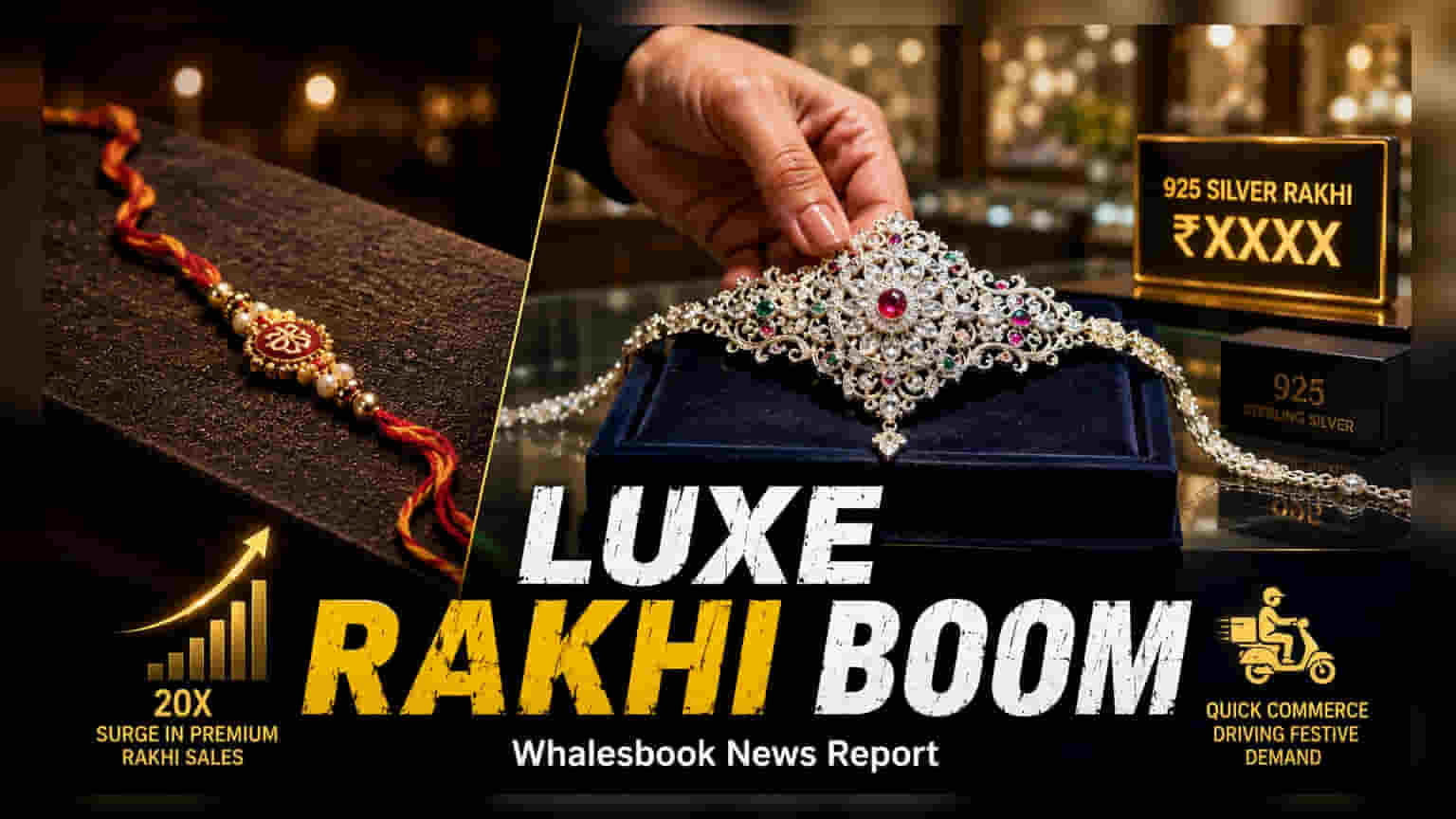
Quick-commerce platform Swiggy Instamart has reported a 20-fold surge in demand for premium rakhis, with shoppers increasingly choosing silver and branded jewelry. This trend reflects a shift toward higher-value, durable gifts over traditional threads, particularly in Tier-2 cities. Investors are monitoring how this premiumization strategy affects jewelry brands and distribution platforms.
The quick-commerce landscape is undergoing a visible shift this Raksha Bandhan, with a massive surge in demand for premium, high-value rakhis. Swiggy Instamart has reported a 20-fold increase in sales for premium offerings compared to the previous year, signaling a change in consumer gifting behavior ahead of the festival on August 28, 2026.
Premiumization Trend Drives Jewelry Sales
The demand is not just for traditional threads but for enduring keepsakes, with significant consumer interest in 925 sterling silver rakhis and anti-tarnish jewelry. Well-known jewelry brands such as Kalyan Jewellers, Palmonas, and GIVA are leveraging quick-commerce platforms to reach customers instantly. Popular items include silver-based motifs and waterproof, designer bracelets that function as both a festival token and a piece of jewelry.
This trend is supported by a broader move toward higher-value products, as shoppers prioritize items that offer lasting value. The data suggests that quick-commerce platforms are no longer just for grocery essentials; they are becoming effective distribution channels for lifestyle and fashion brands looking to capture high-margin, festive demand.
Expansion Beyond Metros
The appeal of these upscale gifts is not limited to major metropolitan areas. Cities such as Lucknow, Ahmedabad, Bhubaneswar, and Chandigarh have emerged as some of the fastest-growing markets for these premium products. This indicates that the preference for branded, durable jewelry gifts is spreading to Tier-2 and Tier-3 cities, providing a wider customer base for these jewelry retailers and platforms.
Investor Risks and Market Monitorables
While the demand surge appears positive, investors should consider the underlying risks associated with this festive business model. First, silver price volatility can directly impact the cost of goods sold and, consequently, the profit margins for brands selling silver-based jewelry. If raw material prices remain unstable, protecting profitability while maintaining competitive pricing may become challenging.
Second, the sector is seeing increased competition. As more brands and quick-commerce platforms fight for market share, there is a risk that heavy promotional discounting could occur. This may lead to margin pressure if companies sacrifice profitability to acquire customers or drive volume during the short, high-intensity festive window.
Third, inventory management is a critical factor. Since these products are highly seasonal, companies must balance stock levels carefully to avoid holding excessive inventory after the festival ends. Future updates to watch will include how these brands manage their inventory turnover ratios, the sustainability of demand in smaller cities, and whether this shift to premiumization can maintain healthy profit margins amidst rising input costs.