

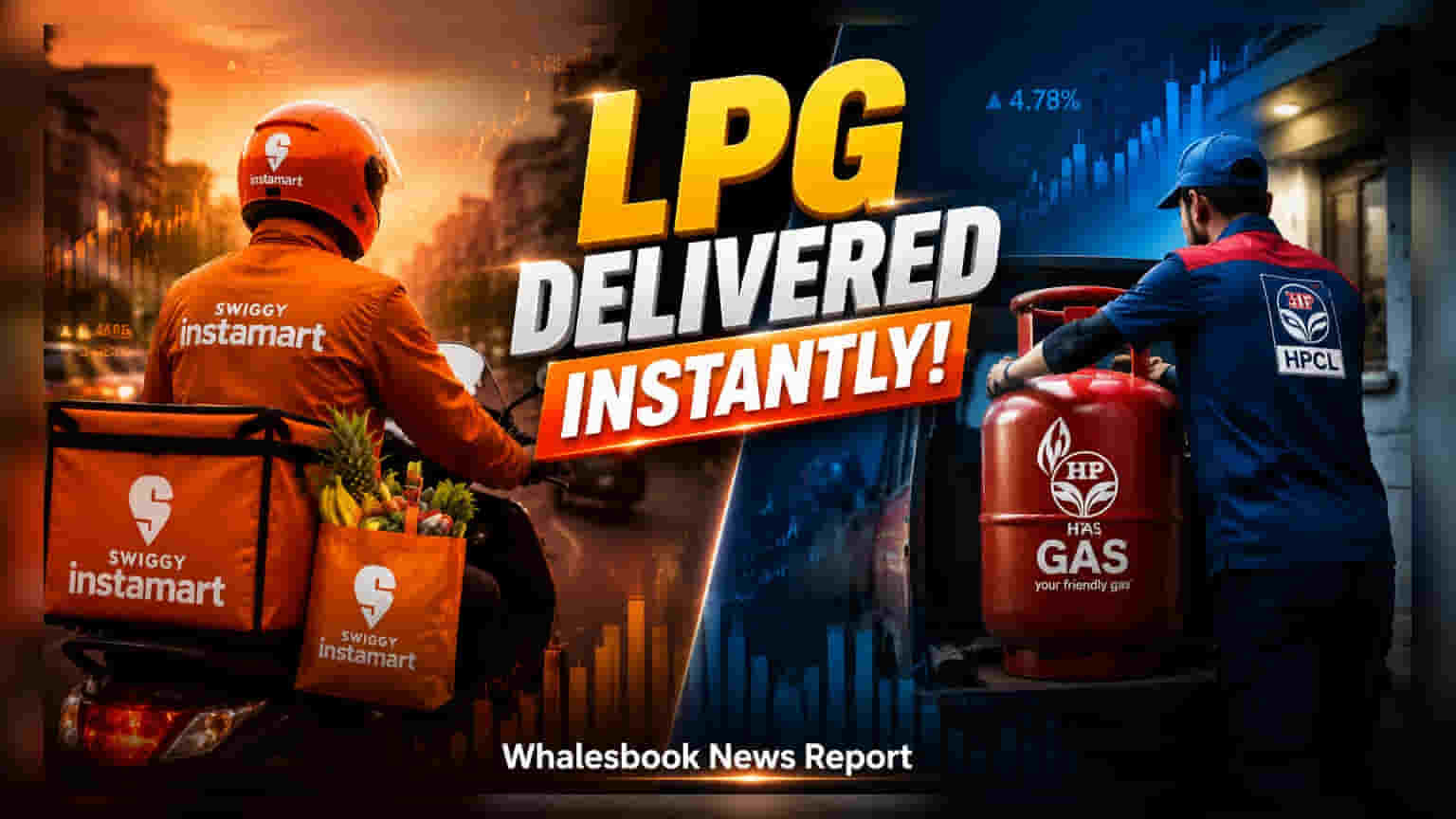
Swiggy Instamart has partnered with HPCL to offer on-demand LPG cylinder delivery in Bengaluru. This service allows users to order the 10 kg HP Navya composite cylinder or 5 kg metal cylinders via the quick-commerce app. The collaboration aims to increase convenience for cooking gas consumers, though investors will track if this service scales to other cities and impacts HPCL's distribution costs.
Swiggy Instamart, the quick-commerce division of Swiggy, has partnered with state-run oil marketing company Hindustan Petroleum Corporation Limited (HPCL) to launch on-demand LPG cylinder delivery. This service, which debuts in Bengaluru, allows customers to book cooking gas cylinders directly through the Instamart mobile app, mirroring the experience of ordering groceries or household essentials.
The initiative introduces the HP Navya, a 10 kg composite LPG cylinder, to the quick-commerce market. Composite cylinders are lighter and translucent compared to traditional metal cylinders, allowing users to see the gas level. In addition to the HP Navya, the platform also offers standard 5 kg metal LPG cylinders. The process requires customers to exchange an empty HPCL cylinder at the time of delivery, integrating the platform into existing supply chain protocols managed by HPCL’s distribution network.
Strategic Shift in Distribution
For HPCL, this partnership represents an attempt to modernize its last-mile delivery reach by utilizing the dense dark-store network of quick-commerce players. Traditional LPG delivery often relies on scheduled local distributors, which can sometimes involve wait times. By moving into the quick-commerce space, the company is positioning itself to capture urban consumers who prioritize delivery speed and digital convenience.
For Swiggy, the move is part of a broader strategy to diversify its Instamart catalog beyond impulse items and groceries, turning the platform into a utility-focused service provider. The success of this model will depend on how efficiently the company can manage the logistics of hazardous goods like LPG, which require specific safety handling and regulatory compliance compared to typical consumer goods.
Investor Monitorables
Investors may track the scale of this pilot project to determine if it will expand to other major Indian metros. While the partnership enhances consumer accessibility, the long-term impact on profitability will depend on the cost of logistics associated with heavy item deliveries and how it influences the existing dealer network. The regulatory landscape regarding home delivery of domestic fuel remains a critical factor, as safety protocols for quick-commerce fleets differ significantly from specialized gas distribution agencies. Additionally, market participants may watch for similar tie-ups between other oil marketing companies and quick-commerce platforms, as this could signal a wider sector-wide shift in the domestic fuel distribution model.