

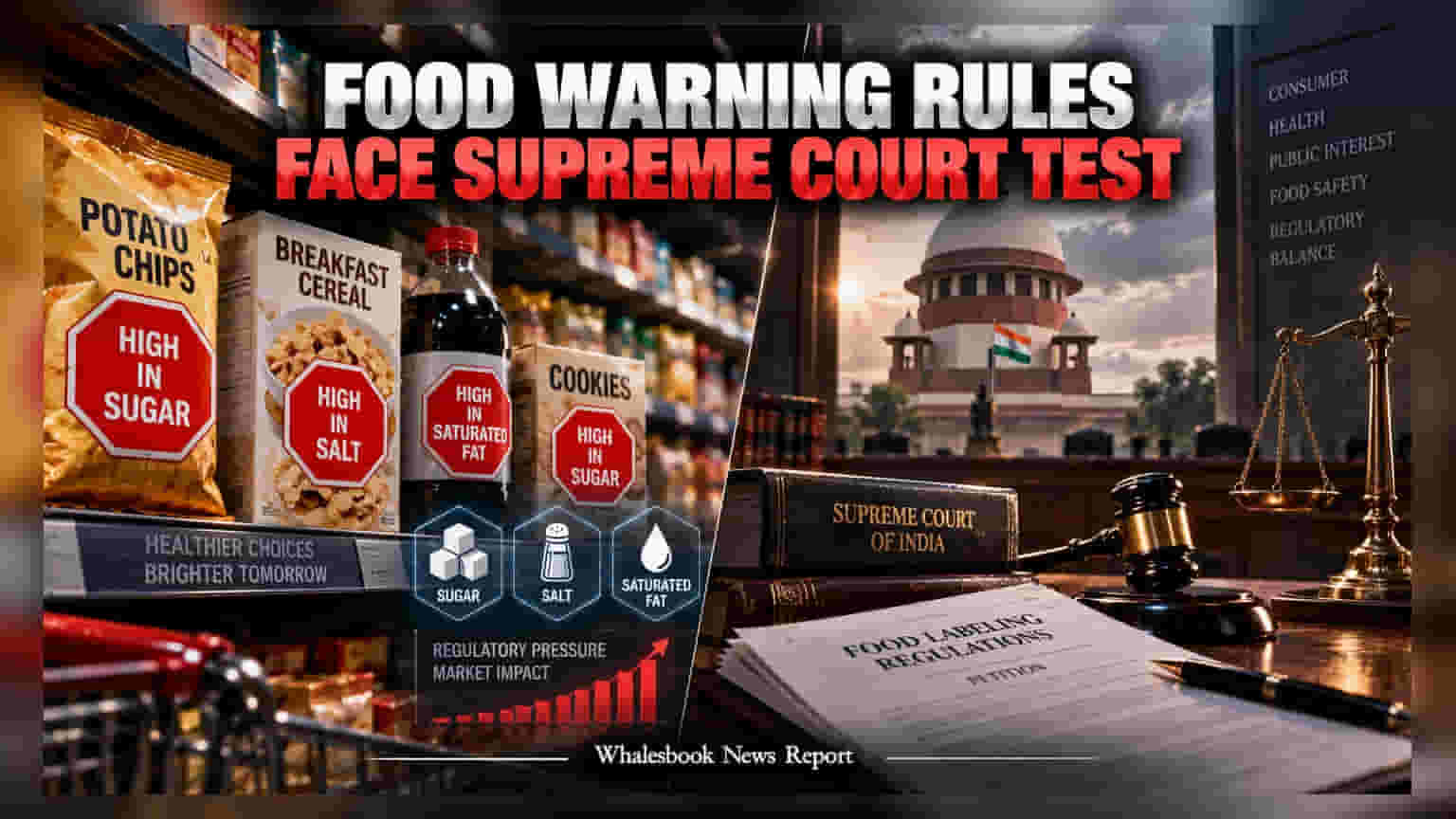
The Supreme Court is set to review a challenge against the FSSAI's proposed food warning labels, which currently trigger only if a product exceeds limits for at least two harmful nutrients. Investors are monitoring the outcome as stricter standards could increase compliance costs and shift consumer demand in the $100 billion packaged food sector.
The Supreme Court of India is scheduled to hear a petition on September 10, 2026, that challenges the proposed front-of-pack food warning system. The legal dispute centers on the government’s plan to mandate red hexagonal warning labels only when a packaged food product exceeds prescribed limits for at least two of three specific categories: added sugar, salt, and saturated fat.
The petitioner, a nonprofit group named 3S And Our Health, has argued that this threshold creates an industry-friendly loophole. They contend that under the current proposal, products containing excessive levels of just one harmful nutrient—for instance, only high sugar but low salt and fat—would avoid carrying the red warning label. The petitioners argue this design fails to provide consumers with the intended transparency regarding nutritional health.
For investors, this court hearing carries significant implications for the $100 billion Indian packaged food and beverage industry. The final court order will likely influence the regulatory landscape for major consumer goods manufacturers, who have long navigated the balance between product formulation and labeling requirements.
Regulatory uncertainty remains the primary concern for the sector. If the court directs the Food Safety and Standards Authority of India (FSSAI) to mandate warnings for any single nutrient exceeding the limit, food companies may face immediate operational challenges. Manufacturers would need to navigate potential costs associated with redesigning packaging, updating supply chain compliance, and in some cases, reformulating products to meet stricter health standards.
Beyond compliance costs, the broader industry risk involves consumer demand. Historical data from international markets, such as Chile, suggests that clear, front-of-pack warning labels can shift consumer behavior and reduce purchases of ultra-processed goods. If India adopts a stricter labeling framework, companies with large portfolios of packaged snacks and sugary beverages could see changes in sales patterns as consumers become more aware of the nutrient content in their products.
Investors may monitor the September 10 hearing for signals regarding the court’s stance on the FSSAI’s current threshold design. A push toward stricter, single-nutrient warning labels would force companies to reassess their product mix, while a rejection of the challenge would maintain the status quo. The timeline for implementation and the final definition of nutrient thresholds remain the key variables for evaluating future margin and operational risks in the consumer goods space.