

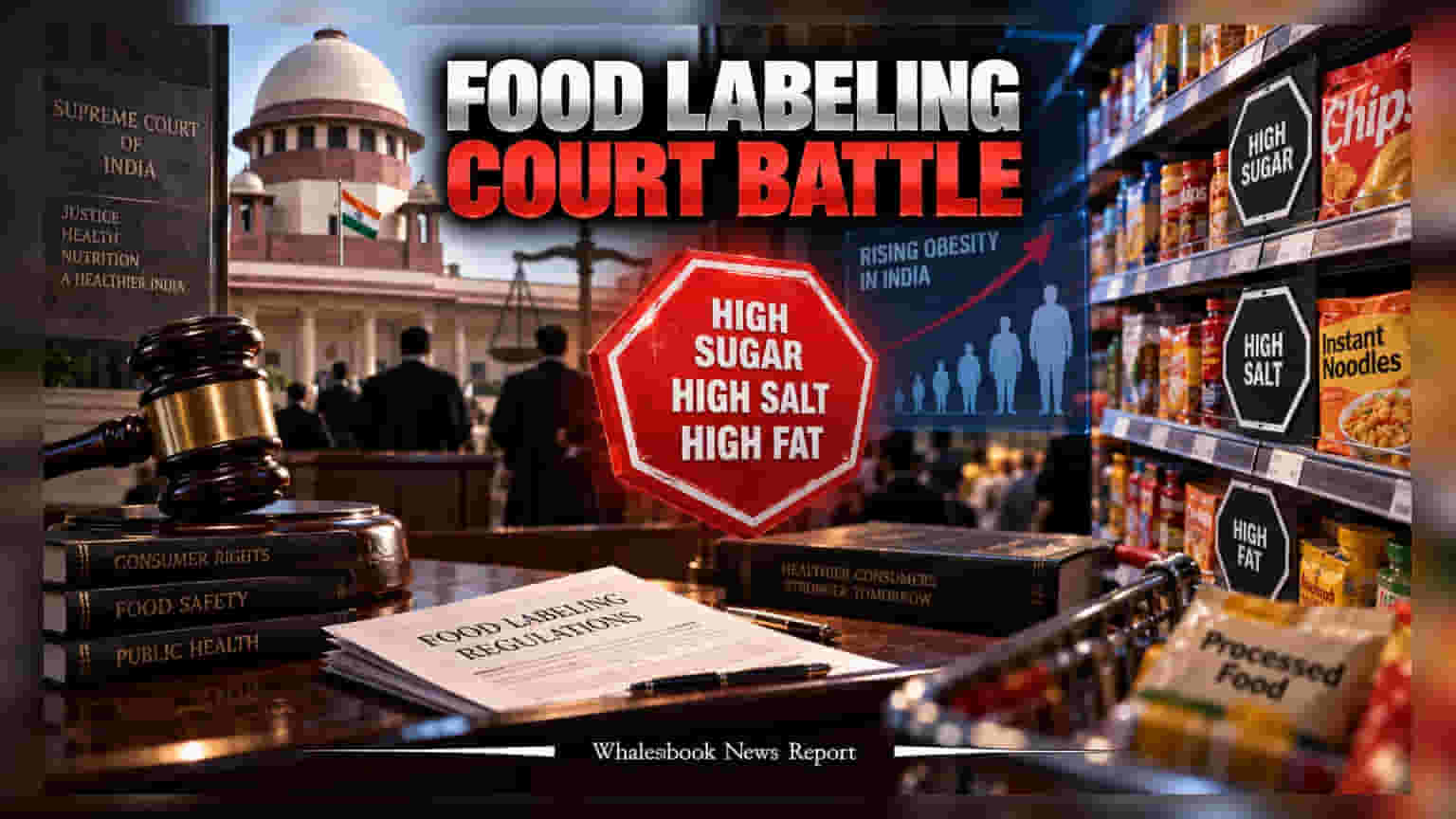
The Supreme Court of India is set to review a legal challenge against the FSSAI’s proposed food labeling mandate on September 10, 2026. Activists argue the government's plan leaves too many unhealthy products unlabeled, creating a potential regulatory risk for the Indian packaged food industry.
The Supreme Court of India is set to adjudicate a significant legal challenge on September 10, 2026, regarding the food safety regulator’s proposed rules for front-of-pack warning labels. The petition, filed by the non-profit group 3S And Our Health, targets the Food Safety and Standards Authority of India (FSSAI) over its current proposal which mandates red hexagonal warning labels only when at least two of three specific categories—added sugar, salt, or saturated fat—exceed defined safety limits.
Health advocates contend that this "two-nutrient" threshold creates a major loophole, allowing food products high in a single harmful ingredient to escape mandatory warnings. They argue that this misses the intent of informing consumers about potential health risks, particularly regarding rising rates of diabetes and obesity. The Supreme Court had previously expressed concerns in August 2026 about the slow progress of these regulations and potential industry influence, which has kept the sector under close scrutiny.
For the Indian packaged food and beverage industry, which is valued at over $100 billion, this legal battle brings a new layer of regulatory uncertainty. Companies in this sector have historically resisted stringent front-of-pack labeling mandates, citing concerns that warning labels could negatively influence consumer demand. If the Supreme Court ultimately mandates stricter labeling requirements, companies may face immediate operational shifts. This could include the need to redesign packaging, reformulate products to avoid warning labels, or manage potential changes in consumer purchasing behavior.
International models, such as Chile’s 2016 law, are often cited as a point of reference. In that market, the implementation of individual warning labels for each excess nutrient was followed by a documented decline in the purchase of sugary drinks. While the FSSAI maintains that a phased implementation is a standard, globally accepted practice, the ongoing legal proceedings suggest that the regulatory landscape may soon change in ways that challenge the industry's status quo.
Investors are now monitoring the upcoming court hearing for signals on how the government might adjust these labeling rules. The primary concern for stakeholders is whether the final regulations will prioritize a phased, industry-friendly approach or adopt the stricter, interpretive warning models advocated by public health groups. Any shift toward more aggressive labeling requirements could influence production costs and brand positioning across the processed food and snack segments.