

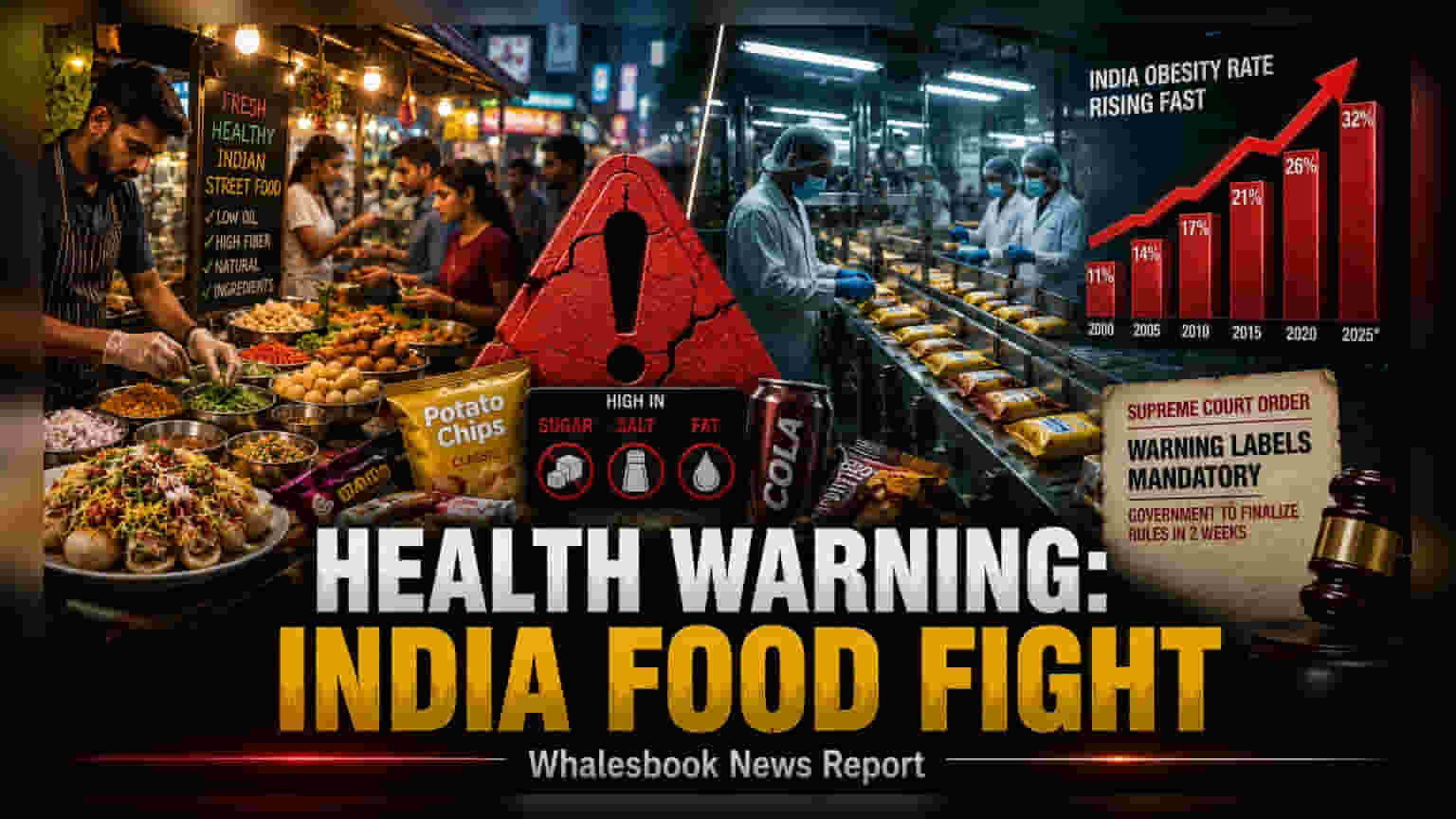
The Supreme Court has mandated a two-week window for the government to finalize front-of-pack labeling rules for processed foods. Meanwhile, the FSSAI has issued over 150 notices to major food companies for misleading advertisements and labeling violations, creating potential compliance and reputational risks for the packaged food sector.
The Supreme Court of India has set a two-week deadline for the government to finalize rules regarding front-of-pack warning labels on packaged food products. This judicial intervention marks a critical moment for the domestic packaged food industry, which has faced mounting pressure to increase transparency about the sugar, salt, and fat content in its products. The outcome of this legal process could force a major change in how food giants market their goods to Indian consumers.
Beyond the Supreme Court proceedings, the regulatory climate has become notably more rigorous. The Food Safety and Standards Authority of India (FSSAI) has recently issued over 150 notices to some of India’s largest food and beverage manufacturers. These notices primarily target misleading health claims and discrepancies in product labeling, signaling a shift toward stricter oversight. For companies, this means the era of relying solely on industry-led standards is being challenged by a more enforcement-driven regime.
At the center of the conflict is the design of nutritional warnings. Health advocates have long campaigned for clear, interpretive symbols—such as the color-coded systems often used in European countries—that immediately signal to a consumer if a product is high in undesirable nutrients. Industry associations, however, have historically opposed such labels, arguing that they are simplistic and fail to account for the nuances of local dietary habits. The ongoing court case highlights the gap between these industry arguments and the push for greater public health transparency.
For investors, these developments carry tangible business implications. Companies like Nestlé India, PepsiCo, and Coca-Cola India are currently at the forefront of this scrutiny. Any move toward mandatory, prominent warning labels may necessitate costly redesigns of product packaging and a complete reassessment of marketing materials. Furthermore, if products are forced to carry visible warnings about their nutritional content, it could erode the 'health halo' that many processed food brands rely on to drive sales. This shift in perception might influence consumer purchasing behavior, potentially forcing companies to invest more in re-formulating products or increasing advertising spend to protect their market share, which could, in turn, pressure profit margins.
The regulatory crackdown also points to increased operational risks. Compliance with new, stricter standards requires significant administrative and legal resources. As the government works to meet the Supreme Court's deadline, investors may watch for the specific guidelines that emerge. The final policy will clarify the extent of the compliance burden for the sector. In the meantime, companies that voluntarily prioritize transparency or have diversified portfolios may be better positioned to navigate these changes compared to those heavily reliant on products that attract the highest levels of regulatory scrutiny.