

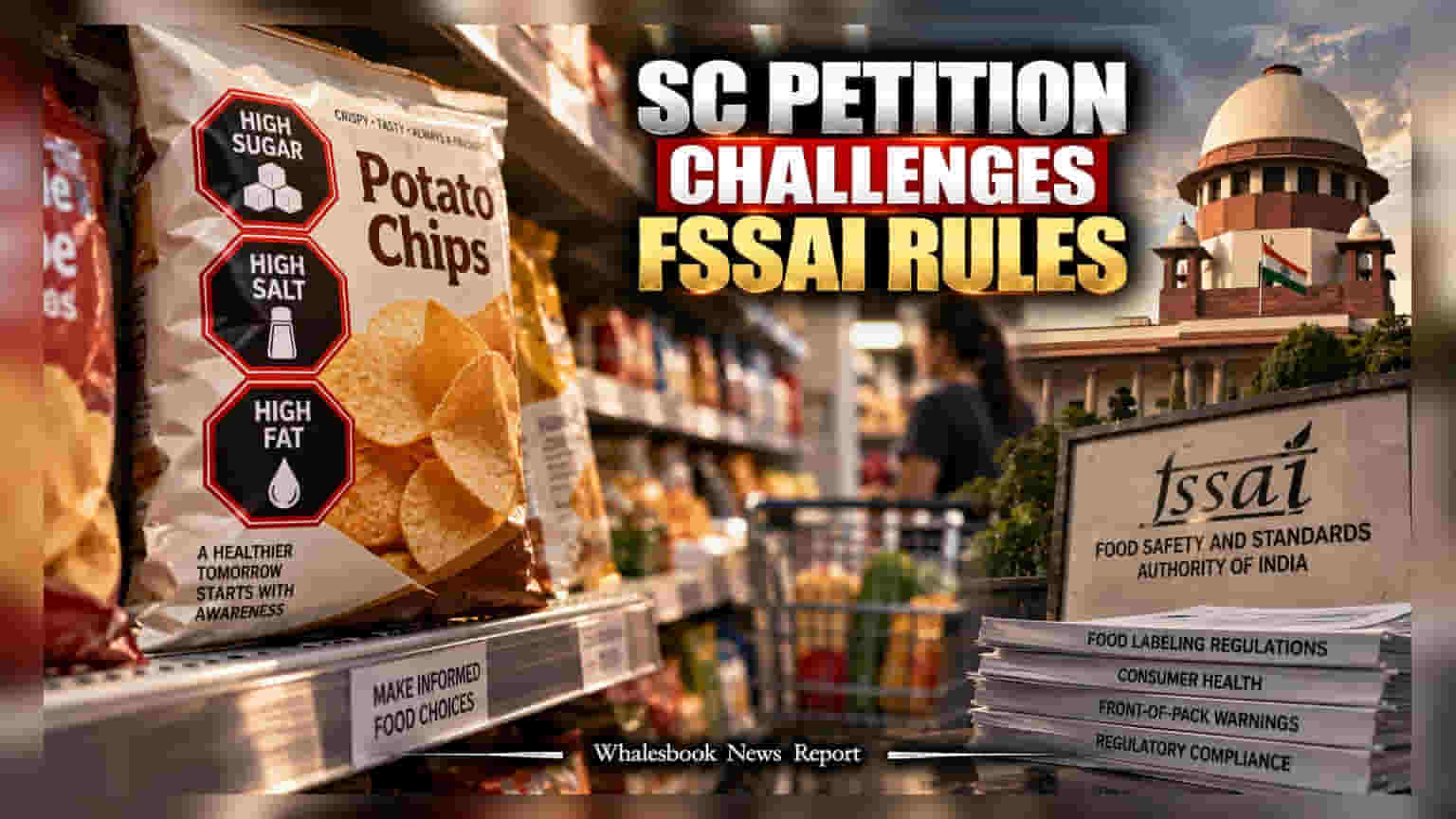
The Supreme Court has rejected FSSAI’s proposed food labeling rules, demanding clear front-of-pack health warnings instead of complex numerical disclosures. This judicial pressure is increasing compliance uncertainty for India's FMCG sector as the court prepares for a critical hearing on September 10, 2026.
The Supreme Court of India is intensifying pressure on the Food Safety and Standards Authority of India (FSSAI) to finalize stricter food labeling regulations. In a case brought by the 3S and Our Health Society, the court has expressed clear dissatisfaction with the regulator’s previous proposals, which suggested using numerical recommended daily limits on packaging. The judiciary views these numerical disclosures as ineffective for the average consumer and has pushed for mandatory, easy-to-understand front-of-pack (FOP) warning symbols for products high in sugar, salt, or fat.
This dispute has placed the FSSAI under a strict timeline, with a final deadline to present a concrete decision before the next hearing scheduled for September 10, 2026. If the regulator fails to align its rules with the court's expectations regarding consumer clarity, the government may face direct judicial intervention.
Impact on the FMCG Sector
For investors, the outcome of this legal challenge is significant because it is happening alongside a wider, aggressive regulatory crackdown on misleading food marketing. The FSSAI has recently scrutinized health and purity claims such as '100% Natural,' '0% Maida,' and 'Pure' across the industry. Major companies including ITC, Nestlé, Dabur, PepsiCo, and Coca-Cola are already navigating this evolving environment, which questions many long-standing marketing strategies.
If the court mandates prominent warning labels, companies may face immediate operational costs. This could include the expense of redesigning packaging, updating labeling technology, and, in some cases, reformulating products to avoid mandatory 'high sugar/salt/fat' warnings. There is also a reputational risk; products that prominently display health warnings may see shifts in consumer preference, potentially affecting market share in specific product categories.
What Investors Should Monitor
Beyond the specific labeling format, the broader trend is toward higher transparency and accountability in the food and beverage industry. Companies that rely heavily on processed snacks, juices, or sweetened beverages may face the most direct impact. While the immediate financial hit from labeling changes is generally manageable for large-cap players, the cumulative effect of stricter health claims and potential re-labeling could put pressure on profit margins if companies need to invest heavily in compliance or brand restructuring.
Investors will likely track the outcome of the September 10 hearing closely. The regulator's response will clarify whether the industry will have to adopt the mandated front-of-pack warnings or if a middle ground can be reached. For now, the regulatory environment for consumer products remains in a state of adjustment.