

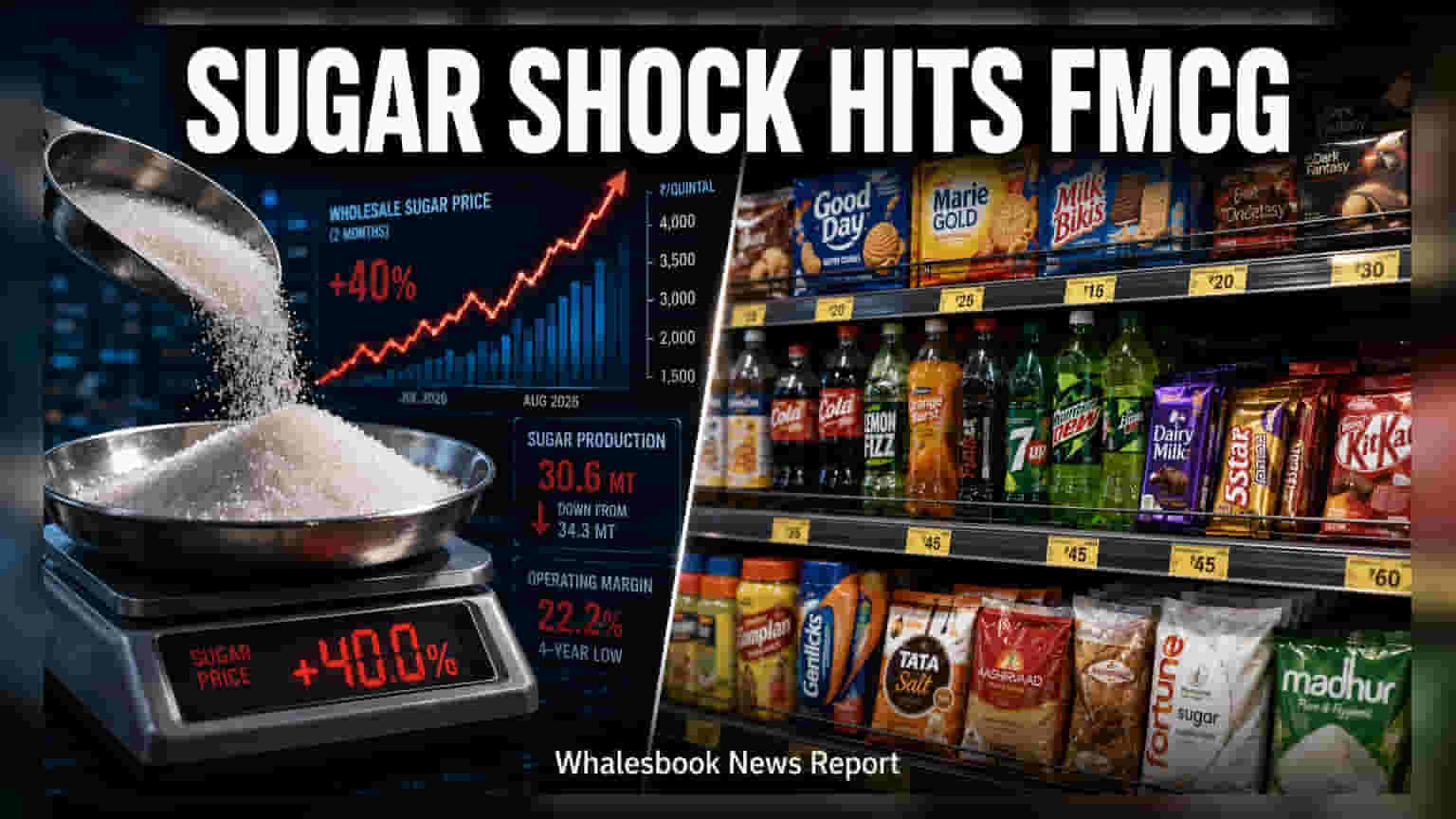
Wholesale sugar prices have surged 40% in two months due to crop failures, straining FMCG margins already at a four-year low. To curb hoarding, the government has authorized duty-free imports of 1 million tonnes and set strict 15-day stockholding limits. Investors are watching how major brands like Britannia, Nestlé, and Varun Beverages balance rising input costs against potential volume declines during the critical festive season.
The Indian FMCG (fast-moving consumer goods) sector is facing a sharp profitability challenge as wholesale sugar prices have climbed 40% in just the last two months. This spike follows significant production shortfalls, with total output now estimated at 30.6 million tonnes, down from an earlier projection of 34.3 million tonnes. Adverse weather, including erratic rainfall and the spread of crop diseases like Red Rot and Top Borer, has tightened supply, pushing raw material costs to levels that are testing the industry’s resilience.
Impact on Profit Margins
The rising costs come at a difficult time for manufacturers who saw operating margins hit a four-year low of 22.2% in the quarter ended June 2026. Companies that rely heavily on sugar as a key ingredient—such as those producing biscuits, soft drinks, and chocolates—are under immediate pressure. Because these firms are already grappling with broader food inflation, their ability to pass on these higher costs to consumers without hurting sales volume is limited.
In response to the supply tightness, the government has intervened to stabilize domestic prices. New regulations effective from September 1, 2026, will cap stockholding for bulk consumers at 15 days of inventory. Additionally, authorities have authorized the duty-free import of 1 million tonnes of raw sugar to bolster availability. While these steps aim to prevent hoarding, they may increase compliance requirements for larger companies, adding a layer of operational complexity during the upcoming festive period.
Company-Specific Vulnerabilities
Not all companies in the sector are equally exposed to this crisis. Market analysts have highlighted that companies like Britannia Industries are particularly vulnerable due to a product portfolio heavily weighted toward price-sensitive segments like mass-market biscuits, where sugar and palm oil are major cost components. With limited room to raise prices further without losing customers, companies in this segment face the highest risk of margin compression.
Conversely, players like Nestlé India and Varun Beverages appear to have stronger mitigation strategies. Their diversified product portfolios, which include low-sugar or premium options, along with generally better pricing power, provide more flexibility to navigate cost spikes. Investors are closely observing whether these companies will opt for price hikes or reduce product sizes—a practice known as grammage reduction—to protect their bottom lines.
Festive Season Consumption Risks
The most critical factor for the sector in the coming months is the impact on consumer demand. Aggregate sales growth for major packaged food companies slowed to 5% in the recent June quarter, down from 13% in the same period last year. With rural consumer demand remaining fragile and overall food inflation staying sticky, there is a risk that further price increases could cool demand during the festive season, which is historically a time of high sales volume. The key monitorable for investors will be how volume growth holds up across different product categories as companies navigate these elevated input costs.