 Whalesbook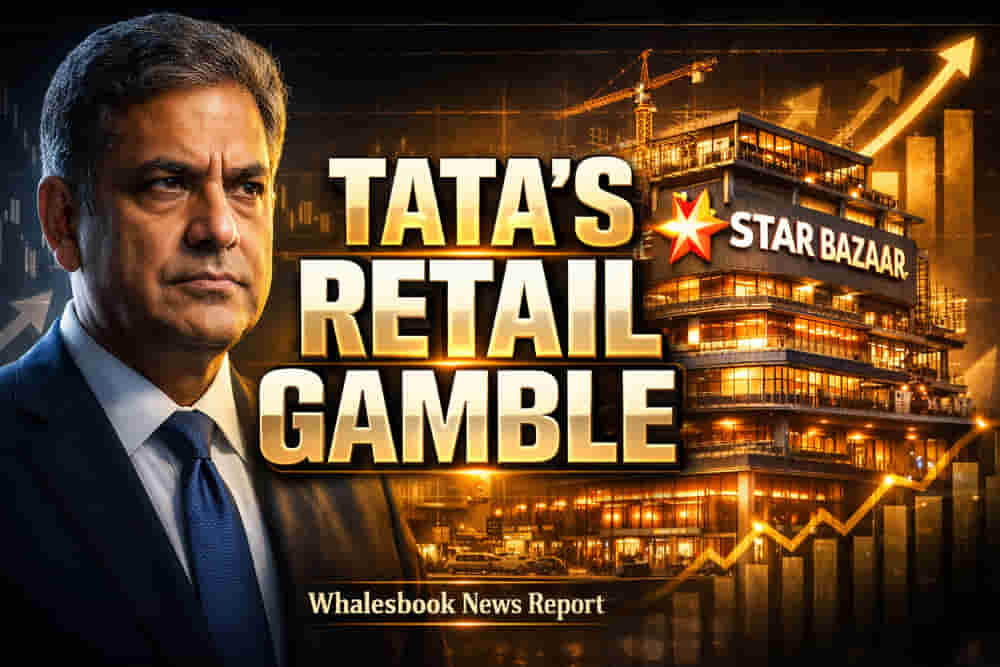
THE SEAMLESS LINK
The ongoing recalibration of Star Bazaar's grocery portfolio signals a critical juncture for the Tata-Tesco joint venture. With a renewed focus on accelerated expansion, 32-year-old Neville Tata is tasked with revitalizing a segment that has historically struggled to match the scale and pace of dominant market players. This initiative comes against a backdrop of declining profitability for the joint venture, even as its internal brands gain traction.
The Profitability Squeeze
Despite efforts to bolster margins through private labels, Trent's share of profits from the Star Bazaar joint venture has contracted sharply. In the third quarter, this share fell to ₹11.9 crore from ₹26.2 crore in the prior year. This decline occurred even as Star Bazaar increased its reliance on own brands, which now represent a substantial portion of sales, a strategy typically aimed at improving profitability in the thin-margin grocery sector. Jefferies noted a 5% year-on-year revenue decline for Star Bazaar in the same quarter, underscoring fundamental challenges in revenue generation despite a sequential increase in private label penetration. This performance starkly contrasts with the broader positive sentiment surrounding Trent Limited, whose market capitalization hovers around ₹75,000 Crore with a high forward P/E ratio of 80x, indicating investor optimism is heavily weighted towards its other ventures like Zudio and Westside.
Neville Tata's Strategic Mandate
Six months into a more active engagement with Star Bazaar, Neville Tata is expected to spearhead a significant revival strategy. His prior success in rapidly scaling the Zudio value fashion format, characterized by disciplined execution, provides a strong precedent. Tata's experience includes overseeing Trent's packaged food and beverages and spearheading Zudio's aggressive expansion, alongside prior roles on the Trent Hypermarket board. Chairman Noel Tata has candidly acknowledged that Star Bazaar's expansion has lagged expectations, stating the company is "looking to accelerate this agenda in the coming periods". Neville's challenge involves translating his proven ability to execute growth strategies into the complex and competitive grocery retail environment, a segment where Star Bazaar has historically demonstrated a more measured, rather than aggressive, expansion pace.
Competitive Overwhelm
The Indian retail sector, particularly grocery, is dominated by formidable players like Reliance Retail, which operates at a vastly different scale and employs a far more aggressive multi-format expansion strategy. Star Bazaar, with its 79 stores across 11 cities, operates in an intensely competitive landscape where thin margins are common, and price wars are endemic. Competitors like Reliance Retail leverage their immense scale and diverse formats to capture market share, placing significant pressure on smaller players to achieve operational efficiencies and rapid growth to remain competitive. This disparity in scale and growth trajectory presents a substantial hurdle for Star Bazaar's revival efforts.
The Bear Case: Margin Pressure and Growth Aspirations
The inherent risks for Star Bazaar are significant. Management's acknowledgment of trailing expansion targets highlights execution challenges that could persist. While private labels now contribute over 74% of sales, this has not translated into robust profit growth for the joint venture, with Trent's share of profits declining substantially. Kotak Research has cautioned that certain Star Bazaar formats, along with other ventures like Zudio Beauty and Burnt Toast, may not materially impact near-term growth. This performance is a concern when measured against Trent’s long-term annual revenue growth aspiration of 25%. The core risk lies in Star Bazaar's historical inability to consistently achieve store-level profitability while accelerating its expansion, a challenge Neville Tata must overcome to ensure the supermarket chain converts its promise into tangible performance. Unlike highly leveraged competitors, Star Bazaar must navigate margin pressures while investing heavily in growth.
Future Outlook
Despite the competitive intensity and operational hurdles, Noel Tata remains convinced of the opportunity in the food space, emphasizing the need to calibrate the store portfolio to be "future-ready". The Tata group continues to believe Star Bazaar is well-positioned to deliver consumer value. However, the success of this strategy hinges on Neville Tata's ability to accelerate store rollouts without compromising unit economics and to ensure that the strong private-label contribution translates into consistent, profitable store-level operations. The coming quarters will be crucial in determining if Star Bazaar can shift from a laggard position to a meaningful growth driver within Trent's diversified retail empire.