

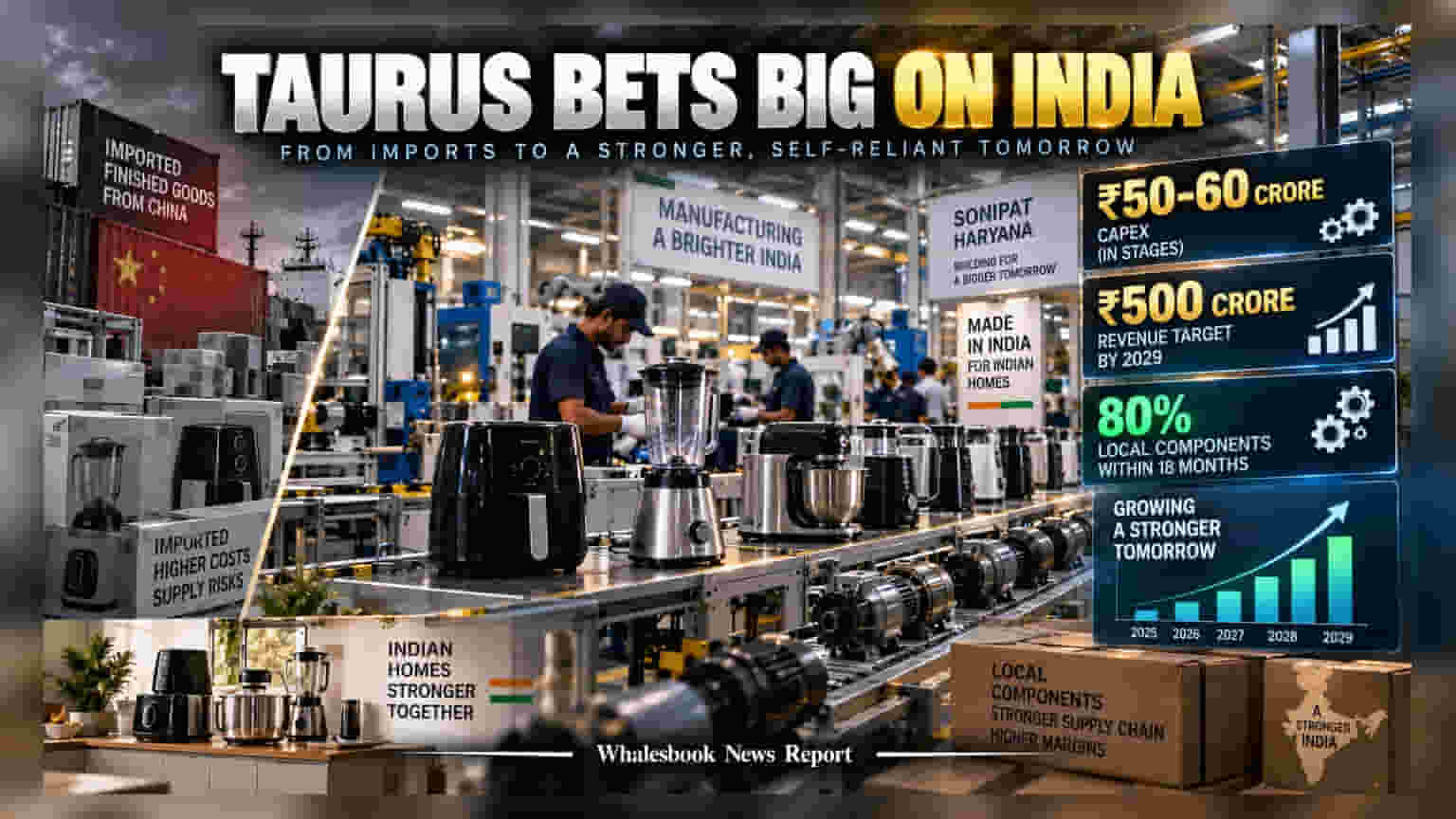
Spain-based Taurus Group is investing ₹60 crore to scale up manufacturing for its subsidiary Inalsa in India. The company aims to boost revenue to ₹500 crore by 2029 by shifting from imported goods to local production and expanding its offline retail network.
Taurus Group, the Spain-based appliance manufacturer, is launching a fresh expansion plan for its Indian subsidiary, Inalsa. This follows the settlement of a long-standing ownership dispute in February 2026. The company now aims to shift its strategy toward domestic manufacturing and expand its physical presence across the country.
The company has outlined a plan to invest ₹50 to ₹60 crore in stages. The first phase of this capital spending will focus on a new manufacturing unit in Sonipat, Haryana, with the company aiming to deploy about ₹12 to ₹15 crore in the initial setup. This marks a departure from the company’s previous model, which relied heavily on bringing in finished goods from abroad.
Currently, Inalsa generates about ₹200 to ₹225 crore in annual revenue. The company’s management has set an ambitious target to reach ₹500 crore in sales by 2029. To achieve this, the company plans to change how its products are sourced. At present, roughly 70% of the products Inalsa sells in India are imported, largely from China. The company intends to shift this model so that 80% of components are sourced or made within India over the next 18 months, with a goal to eventually stop importing finished goods entirely.
This shift in strategy is partly aimed at protecting profit margins from external pressures. Since January, Inalsa has already increased product prices twice to offset rising costs of raw materials like brass and metals, as well as higher transportation expenses. By moving to local production, the company hopes to lower its exposure to global freight volatility and supply chain disruptions.
While Inalsa has built a strong brand presence online—with roughly 60% of its sales coming through digital channels like Amazon—it faces an execution challenge in the physical retail market. The company is currently under-represented in the offline retail space, particularly in southern and eastern India. A key focus for the management team will be converting this online brand recognition into wider availability in physical stores, where competition in the home appliance sector remains intense.
Investors and industry observers will be watching whether the company can successfully manage this transition. The move from an import-heavy model to domestic manufacturing carries execution risks, including the challenge of scaling up production quality and managing the cost of setting up new facilities. Additionally, the company's ability to maintain its profit margins while competing against established local and international appliance brands will be a key factor in its growth trajectory.