

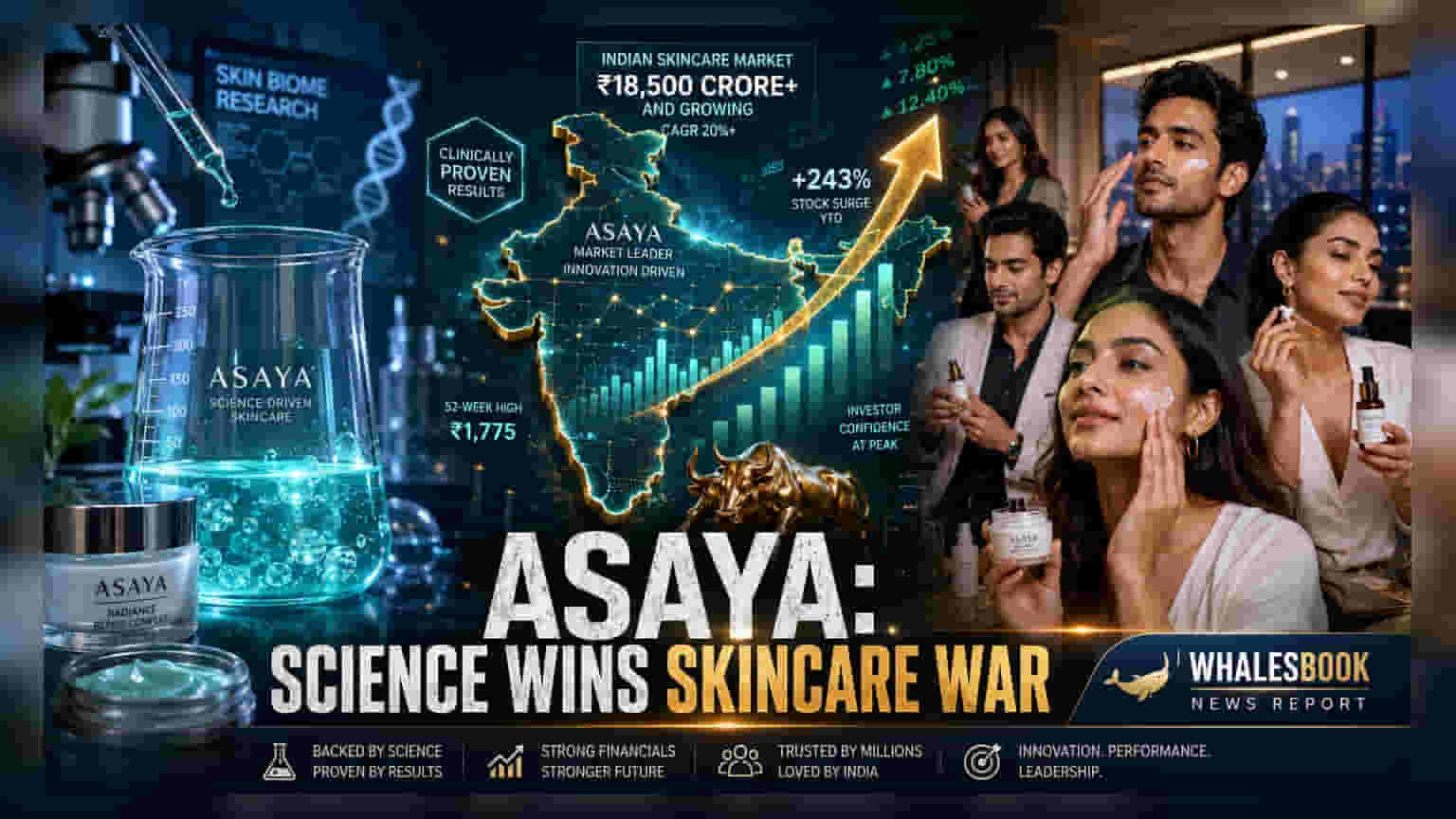
D2C skincare startup Asaya is raising a Series A round to fund clinical research and offline expansion. With over 500,000 customers, the firm aims to differentiate itself from marketing-heavy competitors by focusing on science-led solutions for Indian skin. This highlights the growing focus on R&D in India's crowded beauty and personal care market.
What Happened
Asaya, a direct-to-consumer (D2C) skincare brand, is initiating a Series A funding round to support its next phase of growth. The company, which focuses on products specifically formulated for melanin-rich Indian skin, plans to use the capital to enhance its research and development (R&D), conduct clinical validation, and launch new product categories. Asaya has previously secured ₹43 crore in funding. The startup, founded by Eeta Sharma along with Paper Boat's Neeraj Biyani and Mandeep Singh Bhatia, has grown its user base to over 500,000 customers within the past year.
The Shift to Science-Led Skincare
The beauty and personal care (BPC) market in India has traditionally relied heavily on celebrity endorsements and influencer marketing to drive sales. Asaya is attempting to create a different business advantage by prioritizing clinical validation and proprietary active molecules. The company’s immediate strategy involves expanding beyond its core hyperpigmentation serums into more complex treatments, such as night creams. By investing in science-backed formulations, the startup aims to build brand loyalty that is not dependent solely on marketing spending, which is a common challenge for new D2C brands.
The Role of Quick Commerce
Distribution strategy has become a critical factor for growth in the Indian D2C sector. While traditional online channels like Amazon and Nykaa remain key for Asaya, the company has found significant traction in quick commerce. Blinkit currently accounts for approximately 17 percent of its revenue. This indicates that consumers are increasingly comfortable purchasing beauty products with immediate delivery, a trend that is forcing brands to re-evaluate their supply chain and inventory management. Moving forward, the company intends to establish an offline retail presence, which will require a different approach to distribution and team management compared to its digital-first origins.
Market Context and Challenges
Asaya operates in a highly competitive segment where established giants and a flood of new entrants fight for consumer attention. The Indian BPC industry is witnessing significant consolidation, with larger consumer goods companies actively acquiring smaller, fast-growing brands. For a startup like Asaya, the pressure to maintain growth while proving product efficacy is high. The risks include high customer acquisition costs, which often drain cash reserves for D2C brands, and the difficulty of scaling offline retail operations without impacting profit margins. Furthermore, any expansion into new product categories carries the risk of inventory buildup if demand does not match expectations.
What Investors Should Track
Investors and market observers will likely watch how effectively the company executes its offline expansion, as moving from digital to physical retail typically increases fixed costs. Key monitorables include the company's ability to maintain its profit margins while scaling, the outcome of its new clinical studies, and whether its science-led approach can successfully compete with brands that have deeper pockets and larger marketing budgets. The timeline for achieving consistent profitability will also be an important metric as the company prepares for its next stage of funding.