

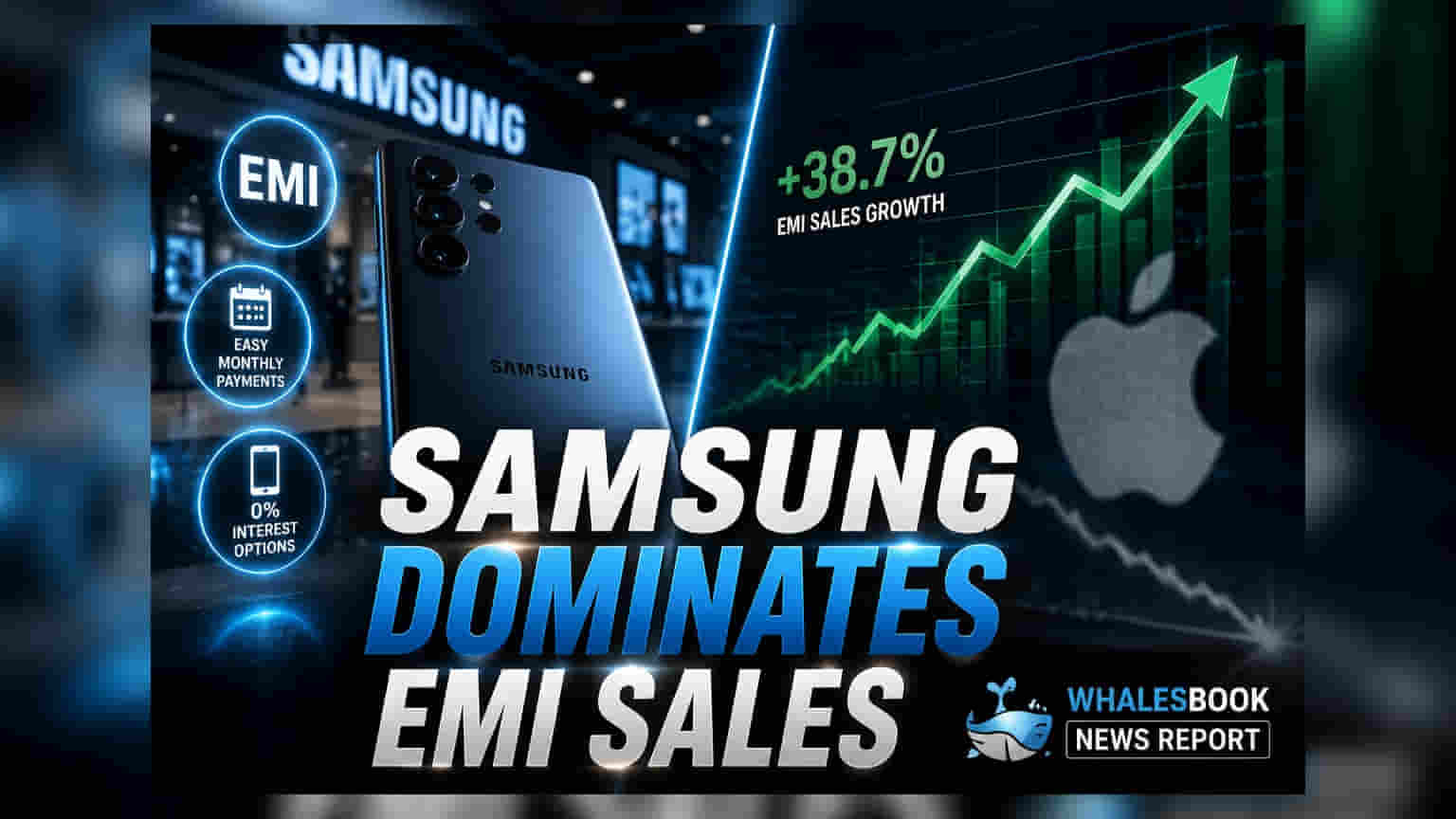
Samsung has captured the largest share of India's smartphone market financed through EMIs, outpacing competitors like Apple and Vivo. With smartphone prices increasing due to higher component costs, financing through NBFCs has become essential for maintaining consumer demand, particularly in Tier-2 and Tier-3 cities.
What Happened
Samsung has emerged as the leading brand in India's smartphone segment driven by Easy Monthly Installment (EMI) financing, according to fresh data from Counterpoint Research. While premium brands often capture headlines, the actual volume of financed smartphone sales is currently dominated by brands with deep offline retail reach, including Samsung, Vivo, and Oppo. This trend highlights a shift in how Indian consumers are buying phones as device prices continue to climb, making upfront payments less accessible for a broad segment of the population.
The Shift Toward Financing
As component prices—particularly for memory—have risen, the average cost of smartphones has increased. This has made financing schemes, which include both credit card EMIs and loans from Non-Banking Financial Companies (NBFCs), a critical tool for maintaining sales momentum. Industry data indicates that by 2026, financing options are expected to account for approximately 42% of all smartphone sales in India, rising from about 35% in 2025. This suggests that financing is no longer just an optional add-on but a fundamental pillar supporting the Indian smartphone market.
The Role Of Retail And NBFCs
Samsung’s dominance in this space is partially attributed to its dedicated financing platform, Samsung Finance+, which integrates directly with its retail network. Unlike purely online-focused brands, companies like Samsung, Vivo, and Oppo utilize their extensive physical store presence to guide customers through the loan application process. These offline outlets act as crucial points of contact where consumers can easily sign up for EMI schemes. NBFCs are playing a massive role, backing roughly 67% of these financed transactions, which is particularly vital in smaller cities and towns where traditional credit card penetration is still growing.
Business Context And Risks
The smartphone sector has faced notable pressure in the first half of 2026, largely due to supply-side constraints and rising memory costs. While financing helps buffer the impact of higher device prices, it also ties the sector’s performance closely to the availability and risk appetite of NBFCs. If financing costs rise or if NBFCs tighten their lending criteria due to asset quality concerns, the growth of this EMI-led sales model could face pressure. Furthermore, while brands with strong offline footprints currently enjoy an advantage, they must balance the cost of maintaining these retail networks against the potential for higher credit-driven sales.
What Investors Should Track
Investors tracking the smartphone and consumer electronics sector may monitor the contribution of financing-led sales to overall quarterly volumes. Key factors to watch include the stability of memory component prices, which influence final consumer pricing, and the lending trends of major NBFCs serving the consumer electronics space. Additionally, shifts in consumer demand patterns in Tier-2 and Tier-3 cities, where credit growth is currently driving volume, will remain an important indicator for the health of major smartphone manufacturers.