

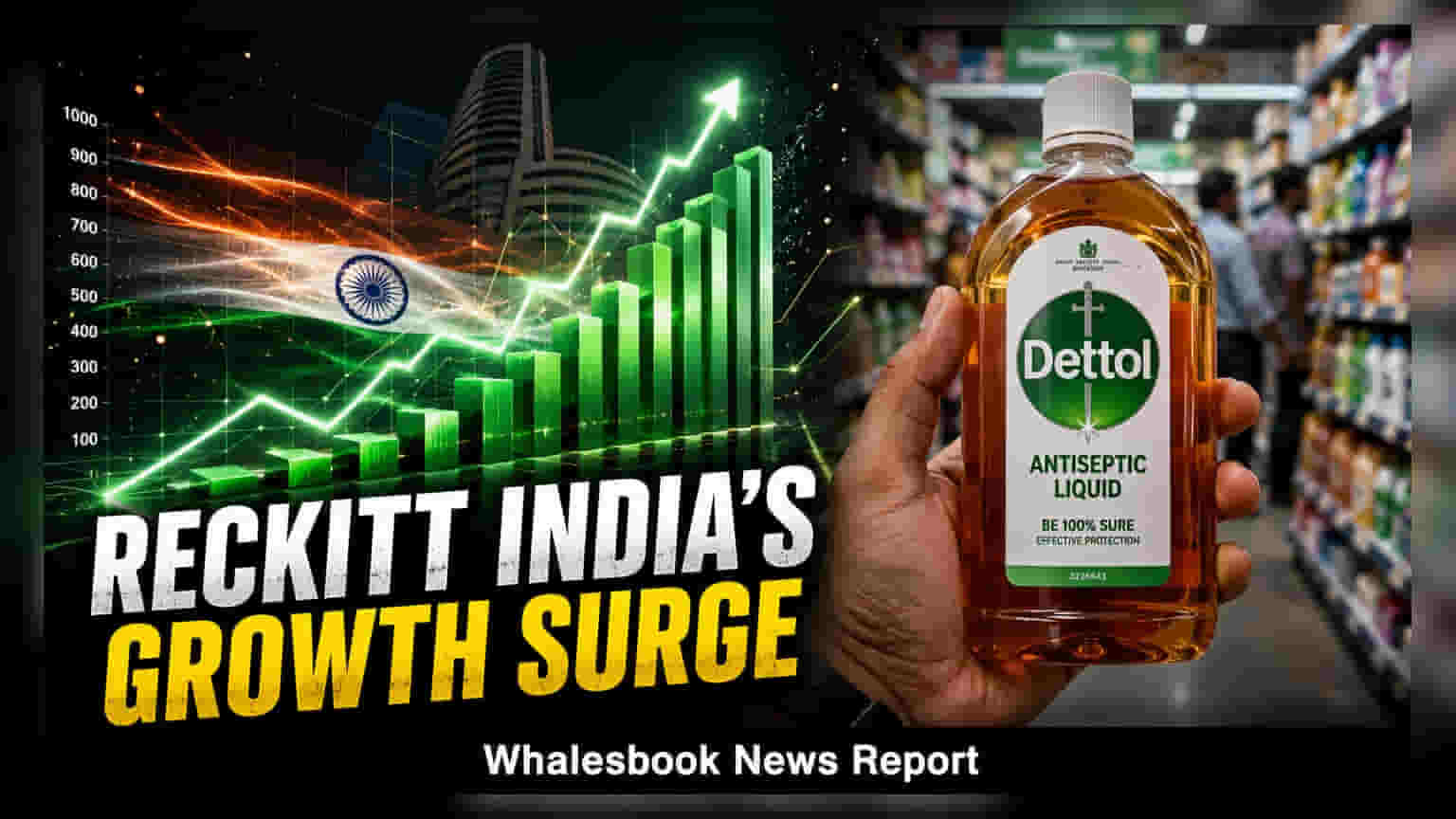
Reckitt reported high single-digit growth in its India business for the June quarter, led by brands like Dettol and Harpic. Success was fueled by expanded distribution and improved in-store execution across more towns. The company expects India to remain a key growth driver for the second half of the year.
Reckitt, the global consumer goods major, delivered a resilient performance in India during the quarter ended June 2026. The company reported high single-digit sales growth, maintaining its momentum in the competitive fast-moving consumer goods market. This growth was driven by its core categories, including Germ Protection, Intimate Wellness, and Household Care, which house popular brands such as Dettol, Harpic, Lizol, Veet, and Durex.
Distribution Expansion Drives Market Reach
A central factor behind this performance is the company’s focus on expanding its physical distribution network. Reckitt has seen a double-digit percentage increase in the number of towns covered by its distribution channels compared to previous periods. The company achieved this through sales force automation and a strategy tailored specifically to the Indian market, which remains heavily reliant on traditional, offline retail compared to the more digital-heavy approach the company employs in markets like China.
Execution and Strategic Focus
Beyond just reach, Reckitt has focused on improving how its products are displayed and sold at retail outlets. By refining its in-store execution, the company has managed to extract better value from its existing footprint. Management noted that the strategy of leveraging trusted power brands, combined with these operational improvements, has been effective. The company’s global leadership highlighted India as a critical contributor to its performance in emerging markets.
Competitive Landscape and Monitoring
Reckitt operates in a highly competitive sector in India, facing off against domestic giants like Hindustan Unilever and Godrej Consumer Products, as well as other multinationals. Investors typically monitor how these companies manage raw material price fluctuations and competitive pricing pressures, which can directly influence profit margins. While Reckitt has benefited from brand strength, sustained success will depend on its ability to continue scaling its distribution in smaller towns without significantly increasing operational costs.
Looking ahead, the company expects its emerging market portfolio, with India at the forefront, to maintain these growth trends through the second half of the year. Investors may track future updates on whether the current distribution expansion translates into higher volume growth and how the company balances its spending on marketing and retail execution against potential changes in input costs.