 Whalesbook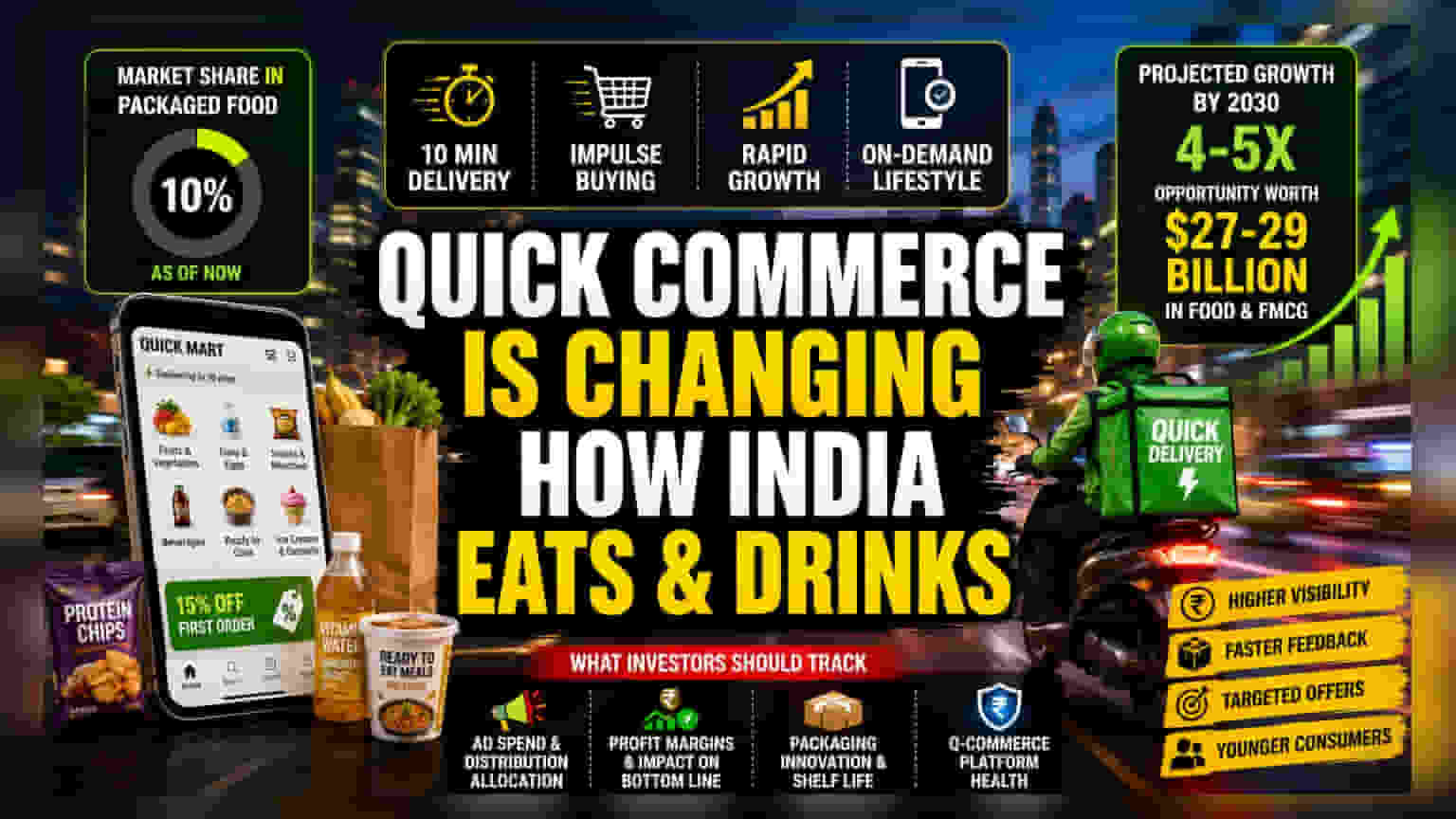


Quick commerce is rapidly gaining ground in India's $100 billion food and beverage market, driving growth in impulse categories like snacks, ready-to-cook meals, and beverages. While these platforms offer faster reach, they are also changing how FMCG companies manage distribution and inventory. Investors should watch how established brands balance this new high-convenience channel with traditional retail while managing potential profit margin pressure.
What Happened
Quick commerce platforms are rapidly changing how Indians buy food and drinks. While traditional shopping often involved planned trips to a local store, these rapid-delivery apps are fueling impulsive buying behavior. Data indicates that quick commerce now holds approximately 10% of the market share in major packaged food categories. Forecasts suggest this footprint could grow 4-5 times by 2030, presenting a potential opportunity worth $27-29 billion within the food and consumer goods sector alone.
Why This Matters For Investors
For investors, this shift signals a transformation in how consumer goods reach the end buyer. Large consumer brands, which previously relied heavily on general trade—the network of small local shops—are now forced to adapt their supply chains for quick commerce. This change affects everything from inventory management to packaging.
Ready-to-cook meals and specialized beverages are seeing the fastest traction. Consumers are increasingly using these apps to order healthy, convenient, and even indulgent items on demand. This shift is not just about convenience; it is about how these platforms capture demand that was previously lost to long delivery times or lack of availability.
How Investors May Read This
While the growth in quick commerce volume is attractive, it brings new challenges for FMCG companies. For established players, the cost of distribution is changing. Traditional retail offers wide reach, but quick commerce offers high visibility and faster feedback on consumer preferences. Investors should watch how companies manage the cost of being present on these apps. Advertising and promotion costs to stay visible on these platforms can affect profit margins if not balanced correctly. Companies that can effectively blend their presence across traditional shops and quick commerce platforms while maintaining healthy margins will be better positioned in the long run.
Sector Pressure and Risks
The quick commerce sector is still evolving, and it carries specific risks that can impact the brands selling through them. The delivery model is costly, and there is ongoing pressure on platforms to achieve profitability. For FMCG brands, relying too heavily on these apps could mean higher costs compared to traditional wholesale models. Furthermore, if these apps focus heavily on discounts to attract users, it can disrupt the pricing strategies that brands maintain in offline stores. There is also the challenge of cannibalization, where sales on quick commerce apps might simply replace sales that would have happened at a local store, rather than creating new demand.
What Investors Should Track
Investors may monitor the following to understand the impact of this trend. First, watch for company updates on how they are allocating their advertising and distribution spending between traditional retail and quick commerce. Second, look for commentary on profit margins, specifically whether the rise of quick commerce is impacting the bottom line. Third, track the performance of brands that are innovating their product packaging or shelf life to better suit the quick delivery model. Finally, pay attention to the overall health of the quick commerce platforms themselves, as any regulatory or financial issues in that industry could impact the brands that rely on them for sales.