

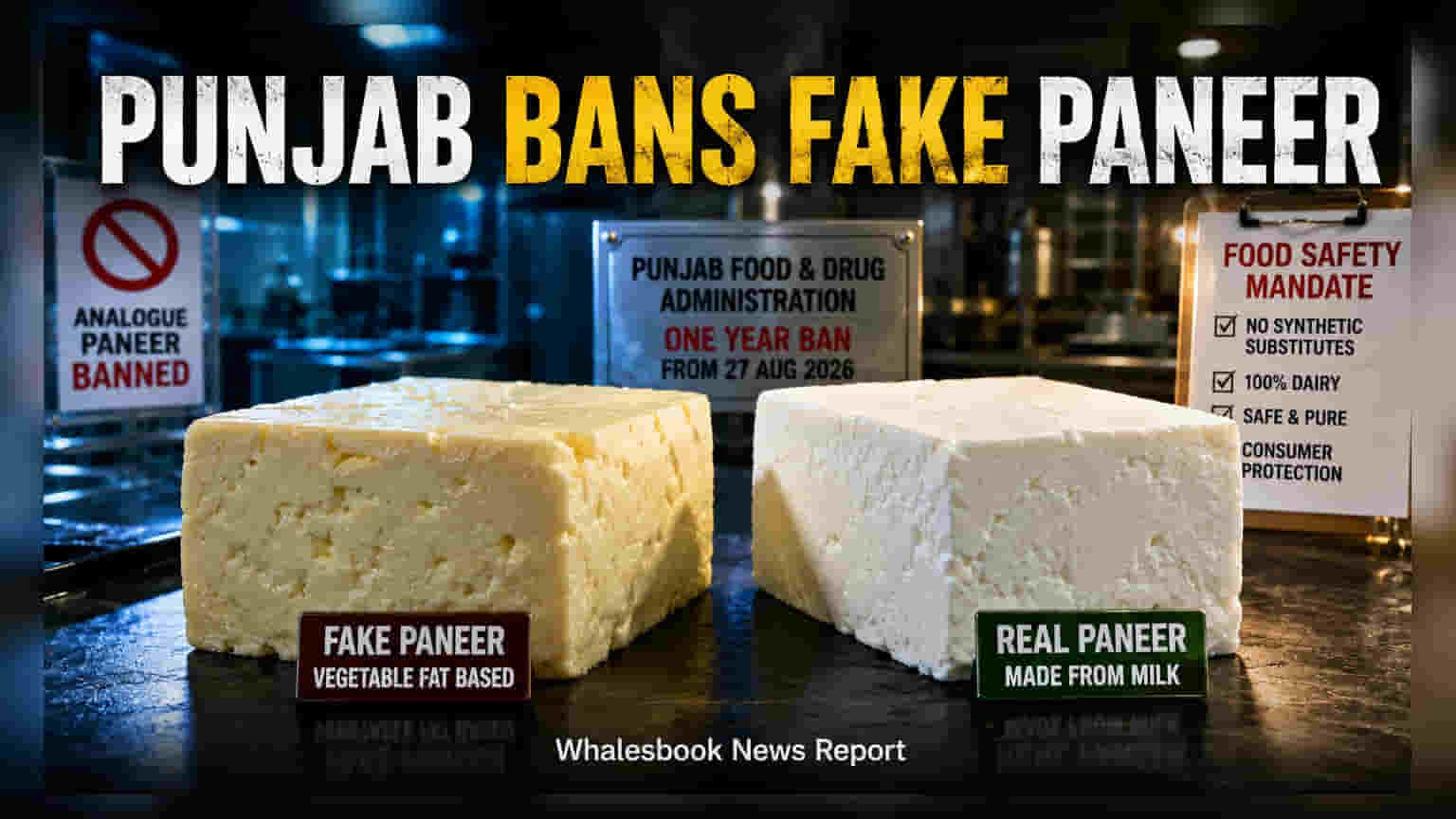
The Punjab government has imposed a one-year ban on the production and sale of non-dairy 'analogue paneer' to protect consumer health. Following tests revealing 42% of samples were non-conforming, the state aims to curb mislabeling. This regulation is expected to impact restaurants and food manufacturers who must now ensure compliance with national dairy standards.
The Punjab government has implemented a one-year prohibition on the manufacturing, storage, distribution, and sale of non-dairy analogue paneer, effective August 27, 2026. This regulatory action, led by the state's Food and Drug Administration, follows a crackdown on food fraud where products marketed as paneer were found to be synthetic substitutes made with vegetable fats instead of real milk.
The decision was prompted by alarming laboratory findings which showed that approximately 42% of the paneer samples analyzed in Punjab were non-conforming. These products failed to meet the nutritional and ingredient standards set by the Food Safety and Standards Authority of India (FSSAI). Analogue paneer, which is often used to mimic the texture of genuine dairy, frequently utilizes vegetable oils and additives that lack the nutritional profile of authentic milk products.
This ban creates significant operational changes for the food service industry, including restaurants, caterers, and food processing units. Businesses that have relied on these cheaper alternatives must now shift to sourcing authentic dairy paneer to comply with the new mandate. Under the Food Safety and Standards Act, 2006, entities found violating these rules face strict legal action, including fines and potential business closures. Enforcement officers are conducting inspections across the state to verify inventory and production methods.
Punjab is not alone in this regulatory move. Several other states, including Chhattisgarh, Maharashtra, Gujarat, Madhya Pradesh, and Himachal Pradesh, have already introduced similar bans on analogue paneer. This pattern reflects a wider tightening of the regulatory landscape across India's food sector, as authorities look to eliminate mislabeled synthetic dairy products ahead of peak demand periods like festivals and wedding seasons.
For investors and industry participants, the key monitorable will be the impact on ingredient costs for food service providers. A mandatory shift toward authentic dairy products may lead to higher input costs for manufacturers and hospitality businesses. Meanwhile, dairy companies that focus on authentic milk-based products may see a change in market demand as the availability of synthetic substitutes is curbed by state-level enforcement.