

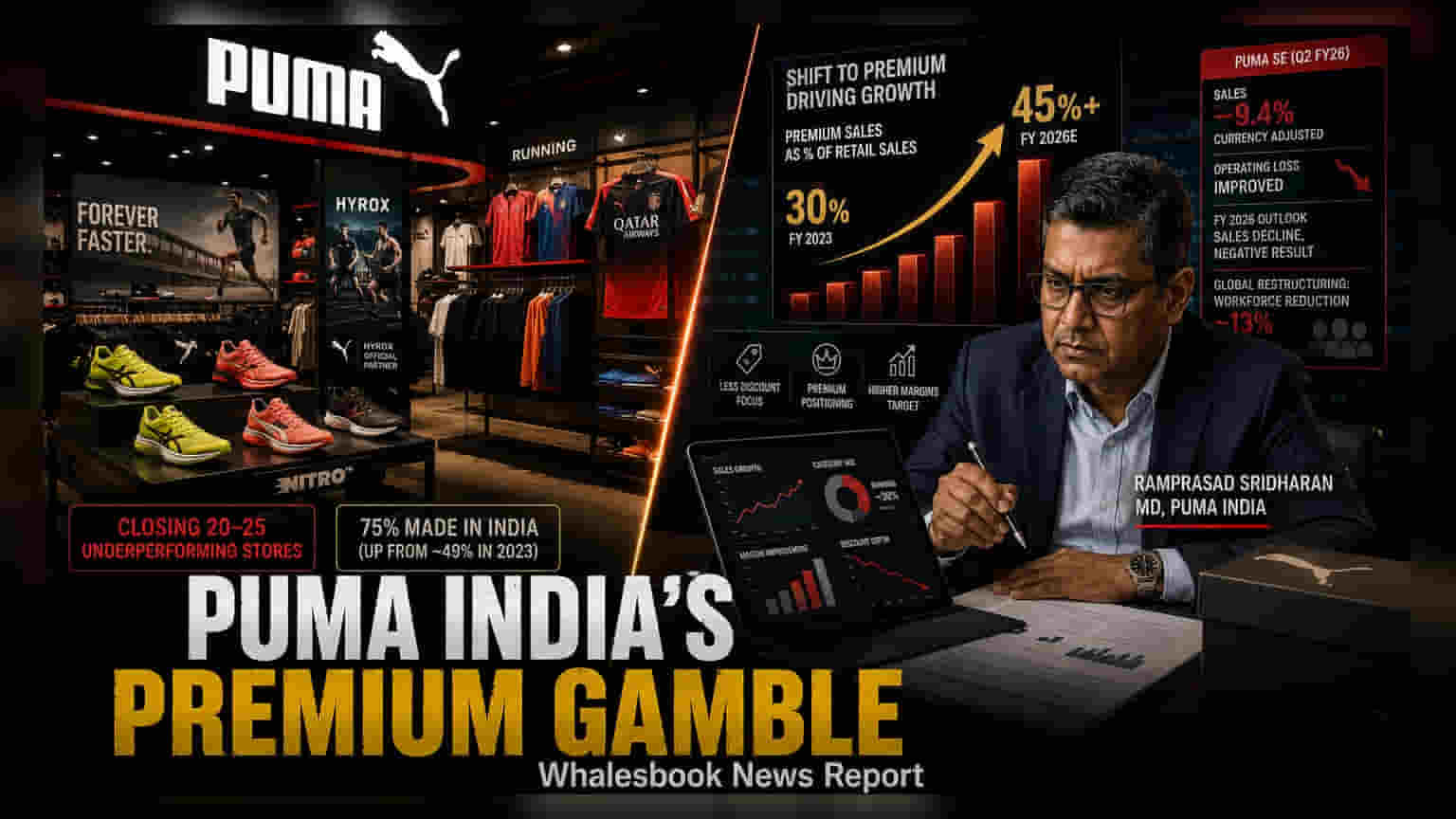
Puma India is shifting away from heavy discounting under new MD Ramprasad Sridharan, focusing instead on premium products and closing 20-25 underperforming stores. While this strategy targets higher margins in a competitive market, it coincides with a challenging 2026 for the parent company, which is navigating global sales declines and restructuring.
Puma India is undergoing a significant strategic reset as it moves away from a reliance on discounts to focus on a more premium business model. Managing Director Ramprasad Sridharan, who took leadership in December 2025, is guiding this change to better align with evolving consumer demand. As part of this transition, the company is consolidating its retail presence by closing approximately 20 to 25 underperforming stores. The goal is to move toward fewer, larger, and better-positioned retail spaces that can offer a more elevated shopping experience.
Targeting Higher-Value Segments
To support this shift, Puma India is sharpening its focus on specific growth categories. Running currently stands as the largest category for the brand in India, contributing nearly 30% of its retail sales. To deepen its reach, the company is expanding into hybrid fitness, including a partnership with the global fitness competition brand Hyrox, and continuing to leverage its team sports associations, such as the partnership with the Royal Cricket team, Royal Challengers Bengaluru.
Another key aspect of this strategy is the synchronization of product launches. Puma India is working to ensure that its global product range is available in the local market at the same time as international launches. This aims to cater to Indian consumers who are increasingly seeking specialized footwear and apparel, similar to the trends seen in developed markets. Operationally, the company has also increased its local manufacturing, with approximately 75% of products now made in India, up from about 49% in 2023.
Global Financial Context and Market Challenges
While this localized strategy aims to improve profitability and brand positioning, the Indian subsidiary is operating within a broader, more difficult environment for its German parent company, Puma SE. The global group is currently in what it describes as a transition year for 2026. Financial data from the second quarter of 2026 showed a 9.4% decline in currency-adjusted sales globally.
Although the parent company reported an improvement in gross margins and a reduction in operating losses compared to the previous year, the outlook for the full year 2026 remains cautious, with projections of a continued sales decline and negative operating results. For investors, this global backdrop underscores the importance of the Indian unit’s attempt to improve margins through a premium-focused approach. The company is also implementing a global restructuring plan, which includes a workforce reduction of approximately 13%, adding an element of organizational change to the mix.
Competitive Landscape and Future Outlook
The sportswear market in India has become increasingly crowded and competitive. Puma faces pressure not only from mass-market brands but also from global premium competitors like Nike, Adidas, Hoka, On, and Asics, all of which are vying for the same growing base of sophisticated consumers.
The next steps for the company will be critical. Investors and market watchers will be tracking whether the store consolidation and premium product mix can successfully drive profit margins higher despite the challenging global economic conditions. A key monitorable will be the company’s ability to maintain sales growth while reducing the frequency and depth of discounts, as consumer demand for these higher-priced products remains sensitive to the broader economic environment.