 Whalesbook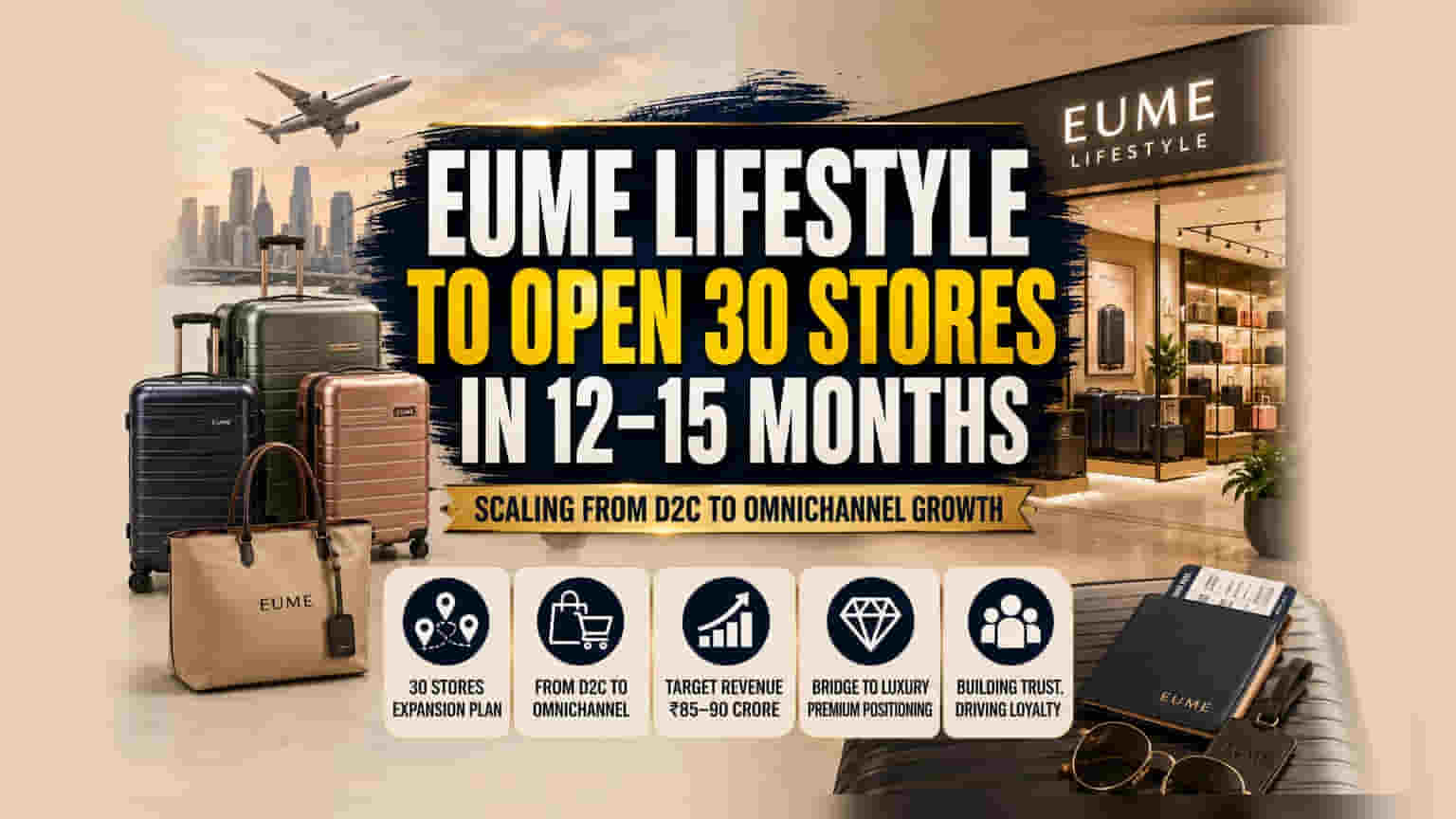


Eume, a premium D2C luggage and travel accessories brand, is aggressively moving into physical retail with plans for 30 stores within 15 months. This strategic shift reflects a broader trend among digital-first Indian brands aiming to capture the growing premium travel market, balancing their online presence with brick-and-mortar experiences to build brand trust.
What Happened
Eume Lifestyle, a private, Mumbai-based luggage and travel accessories brand, has announced plans to expand its physical retail footprint significantly. The company intends to scale its presence by opening 30 stores within the next 12 to 15 months. Currently operating a limited number of outlets in major cities like Mumbai, Bengaluru, and Hyderabad, this move signals a transition from being a digital-first direct-to-consumer (D2C) entity to an omnichannel business. The brand is targeting revenues of ₹85-90 crore for the current fiscal year as it seeks to capture a larger share of the premium travel segment in India.
Why This Matters For Business Strategy
For D2C brands, the transition to physical retail is a critical evolution. While digital-only models offer high initial growth by bypassing intermediaries, they often face customer acquisition cost pressures and lack the physical touch-and-feel experience that premium luggage buyers frequently seek. By opening 30 stores, Eume is looking to establish itself as a "bridge to luxury," aiming to appeal to aspirational Indian travelers who want to inspect product quality, weight, and aesthetics before purchasing. This omnichannel approach allows the brand to build deeper customer trust and potentially justify its premium pricing strategy compared to entry-level travel gear.
The Shift in India's Luggage Market
The luggage sector in India is currently witnessing a massive transformation. For decades, legacy players like VIP Industries and Safari Industries dominated the market through vast distributor networks. However, in recent years, the market has been disrupted by a wave of D2C startups like Mokobara, Eume, and others. These newer entrants have shifted the focus from utility-only products to design-led, aesthetic-driven accessories that appeal to younger, more affluent travelers.
Legacy brands are now feeling the pressure to modernize their portfolios, while newer brands like Eume are trying to prove they can scale profitably beyond their digital origins. This expansion marks a new phase in the battle for the premium luggage segment, where the winning strategy will depend on balancing high-quality product design with the high operational costs associated with physical retail.
The Challenge of Physical Retail
While physical expansion can boost brand visibility and sales, it also introduces significant operational complexities. Unlike digital channels, physical stores require high capital spending on real estate, interior fit-outs, and local staff. Maintaining profitability in these stores depends on high footfall and efficient inventory management, especially in premium malls.
Eume’s strategy of prioritizing brand equity over deep discounts suggests they are betting on customer loyalty rather than price wars. However, the company will face stiff competition not just from emerging D2C rivals but also from the well-entrenched legacy giants who are also refurbishing their own retail showrooms and launching premium sub-brands. Whether the company can maintain its profit margins while absorbing the fixed costs of 30 new stores will be a key performance indicator.
What Stakeholders Should Monitor
The most important monitorables for the company's business progress include the timeline of these store openings and their corresponding performance metrics. Observers should track whether the company can maintain its premium pricing strategy in physical locations where consumers are accustomed to comparing products against multiple alternatives.
Furthermore, the sustainability of this growth will depend on capital allocation—specifically, how efficiently the brand manages its cash flow between retail expansion and continued digital marketing. The ability to successfully launch new product categories, such as women’s totes and specialized accessories, will also determine if the brand can increase its average order value and diversify its revenue base beyond standard travel luggage.