

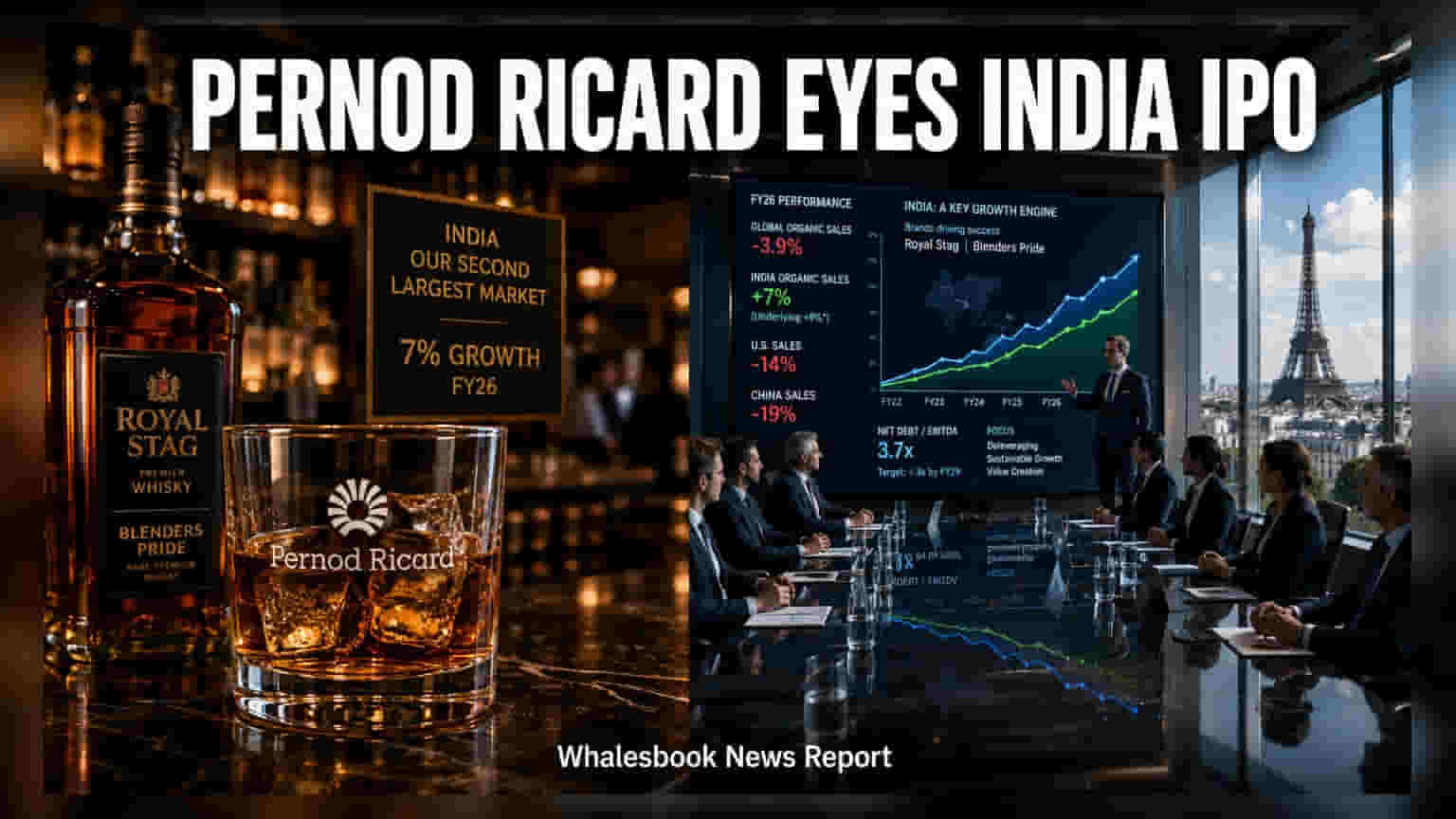
Spirits giant Pernod Ricard is preparing for a potential India IPO after reporting a 7% sales rise in the country, even as global revenues fell by 3.9% in FY26. Investors are now evaluating the company's plan to reduce its 3.7x debt-to-EBITDA ratio while managing competitive headwinds in its core markets.
Pernod Ricard is actively exploring an initial public offering (IPO) for its Indian business, a strategic move designed to leverage the region's strong performance as the company grapples with broader global challenges. The French spirits manufacturer, which counts India as its second-largest market, is currently undertaking legal preparatory steps for a potential listing, though no final decision has been reached by the board.
This move comes as the company reports a stark contrast in regional performance for the fiscal year ending June 30, 2026. While the company’s global organic sales declined by 3.9%, its Indian operations reported a robust 7% increase. When excluding the impact of the divestment of the Imperial Blue mass-market business to Tilaknagar Industries, underlying growth in India reached 9%. This local success, driven by brands like Royal Stag and Blenders Pride, stands in sharp relief against the company's significant setbacks in the United States and China, where sales declined by 14% and 19%, respectively.
Balancing Debt and Expansion
For investors, the potential IPO represents more than just a move to tap into India's premiumization trend. The company is under pressure to manage its balance sheet, as its net debt-to-EBITDA ratio currently sits at 3.7x. Management has set a clear goal to bring this ratio below 3x by fiscal year 2029. An India listing could potentially provide the capital needed to support this deleveraging while funding future growth in one of the world's fastest-growing spirits markets.
However, the company faces multiple pressures. Following the release of its FY26 results on August 27, 2026, Pernod Ricard shares fell approximately 5.8% on the Paris exchange. This negative market reaction reflects investor concern over the continued weakness in key global markets like the US and China, along with persistent cost inflation and potential geopolitical risks affecting international trade and travel retail.
Risks and Market Dynamics
While India remains a bright spot, the competitive landscape is intense. Maintaining the current growth momentum requires navigating complex regulatory environments and shifting consumer preferences. Furthermore, the success of the proposed IPO will depend on broader market conditions and the company's ability to demonstrate that its Indian operations can continue to outperform while providing stable cash flows to the parent group.
Investors should monitor several factors in the coming months. These include official updates on the IPO timeline, progress in reducing the company’s net debt-to-EBITDA ratio, and whether the company can sustain its growth in India amidst increasing local competition. Additionally, the impact of international trade policies, such as the India-UK Free Trade Agreement, will remain a key factor in how the company expands its premium Scotch whisky portfolio in the region.