

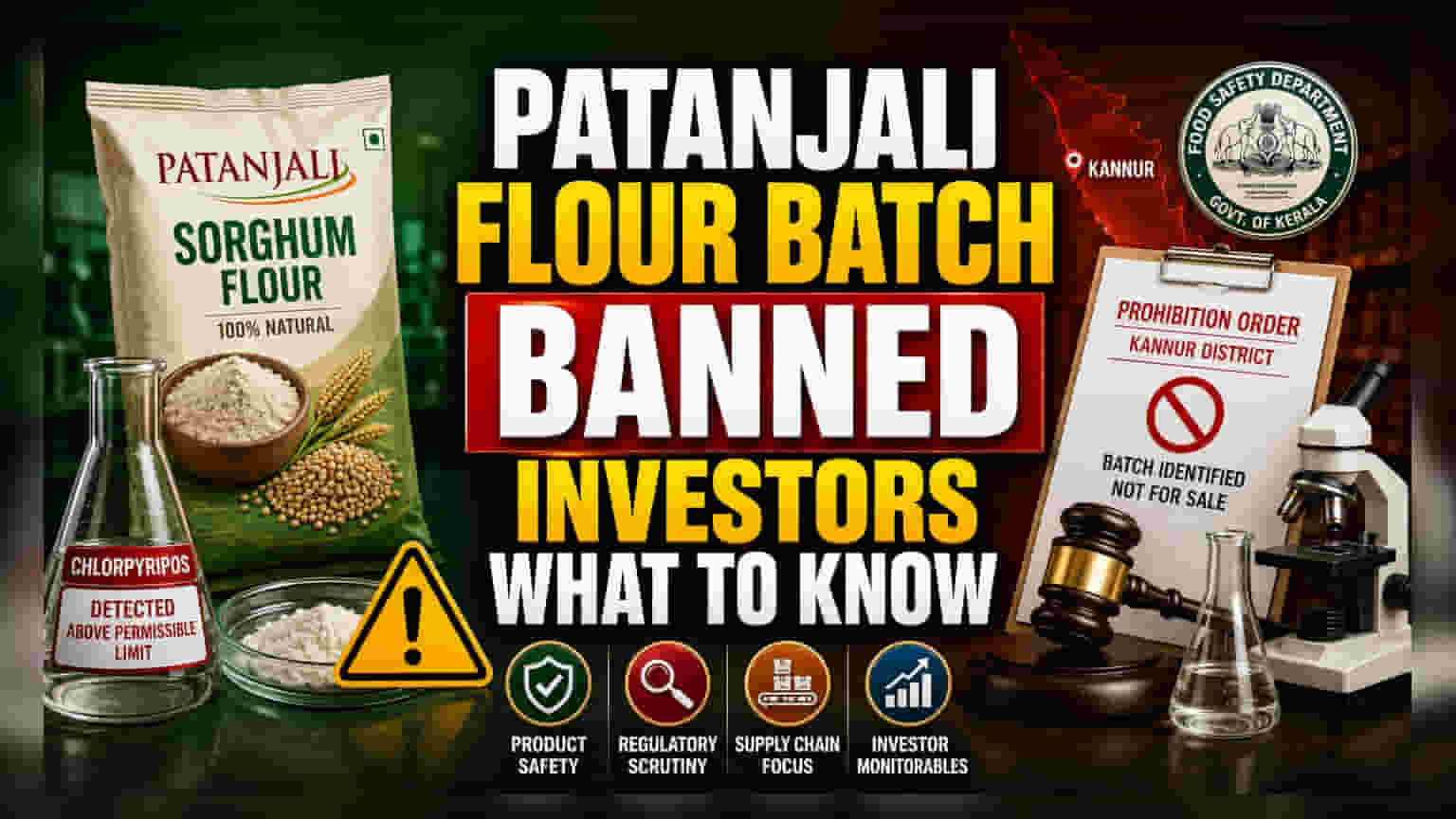
Kerala food safety authorities have restricted the sale of a specific batch of Patanjali Foods sorghum flour in Kannur district due to high pesticide residues. The company plans to appeal the order and stated the financial impact is limited to the local batch. Investors may track the outcome of the appeal and the company’s quality control measures.
What Happened
The food safety department in Kannur, Kerala, has issued a prohibition order on a specific batch of sorghum flour produced by Patanjali Foods Ltd. This action follows the detection of chlorpyriphos, a pesticide, in concentrations exceeding the maximum allowable safety limits set by the authorities.
Patanjali Foods informed the stock exchanges about this development on June 20, 2026. According to the company, the restriction is limited to the Kannur district and applies only to the specific batch identified by the officials. The company has announced its intention to file an official appeal against the decision taken by the Designated Officer in the district.
Why This Matters For Investors
In the food and consumer goods sector, regulatory compliance and product safety are crucial for brand reputation. Even localized bans can draw attention to a company's internal quality assurance and supply chain management. While Patanjali Foods has stated that this incident will not have a material impact on its overall financial or operational performance, the market often monitors such events to determine if they are isolated issues or signs of broader challenges in quality monitoring.
How The Company Responded
The management has emphasized that the geographical scope of the order is confined to the Kannur district. By filing an appeal, the company is attempting to contest the findings of the local food safety authorities. As a listed entity, the company is required to disclose such regulatory actions under the SEBI regulations, ensuring transparency regarding events that might affect its product distribution or reputation.
What Investors Should Track
The primary focus for investors will be the outcome of the appeal process. Any further regulatory actions or similar notices from food safety authorities in other regions could be a point of concern for market participants. The key monitorable remains the company’s ability to ensure that its food safety testing processes are robust enough to prevent such contamination issues before products reach the store shelves. Investors will also look for any updates on how the company plans to strengthen its quality oversight to avoid repeat instances of this nature.