

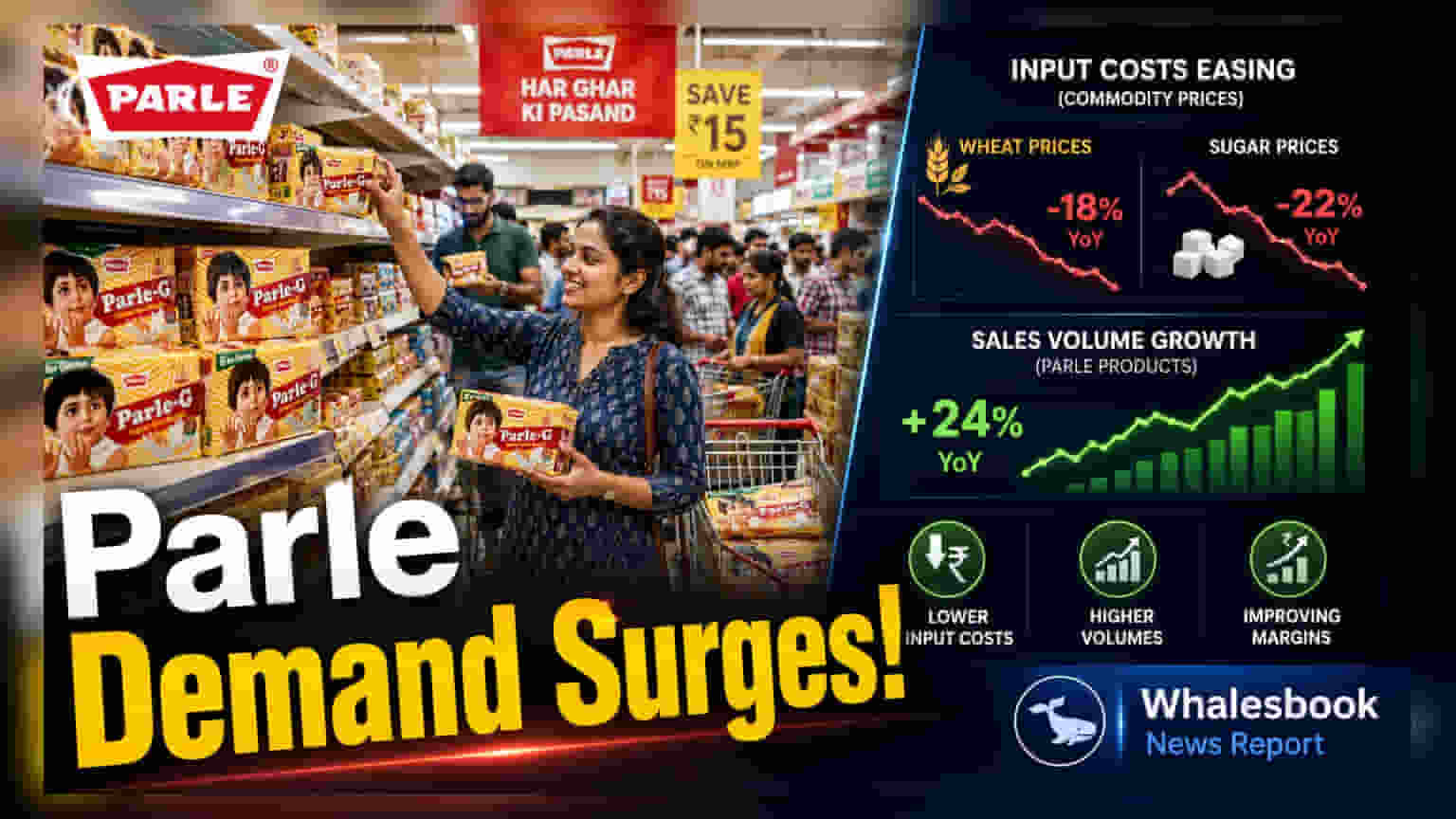
Parle Products reports rising demand as input costs stabilize, allowing the company to avoid price hikes. While Parle’s performance signals resilience, the broader FMCG sector is facing renewed margin pressures from rising crude oil and packaging costs in mid-2026. Investors can use this update to gauge volume trends, but should monitor how listed peers like Britannia manage these commodity headwinds.
What Happened
Parle Products has reported an uptick in demand for its product portfolio, driven by easing input costs and a strategic decision to avoid significant price hikes. According to company management, this move is intended to protect consumer purchasing power and maintain sales momentum. The company has observed mid- to high-single-digit growth in select product categories. While early 2026 margins were squeezed by higher-cost inventory acquired when raw material prices were elevated, the outlook for the September quarter appears more positive as these cost pressures begin to normalize.
Separately, the company highlighted a surge in its candy segment, which has gained popularity in both domestic and international markets. The firm is currently exporting to over 40 countries and is planning further expansion into regions like Eastern Europe.
Why It Matters For Investors
As one of India’s largest, though unlisted, biscuit and confectionery makers, Parle’s operational performance often serves as a barometer for the broader Fast-Moving Consumer Goods (FMCG) sector. When a major player like Parle avoids price hikes to stimulate demand, it highlights the sector’s current focus: protecting volume growth at the expense of potential margin expansion. For investors, this provides a window into the health of the "mass-market" consumption basket, which has been a point of concern in recent quarterly reports for many listed FMCG giants.
The Broader Sector Reality
While Parle’s update strikes an optimistic note, the broader FMCG industry in India is currently grappling with a complex cost environment. Reports from July 2026 indicate that the sector faces renewed inflationary pressure, particularly in crude oil-linked commodities and packaging. Rising crude oil prices—driven by ongoing geopolitical tensions in West Asia—have directly impacted packaging and logistics costs, which constitute a significant portion of total expenditure for consumer goods companies.
Recent data suggests that while some commodities like edible oils have seen price volatility, packaging material costs remain a sticky headwind. Unlike earlier periods where companies could easily pass on costs to consumers, current market conditions are more sensitive to price hikes. This has forced companies to implement "grammage reduction" (shrinking pack sizes) or reduce trade discounts to protect profitability without alienating price-sensitive buyers.
Competitive And Peer Context
Investors tracking this space often look to Britannia Industries as the primary listed proxy for the biscuit market. While Parle focuses on a broad mass-market reach, Britannia has maintained a strong hold on the premium and mid-segment biscuit categories. Comparing the two reveals the ongoing tug-of-war in the industry: maintaining market share in an environment where volume growth is difficult to achieve without sustained marketing investment. Companies that can innovate in the premium segment or utilize distribution strength to offset rural demand weakness are generally better positioned to handle the current inflationary cycle.
What Investors Should Track Next
- Rural Consumption: The most critical monitorable for the remainder of 2026 is the strength of rural demand. Any positive shift in agricultural income, supported by a healthy monsoon, could act as a significant tailwind for companies like Parle and its listed peers.
- Crude Oil Trends: Packaging and logistics costs are tied to energy prices. Investors should keep an eye on crude oil fluctuations, as these costs dictate how much margin pressure companies will face in the coming quarters.
- Volume vs. Price Growth: Watch for company disclosures on "volume growth" versus "value growth." In a period of high commodity inflation, true business strength is demonstrated by companies that can grow volumes without relying solely on price hikes.