

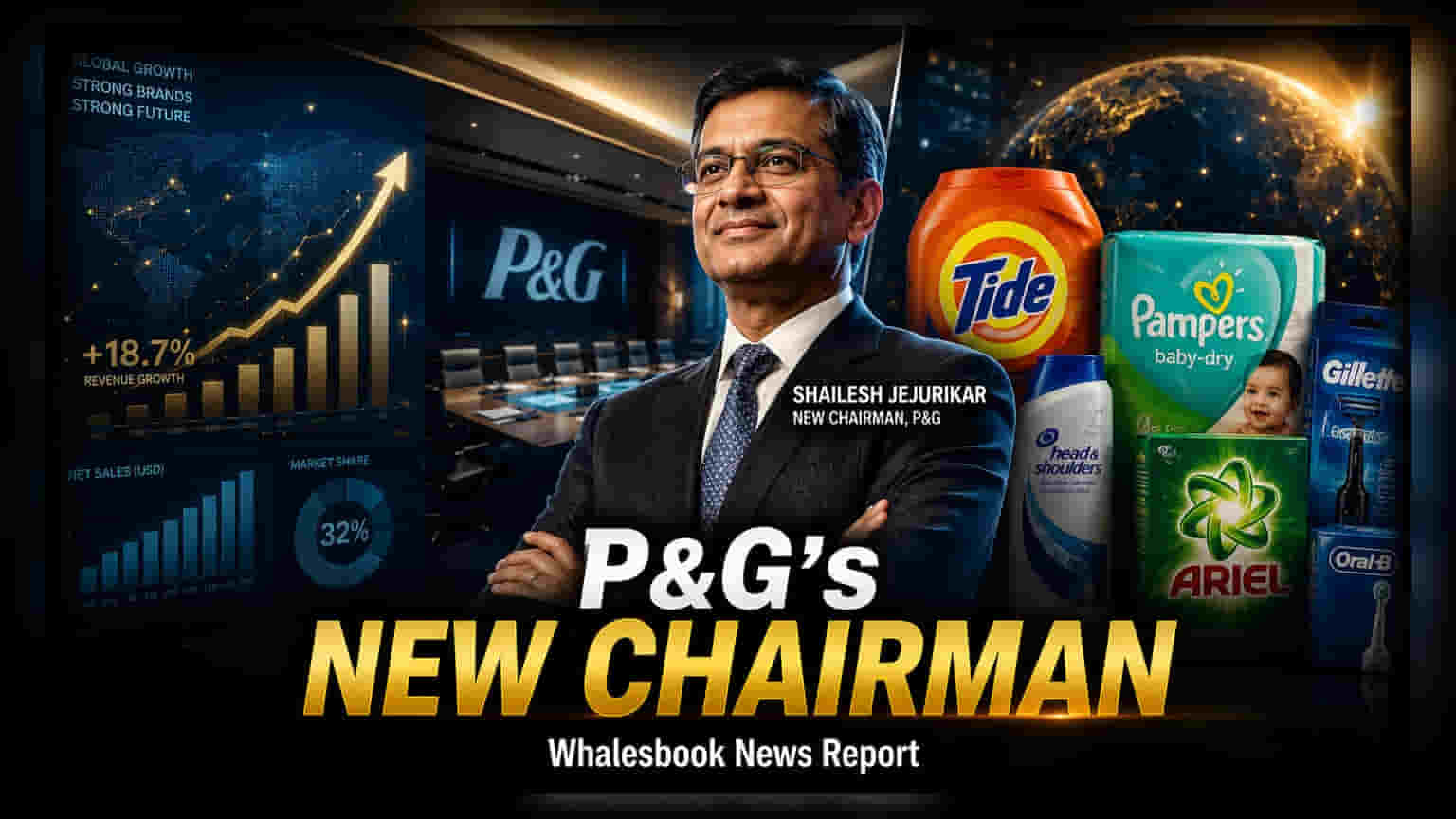
Procter & Gamble has named CEO Shailesh Jejurikar as chairman of the board, effective August 1, 2026. He succeeds outgoing leader Jon Moeller, who is retiring after 38 years. Investors are focused on how this unified leadership structure will manage global competition and shifting consumer demand for major brands like Tide and Gillette.
Procter & Gamble (P&G) has announced a major leadership consolidation, appointing Shailesh Jejurikar to the position of chairman of the board, effective August 1, 2026. Jejurikar, who already serves as the company's president and chief executive officer, will take on the dual role of leading both the board and the executive management team. This transition marks a significant shift in corporate governance at the consumer goods giant.
Transition After a Multi-Decade Tenure
Jejurikar succeeds Jon Moeller, who will depart from the board on July 31 and conclude his official tenure with the company on August 14. Moeller’s retirement marks the end of a 38-year career at P&G, during which he held several critical leadership positions, including chief financial officer, chief operating officer, and executive chairman. His departure represents a notable change in the company's long-term strategic oversight.
Focus on Global Operations
Having joined P&G in 1989, Jejurikar brings over three decades of internal experience to the chairmanship. Since 2014, he has been a consistent member of the company's global leadership team. His background includes overseeing major product categories such as Fabric Care and Home Care, as well as managing regional operations across North America, Asia, Europe, and Latin America. Additionally, he has been heavily involved in supply chain management and global business services, areas that are essential for maintaining profit margins in the consumer goods sector.
Strategic Challenges Ahead
As Jejurikar takes the helm, the company faces a complex global environment. P&G operates in approximately 70 countries with a brand portfolio that includes household staples like Pampers, Gillette, Pantene, and Oral-B. Investors typically track how leadership balances the need for consistent volume growth with the pressure of rising input costs and fierce competition from both established multinational rivals and smaller, localized brands. The unification of the CEO and chairman roles often suggests a move toward faster decision-making, but it also increases the responsibility on a single leader to navigate sector-wide challenges such as changes in raw material pricing and fluctuating consumer spending power. The next important monitorable for shareholders will be the company’s ability to maintain its market share while managing the transition without disruption to its supply chain or operational efficiency.