

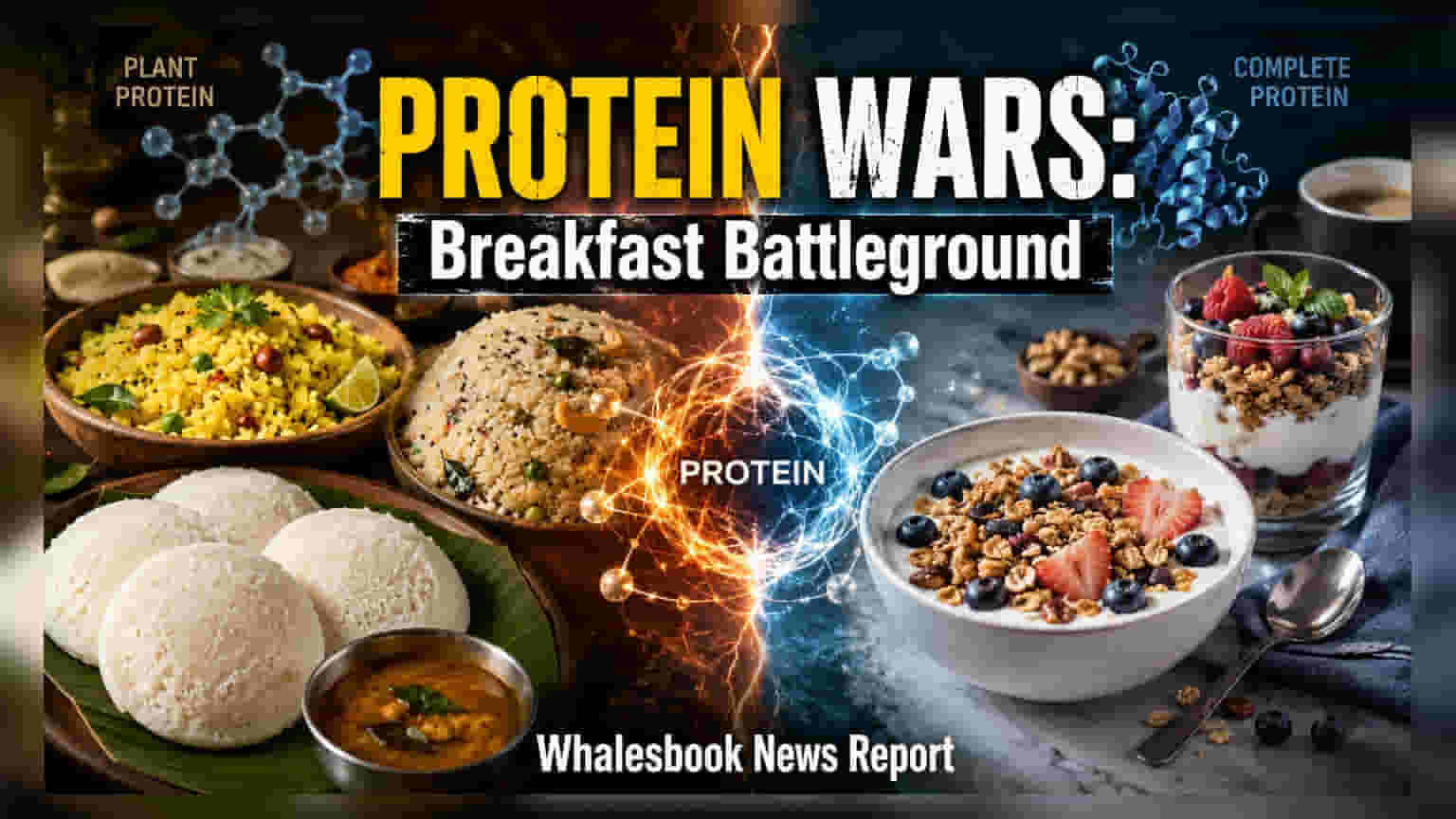
Major Indian food brands like MTR Foods and iD Fresh Food are adding protein to traditional breakfast staples to compete with Western cereal alternatives. This shift aims to capture the growing health-conscious segment, which analysts expect will reach ₹2.5 lakh crore by 2030, while offering companies better profit margins through premium pricing.
Detailed Coverage
The Indian breakfast market is witnessing a strategic shift as major packaged food companies begin fortifying traditional staples with protein. Brands like MTR Foods, owned by Orkla India, and Bengaluru-based iD Fresh Food are launching enhanced versions of everyday items such as idli, dosa, upma, and poha to better compete with Western health-focused alternatives like oats, muesli, and Greek yogurt.
Targeting the Premium Consumer Segment
MTR Foods has introduced a breakfast range that packs 10 grams of protein into its traditional mixes. The company is leveraging quick commerce platforms to roll out these products across 28 cities, marking a push beyond its initial metro market pilot. Similarly, iD Fresh Food has expanded its portfolio to include protein-fortified idli and dosa batter, as well as parathas, which the company claims contain up to 24 grams of protein.
This trend is supported by a change in consumer habits, where health awareness is driving demand for products that offer functional benefits without sacrificing traditional flavors. According to market data from Worldpanel, the ready-to-cook (RTC) segment has seen a significant surge, doubling its volume over the last two years and attracting roughly 18 million new households. This growth trajectory is drawing increased attention from manufacturers looking to move beyond basic staples.
Margin Expansion through Innovation
Beyond market share, the move toward protein-fortified products is primarily driven by the potential for higher profitability. Industry analysis from Kearney suggests that fortified products typically command a premium, with gross margins potentially reaching 10 basis points higher than standard variants. Because the manufacturing cost increase for these additives is relatively low compared to the price increase, companies are finding an effective way to improve their bottom line.
For example, current market pricing shows that regular idli and dosa batter from iD Fresh Food retails at approximately ₹72 for a 500-gram pack, while the protein-fortified version is priced at ₹93. This pricing strategy allows brands to position themselves in the premium 'better-for-health' category, which analysts project will expand significantly as part of a total market forecast of ₹2.5 lakh crore by 2030.
Market Dynamics and Future Monitorables
While the focus on protein-rich snacks is growing, the ability of these brands to maintain their market position will depend on consumer adoption and the ability to scale distribution effectively. The competition remains intense, as Western health-focused breakfast categories have already seen their volume grow by 1.5 times over the last two years. Investors may monitor whether this trend successfully shifts a larger portion of the consumer base toward higher-priced, value-added products and how the increased competition impacts the overall pricing power of these food manufacturers in the coming quarters.