

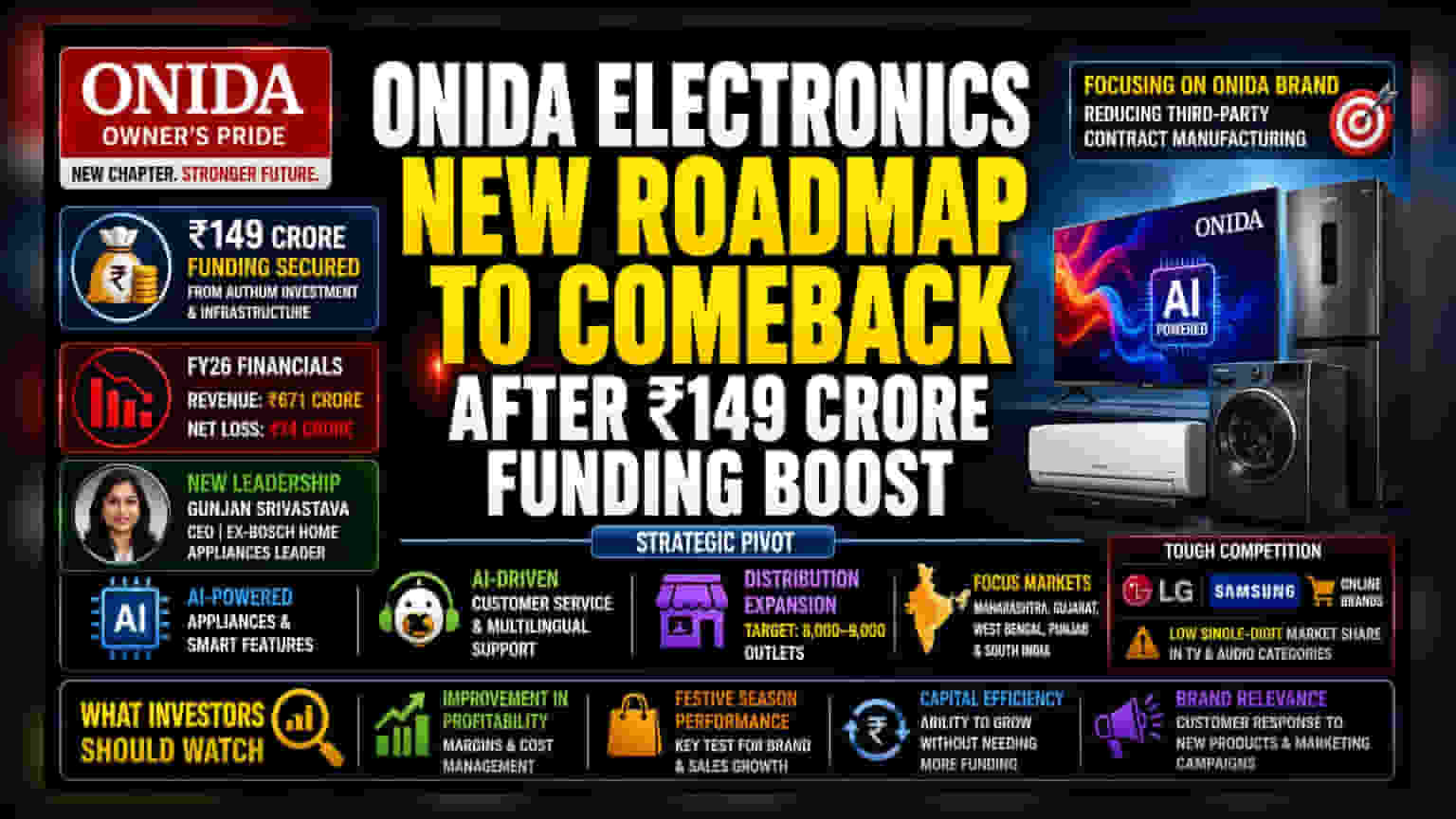
Onida Electronics has raised ₹149 crore from Authum Investment to revive its struggling business. The company, which reported a ₹74 crore loss in FY26, plans to pivot to AI-integrated appliances and expand its distribution network. This turnaround strategy, led by new CEO Gunjan Srivastava, aims to help the brand regain footing against established global giants in a highly competitive consumer electronics market.
What Happened
Onida Electronics, previously known as MIRC Electronics, has announced a new strategic roadmap to reclaim its position in the Indian consumer electronics market. The company has secured ₹149 crore in funding from Authum Investment and Infrastructure. This capital injection is intended to support a major restructuring plan under new CEO Gunjan Srivastava, who previously held leadership roles at Bosch Home Appliances. The company is now prioritizing the Onida brand and reducing its focus on third-party contract manufacturing, where it previously produced goods for other brands.
The Financial Reality Check
The company’s latest financial performance highlights the urgency of this turnaround. In the fiscal year 2026, Onida Electronics reported a net loss of ₹74 crore on revenue of ₹671 crore. For investors, these figures indicate that the business is currently struggling to generate profit despite its long history. The fresh funding is likely essential for daily operations, clearing old liabilities, and funding the new marketing and R&D efforts needed to modernize the product lineup.
The Strategic Pivot
Onida is attempting to modernize its business by integrating artificial intelligence into its appliances. The company plans to use AI to improve product features and enhance customer service, such as using AI-driven tools for multilingual support. Additionally, the brand is targeting an aggressive distribution expansion, planning to double its retail footprint to 8,000-9,000 outlets in the coming months. The expansion is concentrated in markets where the brand historically held strong recall, such as Maharashtra, Gujarat, West Bengal, Punjab, and southern India.
The Competitive Landscape
The consumer electronics sector in India is dominated by major global players like LG and Samsung, alongside a growing number of online-first brands. These competitors typically benefit from massive scale, which lowers their manufacturing costs, and strong digital marketing presence. Onida’s current market share in categories like televisions and audio systems has declined to low single digits. To compete, the company is moving away from low-cost, "me-too" products, hoping to shift toward premium appliances. Success in this strategy will depend on whether consumers perceive the refreshed Onida brand as a modern, value-for-money alternative to established market leaders.
What Investors Should Track
Investors looking at the business should monitor several key updates over the coming quarters. First, the company’s ability to improve its profit margins will be critical, as high operating costs currently outweigh revenue. Second, the performance of the brand during the upcoming festive season in August will be a significant test of its new marketing and distribution strategy. Finally, management's ability to maintain these efforts without requiring additional rounds of funding, which could dilute existing shareholder value, remains a key monitorable.