 Whalesbook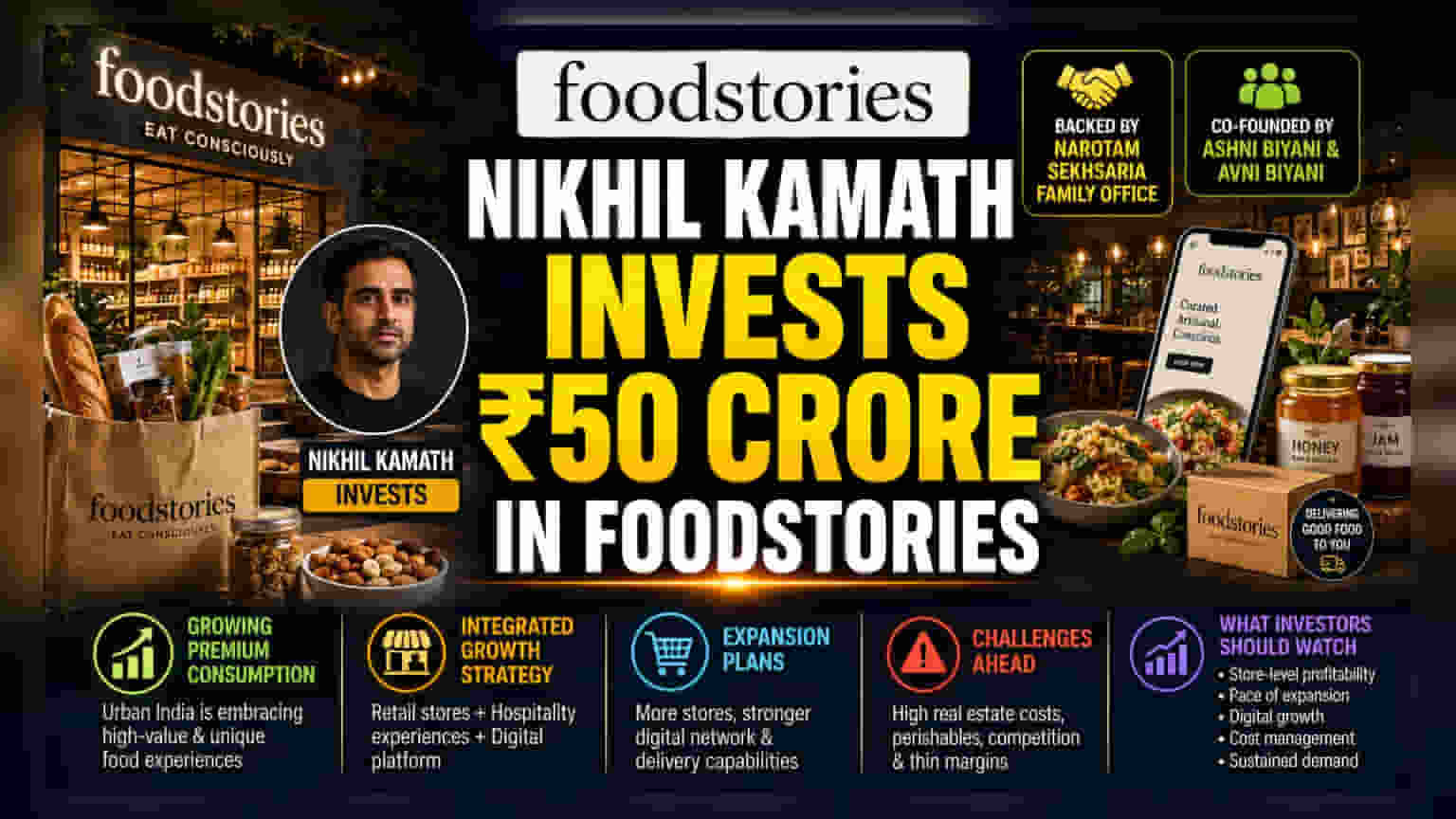


Investor Nikhil Kamath has put ₹50 crore into Foodstories, a premium food retailer co-founded by Ashni and Avni Biyani. This deal highlights the growing trend of high-end consumption in India. We examine the growth strategy and the operational realities of this niche retail space.
What Happened
Investor Nikhil Kamath has invested ₹50 crore in Foodstories, a premium food retail startup. The funding round also included backing from the Narotam Sekhsaria Family Office. Foodstories was co-founded by Ashni Biyani and Avni Biyani. The company operates in the specialty food, hospitality, and digital retail space, sourcing products from artisanal producers and farmers. It currently has a presence in cities including Delhi, Bengaluru, and Hyderabad, with recent store openings in Mumbai.
Why This Matters For Investors
The investment highlights a broader shift in India's consumption patterns. Urban consumers are increasingly moving toward higher-value products and unique food experiences. Businesses that bridge the gap between traditional grocery retail and lifestyle hospitality are gaining traction. For market observers, this funding serves as a proxy for the confidence investors have in the premiumization trend, which suggests that a segment of the Indian population is willing to pay a premium for quality and curation.
The Growth Strategy
Foodstories aims to build a business that integrates three key areas: physical retail stores, hospitality experiences, and a digital platform. The goal is to create a destination for food discovery rather than just a standard grocery store. With the new capital, the company plans to increase its store count, improve its digital network, and enhance delivery capabilities. The founders have stated that their strategy focuses on maintaining high standards in craftsmanship and curation even as they look to scale.
Sector Challenges and Competition
While the market for premium food is growing, it remains a difficult space to operate in. Premium retail is inherently capital-intensive. The cost of real estate in prime locations like Mumbai or Delhi can be significant, which puts pressure on profit margins. Additionally, the business deals with perishable goods, which makes supply chain management and inventory control complex.
Foodstories also enters a competitive market. Large retail chains, specialty coffee brands, and other gourmet grocery players are already active in this space. Success in this segment requires balancing high-quality customer experiences with the operational efficiency needed to control costs.
How Investors May Read This
The retail sector often faces the risk of cost overruns and execution delays. Expansion into new cities requires significant upfront money spent on leases, staff, and inventory. Investors who track similar retail businesses often look for signs of store-level profitability, which indicates whether the concept can work across different locations without constant capital injections. A key area to watch is how the company manages the tradeoff between rapid expansion and maintaining the high-quality product mix that attracts premium customers.
What Investors Should Track
Moving forward, the primary monitorables will be the company's ability to scale its store network while managing the rising costs of operations. Tracking the pace of store openings, the company's success in digital sales, and its ability to compete with larger, established retail chains will be important. Market participants will also watch for signs of sustained demand for premium food items, as this will determine the long-term viability of this business model.